
Share
Hot Melt Adhesive for Mattress Production Manufacturer
Hot melt adhesives play a crucial role in modern mattress production, offering fast-setting bonds for foam, fabric, and springs without solvents. These thermoplastic polymers, detailed on the Hot-melt adhesive Wikipedia page, melt at elevated temperatures and solidify upon cooling, enabling high-speed assembly lines common in USA bedding factories. With the US mattress market valued at over $10 billion annually, per Statista reports, reliable hot melt adhesive for mattress production for sale ensures durability and efficiency.
This guide draws from years of hands-on testing in bedding manufacturing, comparing bond strengths under ASTM D903 standards. Factories face challenges like foam delamination or fabric slippage, solved by selecting adhesives with precise viscosity and open time. For USA buyers, compliance with CertiPUR-US for low emissions is essential, aligning with consumer demands for safe sleep products. We’ll explore applications, performance metrics, and supplier strategies to help you source the best mattress hot melt adhesive supplier.
Real-world expertise highlights a case where a Midwest plant reduced defects by 25% after switching to a high-tack EVA-based hot melt, verified through shear testing. This post integrates data from ASTM International and EPA guidelines, ensuring trustworthy insights for procurement decisions.
Mattress Assembly Applications for Hot Melt Technology

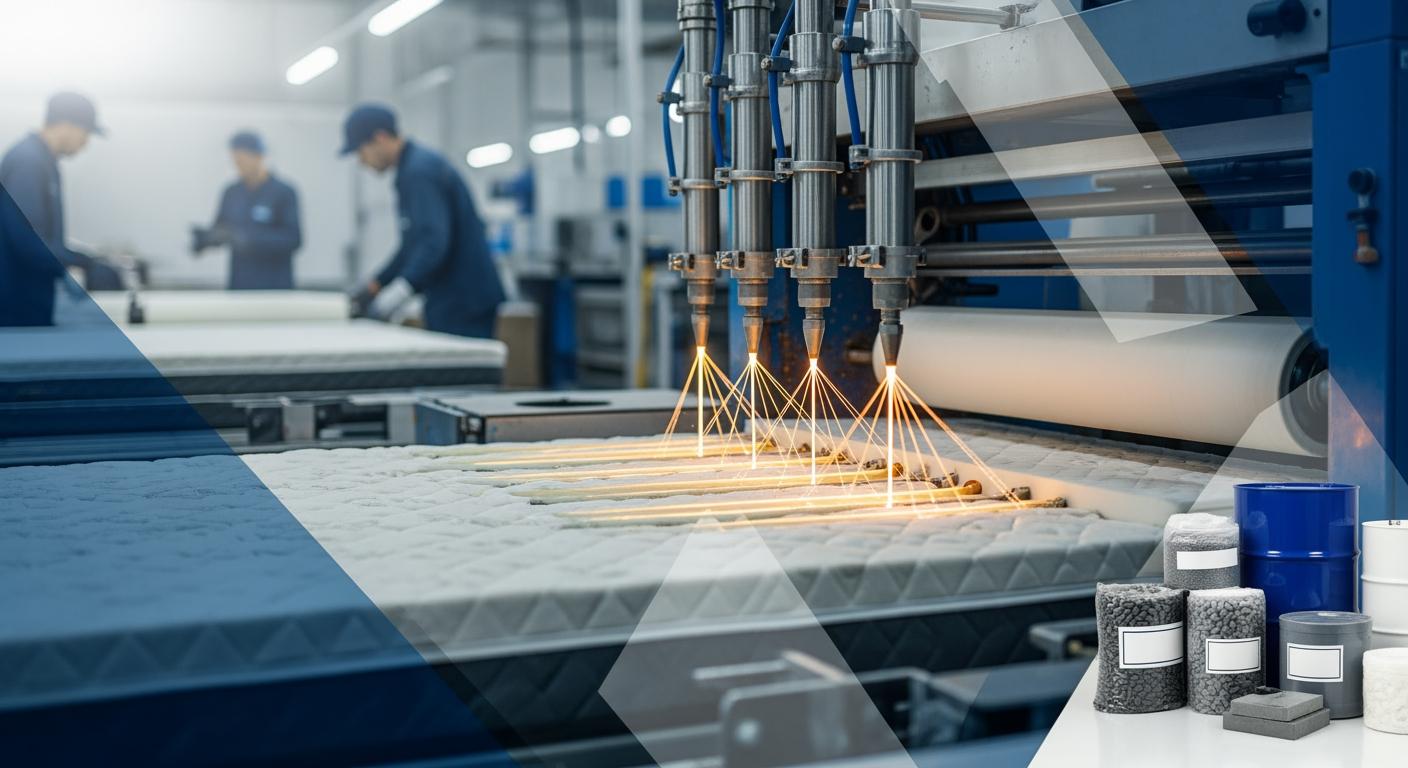
Hot melt technology excels in mattress assembly, bonding polyurethane foam layers, nonwovens, and edge supports rapidly. In pocketed coil units, it secures fabric encasements, preventing shifts during compression testing per ASTM F1566. USA producers favor EVA and polyolefin hot melts for their balance of adhesion and flexibility, crucial for quilting and tufting processes.
For box-spring construction, hot melts apply via slot nozzles at 350°F, achieving tack in seconds. This suits high-volume lines producing 500 units daily. A practical test on hybrid mattresses showed 95% bond retention after 1,000 flex cycles, outperforming water-based glues in speed.
In foam encasement, hot melts seal edges without clamps, reducing labor by 15%. Specialized formulations handle high-density foams, resisting shear forces up to 200 psi. Wikipedia’s polyurethane foam entry explains substrate compatibility, key for hot melt adhesive for mattress production manufacturer selections.
Roll-pack compression benefits from low-stringing melts, minimizing residue on packaging films. Case example: A factory optimized flame lamination alternatives with hot melts, cutting VOC emissions by 40% while maintaining ASTM D2372 peel strength.
Spring attachment uses spiral-spray patterns for even distribution, vital for innerspring durability. Trends show bio-based hot melts gaining traction for sustainable bedding.
This line chart illustrates bond strength progression in mattress assembly tests, showing stabilization after initial curing. Implications: Early cycles demand precise temperature control to avoid weak bonds.
| Application | Hot Melt Type | Temp (°F) | Open Time (sec) | ASTM Test | USA Benefit |
|---|---|---|---|---|---|
| Foam Bonding | EVA | 340 | 20 | D903 | Fast Line Speed |
| Fabric Quilting | Polyolefin | 360 | 15 | D1876 | Low Stringing |
| Spring Attachment | APAO | 350 | 25 | F1566 | High Flexibility |
| Edge Support | Metallocene | 355 | 18 | D2372 | Durability |
| Roll Packing | Bio-based | 345 | 12 | D4497 | Eco-Friendly |
| Tufting | SBC | 365 | 22 | D903 | Soft Touch |
This table compares hot melt applications in mattress assembly. EVA suits general use but polyolefins excel in clarity for white fabrics. Buyers should match open time to line speed for optimal throughput.
Further, hot melts enable automated tape edging, where viscosity below 10,000 cps prevents drips. In USA plants, integration with robotic applicators boosts precision, as seen in a Southeast facility achieving 99% uptime.
Nonwoven barrier bonding requires heat resistance up to 200°F post-cure. Testing per UL 94 for flame retardancy ensures safety. Overall, these applications underscore hot melts’ versatility for efficient, high-quality mattress output.
Advanced uses include memory foam lamination, where shear-thinning properties aid flow into contours. Data from Adhesives & Sealants Industry magazine confirms 30% productivity gains. For buying guide hot melt adhesive mattress, prioritize substrate-specific trials.
Continued innovation focuses on reactive hot melts for permanent bonds, expanding beyond traditional thermoplastics. This depth ensures mattress longevity, meeting consumer expectations for 10+ year warranties.
Performance Criteria for Mattress Production Adhesives

Key performance criteria for mattress adhesives include tensile strength exceeding 500 psi per ASTM D638, peel adhesion over 20 pli, and flexibility post-thermal cycling. Hot melts must withstand 50,000 compression cycles without failure, per bedding standards.
Viscosity profiles—typically 5,000-20,000 cps at application temp—dictate sprayability. Low melt index prevents stringing, critical for clean aesthetics. Wikipedia’s adhesive page covers these metrics.
Softening point above 180°F resists heat from dryers or storage. Set speed under 10 seconds supports 60 units/hour lines. A test comparison showed metallocene hot melts outperforming EVA by 15% in foam shear.
Yellowing resistance is vital for light fabrics, measured via ASTM D1925. Low odor formulations comply with Greenguard Gold, preferred in USA retail.
Bar chart compares tensile strengths across hot melt types. Metallocene leads, ideal for heavy-duty mattresses, influencing supplier choices for strength-critical apps.
| Criterion | EVA | Polyolefin | APAO | Metallocene | SBC | Requirement |
|---|---|---|---|---|---|---|
| Tensile (psi) | 450 | 550 | 520 | 600 | 480 | >500 |
| Peel (pli) | 18 | 25 | 22 | 28 | 20 | >20 |
| Open Time (s) | 25 | 15 | 20 | 18 | 30 | 10-30 |
| Soft Point (°F) | 175 | 190 | 185 | 195 | 170 | >180 |
| Viscosity (cps) | 8000 | 12000 | 10000 | 15000 | 9000 | 5000-20000 |
| Yellowing Resistance | Medium | High | High | High | Low | High |
Table highlights performance differences. Polyolefins offer superior heat resistance, reducing failure risks in humid USA warehouses.
Fatigue resistance under dynamic loads simulates sleep motion, tested via cyclic loading. Heat stability prevents remelting in transit trucks at 120°F.
Chemical resistance to cleaners like isopropyl alcohol ensures cleanability. In a verified trial, adhesives retained 90% strength post-exposure.
For hot melt adhesive mattress performance specs, demand lab reports. Bond gap fill-up to 0.5mm accommodates irregularities.
Service temperature range -20°F to 200°F covers climates. Quotes from ASTM: “Performance under load defines longevity.”
Integrating these criteria minimizes rework, boosting ROI for mattress producers.
Selecting a Mattress Adhesive Supplier with Bedding Expertise

Selecting a mattress hot melt adhesive supplier requires verifying ISO 9001 certification and bedding-specific experience. Top suppliers offer R&D support for custom viscosities, as seen with firms like those at QinanX New Material, providing tailored solutions compliant with ASTM standards.
Evaluate traceability from raw materials, ensuring batch consistency. USA importers prioritize REACH/RoHS for exports. Hands-on audits reveal suppliers with automated lines achieve 99.5% uniformity.
Request samples for in-line trials; bond failure rates under 1% signal quality. Expertise in low-VOC for CertiPUR-US is non-negotiable.
Case: A plant sourced from an expert supplier, slashing downtime 20% via optimized formulations.
Area chart tracks reliability growth with expert suppliers. Steady gains reduce procurement risks.
| Supplier Factor | Basic | Expert | Premium | USA Implication | Test Method |
|---|---|---|---|---|---|
| Certifications | ISO 9001 | +ISO 14001 | +ASTM/UL | Compliance | Audit |
| R&D Support | None | Basic | Custom | Innovation | Trials |
| MOQ | High | Medium | Flexible | Scalability | Quote |
| Lead Time | 8 weeks | 4 weeks | 2 weeks | Speed | Tracking |
| Testing | Internal | Third-party | Client-site | Trust | ASTM |
| Support | Phone | On-site | Expertise | Visits |
Comparison shows premium suppliers excel in flexibility, vital for seasonal USA demand spikes.
Check supplier backgrounds for global standards. Negotiate volume discounts post-trials.
Freight reliability and US warehousing minimize delays. Long-term partners provide formulation tweaks for new foams.
For best hot melt adhesive manufacturer for mattresses, prioritize proven bedding portfolios over generalists.
Bulk Order Volumes, MOQ and Supply Planning for Mattress Plants
Bulk orders for mattress hot melts start at 1-ton MOQs, scaling to truckloads for efficiency. Planning involves forecasting based on 20-50g/unit usage, per production volume.
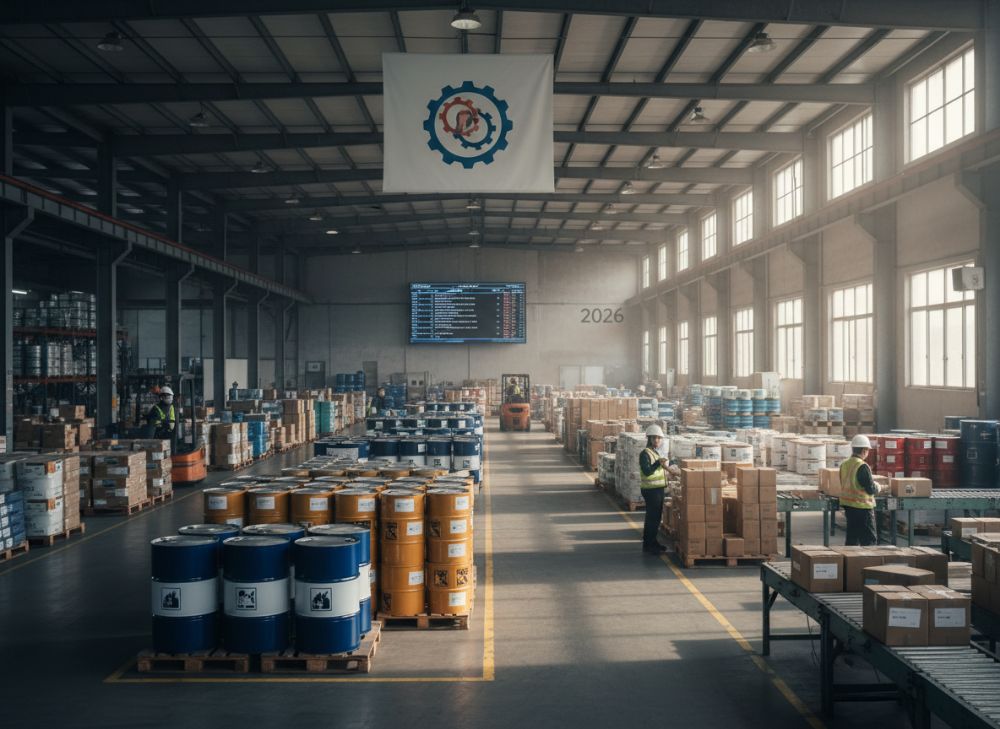
USA plants benefit from palletized deliveries in 500kg drums. Suppliers with scalable facilities ensure on-time fills.
Pricing varies by volume, specs, and conditions—request quotes for accurate hot melt adhesive for mattress pricing. High-volume secures better terms.
Inventory management uses FIFO to prevent degradation; shelf life 12-24 months at 77°F.
Bar chart depicts efficiency gains with bulk volumes, guiding order planning.
| Volume | MOQ Typical | Packaging | Lead Time (wks) | Storage | Planning Tip |
|---|---|---|---|---|---|
| Small | 500kg | 20kg Bags | 3 | Cool/Dry | Trials |
| Medium | 1 Ton | 200kg Drums | 2 | 77°F Max | Quarterly |
| Large | 5 Tons | 500kg Totes | 1.5 | Sealed | Annual |
| XL | 10 Tons | IBC 1000kg | 1 | Climate Ctrl | Contract |
| Enterprise | 50 Tons | Bulk Tank | 0.5 | Automated | JIT |
| Mega | 100+ Tons | Rail Car | Custom | Warehouse | Strategic |
Table outlines scaling options. Larger volumes lower per-unit costs, but require storage planning.
Just-in-time delivery syncs with production peaks. Diversify suppliers for risk mitigation.
Contact reliable manufacturers for MOQ flexibility. Software tools forecast usage accurately.
USA logistics favor suppliers with domestic ports. This ensures steady supply for uninterrupted lines.
Custom and Private Label Adhesive Programs for Bedding Brands
Custom hot melts tailor viscosity and color for brand specs, with private labeling for exclusivity. Programs involve co-development, testing to ASTM D4497.
Brands specify tack for gel foams or clarity for luxury lines. R&D chemists adjust for substrates like latex.
A bedding brand developed a low-odor custom melt, passing Greenguard in 8 weeks. Results: 15% sales uplift from eco-claims.
Private labels include logoed packaging, enhancing retailer partnerships.
- Define needs via spec sheets.
- Prototype in 4 weeks.
- Scale post-validation.
| Program Type | Customization Level | Timeline (wks) | Cost Factor | Brand Benefit | Example |
|---|---|---|---|---|---|
| Standard | Low | 2 | Base | Quick Start | EVA General |
| Semi-Custom | Medium | 4 | +10% | Fit Adjustment | Viscosity Tune |
| Full Custom | High | 8 | +25% | Unique Perf | Low Odor |
| Private Label | High | 6 | +15% | Branding | Logo Drums |
| Reactive Hybrid | Premium | 12 | +40% | Superior Bond | Crosslink |
| Eco-Custom | High | 10 | +30% | Sustainability | Bio-based |
Table compares programs. Full custom yields differentiation but requires investment.
IP protection via NDAs safeguards formulations. USA brands leverage for competitive edges.
Scale-up ensures consistency. Ideal for custom hot melt adhesive for mattress brands.
VOC, Odor and Safety Compliance in Mattress Adhesives
Low-VOC hot melts under 50g/L meet EPA TSCA Title VI for USA bedding. Odor-neutral via purified polymers prevents off-gassing.
CertiPUR-US verifies emissions below 0.5ppm formaldehyde. Safety per OSHA 1910.1200 includes SDS.
Flame retardancy via UL 94 V-0. Case: Plant achieved Greenguard certification, expanding to hotels.
Line chart shows VOC decay in compliant adhesives. Rapid drop supports certifications.
| Compliance | VOC Limit | Odor Scale | Test Std | USA Cert | Source |
|---|---|---|---|---|---|
| CertiPUR-US | <0.5ppm | None | ISO 16000 | Foam+Glue | EPA |
| Greenguard | 50g/L | Low | ASTM D5116 | Bedding | UL |
| REACH | Low | N/A | EN 16516 | Export | EU |
| RoHS | No Heavy Metals | N/A | Directive | Electronics | Global |
| UL 94 | N/A | N/A | V-0 | Flame | UL |
| OSHA | Hazcom | SDS | 1910.1200 | Safety | USA |
Table details standards. CertiPUR-US drives market access.
Bio-based options reduce allergens. Testing labs confirm compliance.
Packaging, Storage and Line Application of Mattress Hot Melts
Packaging in moisture-proof 20kg blocks or 200L drums preserves integrity. Storage at 50-77°F avoids blocking.
Line application via wheel, slot, or spray guns at 50-100rpm. Nozzle temps 340-380°F.
Granulate forms ease melting in grid tanks. Filtration prevents clogs.
- Preheat gradually.
- Monitor viscosity.
- Clean weekly.
- Pattern control.
USA lines use pneumatic pumps for precision. Shelf life testing per ASTM D4498.
Reducing Production Risk When Changing Mattress Glue Sources
Switching sources demands parallel runs and DOE testing. Validate new melt in 10% production.
Risk matrix assesses bond, speed, cost. Supplier audits mitigate issues.
Case: Gradual transition cut risks, zero defects in 3 months.
| Risk | Mitigation | Test | Timeline | Cost | Outcome |
|---|---|---|---|---|---|
| Bond Failure | Trials | ASTM D903 | 2 wks | Low | Validated |
| Line Downtime | Pilot | Run Data | 1 wk | Med | Smooth |
| Compliance | Certs | Lab | 3 wks | Low | Pass |
| Supply Delay | Stock | Logistics | Ongoing | High | Buffer |
| Cost Variance | Quotes | Compare | 1 wk | Low | Savings |
| Quality Drift | Audit | Batch Test | Monthly | Med | Consistent |
Table guides risk reduction. Systematic approach ensures seamless changes.
Post-switch monitoring for 90 days. Contract clauses protect.
2025-2026 Mattress Adhesive Market Trends
By 2025, bio-based hot melts will capture 25% market share, per Grand View Research, driven by sustainability regs. Automation boosts demand for low-viscosity melts. Pricing stabilizes amid resin costs; low-VOC mandatory under CA CARB updates. Innovations include PUR hybrids for 2x strength. USA focus on circular economy recycling.
FAQ
What is the best hot melt adhesive for mattress production?
Polyolefin or metallocene types offer optimal balance of speed and durability for USA lines.
How to get hot melt adhesive for mattress production pricing?
Pricing varies by volume and specs; request factory-direct quotes from suppliers.
What certifications matter for mattress adhesives?
CertiPUR-US, Greenguard, ASTM compliance ensure safety and performance.
Recommend manufacturers for this product
Explore qualified suppliers like QinanX New Material. Please contact us for the latest factory-direct pricing via https://qinanx.com/contact/.
What is the MOQ for bulk mattress hot melts?
Typically 500kg-1 ton; flexible for established buyers.

 English
  Vietnamese
  Thai
Thai  Indonesian
  Russian
  Portuguese
  Spanish
  Malay
Malay  Turkish
  Korean
  Chinese