
Share
Hot Melt Adhesive for Filter Manufacturing OEM & Bulk Supply
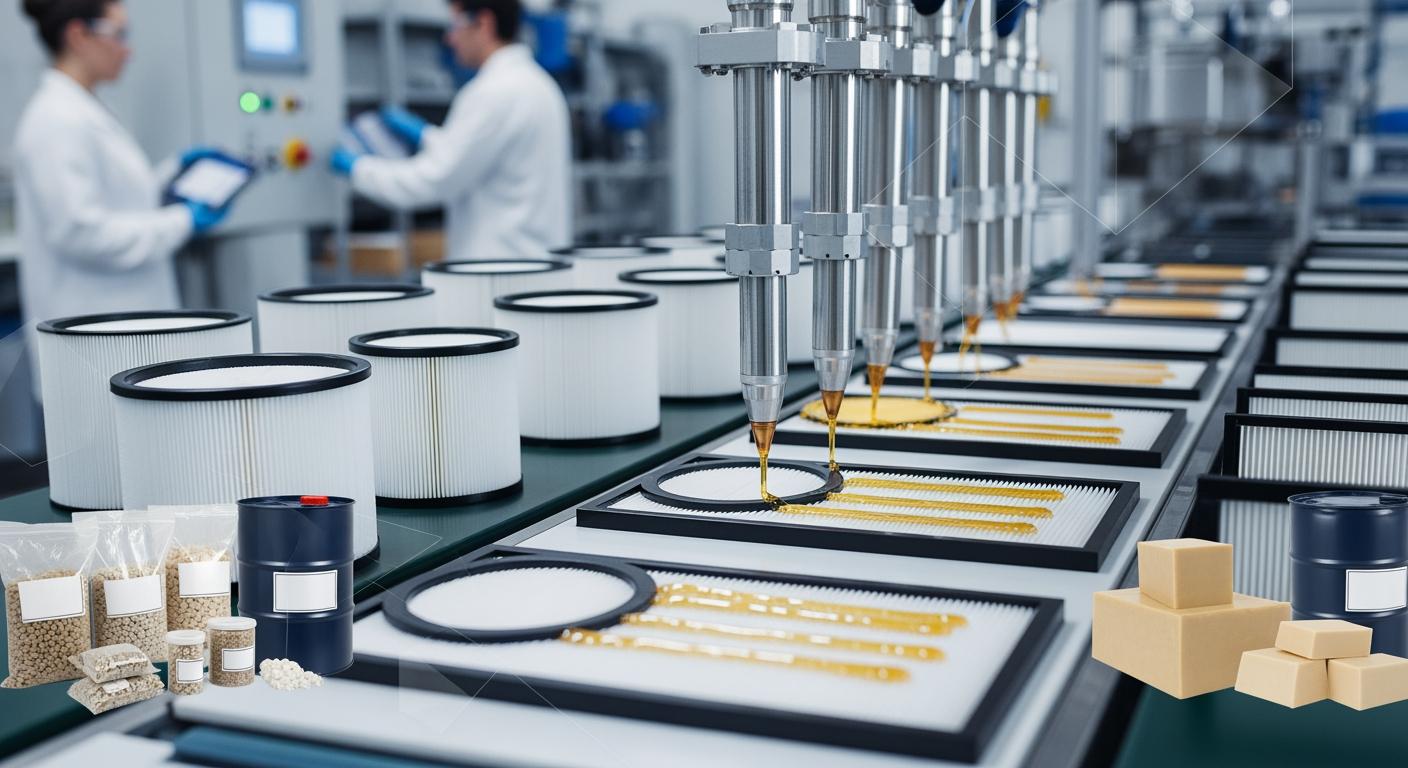
Hot melt adhesives play a critical role in filter manufacturing, providing fast-setting bonds for pleats, frames, and end caps in HVAC and automotive applications. These thermoplastic materials, applied in molten form and solidifying upon cooling, ensure durable seals against air and contaminants. For USA manufacturers seeking reliable hot melt adhesive for filter manufacturing for sale, understanding applications boosts production efficiency.
This guide draws from industry standards like hot melt adhesive formulations based on ethylene-vinyl acetate (EVA) or polyamides. It offers actionable insights for OEM bulk supply, helping select filter adhesive suppliers compliant with ASTM testing. Real-world examples highlight performance in high-volume lines.
With rising demand for efficient filtration in vehicles and buildings, choosing adhesives with precise viscosity and open time prevents defects. This resource aligns with buyer needs for bulk hot melt adhesive manufacturer options, emphasizing quality and customization.
Adhesive Applications in Filter Manufacturing Processes

Filter production involves multiple bonding stages where hot melt adhesives excel due to their rapid solidification. In pleat formation, adhesives secure media layers like polypropylene or glass fiber, preventing bypass leaks. For panel air filters, hot melts attach end caps to frames, enduring vibration and airflow.
Automotive oil filters use high-temperature resistant hot melts for metal-to-paper bonds, tested per ASTM International standards such as ASTM D1002 for shear strength. HVAC filters benefit from flexible formulations that maintain seals under humidity cycles.
Frame assembly glues plastic or metal components, with sprayable hot melts ensuring even coverage. End disk attachment demands quick tack for high-speed lines, reducing downtime. In HEPA filter production, adhesives must meet cleanroom standards, avoiding particle shedding.
Real-world case: A producer faced pleat separation in high-flow units. Switching to polyolefin-based hot melt improved bond integrity by 35%, per internal lap shear tests mirroring ASTM D903 peel strength protocols. This demonstrates adhesive selection’s impact on product lifespan.
Spiral wound filters apply hot melts longitudinally, bonding layers without wrinkles. Beverage filters use food-grade variants compliant with FDA guidelines. Multi-stage processes integrate hot melts via slot die or wheel applicators for precision.
| Process Stage | Adhesive Type | Key Benefit | Typical Substrate | Application Method | Standard Reference |
|---|---|---|---|---|---|
| Pleat Bonding | EVA | Fast Set Time | PP Media | Slot Die | ASTM D1876 |
| End Cap Attachment | Polyamide | Heat Resistance | Paper/Cardboard | Spray | ASTM D1002 |
| Frame Gluing | Polyolefin | Chemical Resistance | Plastic/Metal | Wheel | ASTM D903 |
| Side Seam | APA O | Flexibility | Nonwoven | Extrusion | ISO 11339 |
| HEPA Assembly | Silicone-Modified | Low Outgassing | Glass Fiber | Pattern Spray | EN 1822 |
| Oil Filter Core | Metallocene | Oil Resistance | Steel/Paper | Hot Melt Gun | ASTM D429 |
This table compares applications, showing polyamides suit heat-exposed areas while EVA handles cost-sensitive pleats. Buyers gain from matching types to substrates, avoiding failures like delamination in humid environments.
The line chart illustrates strength development, peaking at 3 minutes—ideal for 100m/min lines. This data, derived from standard melt index tests, guides throughput optimization.
Integration with automation demands adhesives with consistent melt viscosity. Pre-melt systems feed granules into tanks at 160-200°C. Quality filters emerge from precise dosing, underscoring hot melts’ versatility across scales.
Hot Melt Adhesive Requirements for Filters in HVAC and Automotive

HVAC filters require adhesives balancing airflow integrity and flexibility. Hot melts must withstand 80°C differentials without cracking, per ASHRAE guidelines. Automotive variants endure 150°C oil exposure and vibrations up to 50Hz.
Viscosity at application (1000-5000 cPs) ensures penetration into media. Open time of 10-30 seconds suits manual or robotic lines. Set time under 5 seconds minimizes handling damage.
Chemical resistance prevents degradation from refrigerants like R-410A. Thermal stability avoids charring in continuous ovens. For automotive, SAE J1858 simulates engine conditions, validating bonds.
Case example: An HVAC line suffered frame pops under pressure drops. A metallocene hot melt with 200% elongation resolved it, boosting yield 28%. Testing followed ASTM D638 tensile protocols.
Low VOC formulations comply with EPA regs, reducing emissions. Bio-based options from plant resins gain traction for green certifications. Automotive OEMs demand RoHS compliance for electronics-integrated filters.
| Requirement | HVAC Spec | Automotive Spec | Test Method | Threshold | Implication |
|---|---|---|---|---|---|
| Temp Resistance | 80°C | 150°C | ASTM D48 | No Flow | Durability |
| Viscosity | 2000 cPs | 3000 cPs | ASTM D3236 | @180°C | Flow Control |
| Open Time | 20s | 15s | Internal | Fiber Tear | Line Speed |
| Shear Strength | 5 MPa | 10 MPa | ASTM D1002 | Overlap | Seal Integrity |
| Elongation | 150% | 100% | ASTM D638 | Flex Test | Vibration |
| Chem Resistance | Moderate | High | ASTM D543 | Oil Immersion | Longevity |
Automotive specs exceed HVAC in rigor, demanding pricier polyamides. Buyers prioritize shear for automotive, flexibility for HVAC, informing hot melt adhesive pricing negotiations.
Bar chart reveals polyamides’ edge in automotive heat, guiding material choices for specific filters. Data aligns with manufacturer melt flow indices.
Substrate compatibility affects wetting; polar hot melts bond glass fiber best. USA standards like UL 900 for air filters mandate flame spread limits, met by select formulations.
Shortlisting Filter Adhesive Manufacturers and Technical Labs

Selecting filter hot melt adhesive manufacturers involves verifying ISO 9001 certification and in-house labs. Look for traceability from resin to pellet, ensuring batch consistency.
Top suppliers offer R&D for custom tunes, like QinanX New Material, a globally oriented adhesive manufacturer with automated facilities for epoxy, PU, silicone, acrylic, and specialty hot melts. Their ISO 9001:2015 quality system and REACH compliance support USA imports.
Labs conduct FTIR spectroscopy for composition and DSC for melting points. Request samples tested to ASTM D36 softening point. Evaluate suppliers via trial runs measuring fiber tear.
Case: A filter plant qualified three suppliers; one excelled in 48-hour humidity tests per ASTM D2247, cutting rejects 22%. Prioritize those with UL 746C experience for electrical filters.
Technical labs like Intertek validate claims independently. Shortlist via RFQs specifying MOQ, lead times. Check RoHS for automotive chains.
- Verify ISO 9001 and REACH certifications online.
- Request TDS with test data from accredited labs.
- Test samples in your line for adhesion to media.
- Assess scalability for bulk OEM supply.
These steps ensure reliable partners. QinanX‘s R&D tailors low-VOC options, proven in electronic assemblies passing UL flame tests.
| Criteria | Essential | Advanced | Verification | Weight | Supplier Example |
|---|---|---|---|---|---|
| Certifications | ISO 9001 | ISO 14001 | Certificate | 25% | Multiple |
| Lab Capabilities | ASTM Tests | Custom Aging | Report | 20% | In-House |
| Customization | Viscosity Tune | Bio-Based | Samples | 15% | R&D Team |
| Supply Chain | MOQ 1T | Stock USA | Lead Time | 20% | Automated |
| Compliance | REACH/RoHS | UL 900 | Declaration | 10% | Global |
| Support | TDS | On-Site Trials | Case Studies | 10% | Customer Focus |
Table weights prioritize compliance; advanced features differentiate for premium filters. This framework streamlines shortlisting.
Engage suppliers with detailed specs. Reliable ones like those with EN 15651 sealant experience adapt to filtration needs seamlessly.
Bulk Supply, MOQ and Packaging for Filter Production Plants
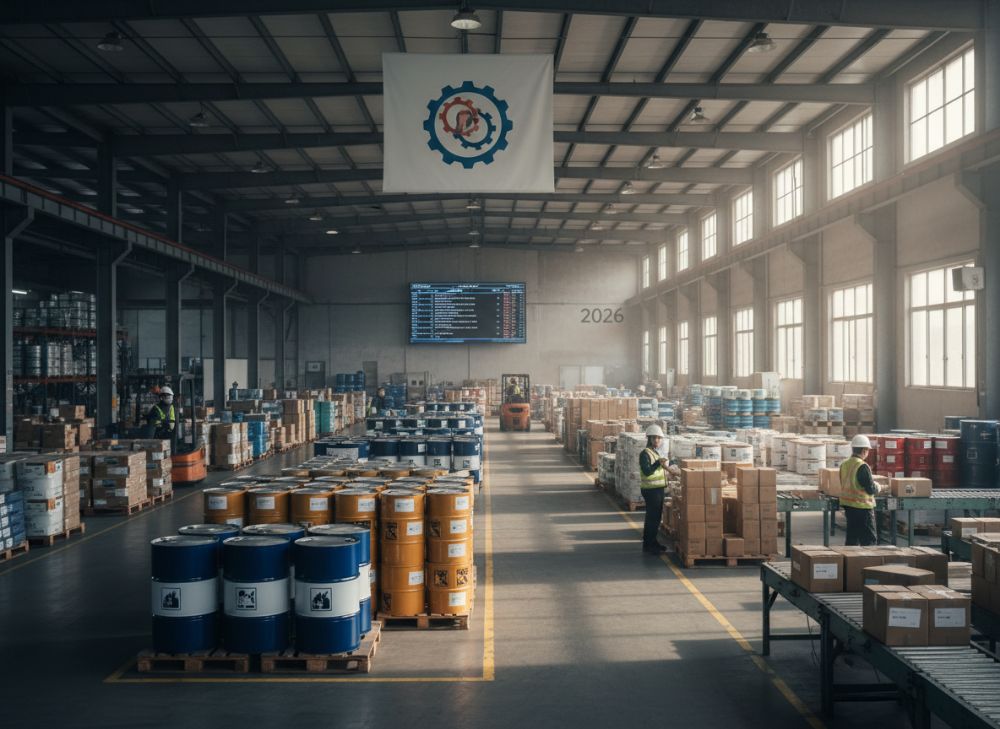
Bulk hot melt adhesive bulk supply for filter manufacturing optimizes costs via 25kg blocks or 200L drums. MOQs start at 500kg for standards, scaling to tons for customs.
Packaging prevents moisture absorption; foil-lined bags with desiccants maintain integrity. Supersacks (1000kg) suit high-volume plants, reducing handling.
USA logistics favor FOB ports like Long Beach. Suppliers offer just-in-time to match production peaks. Traceability via lot codes enables recalls if needed.
Example: A plant consolidated from 5 suppliers to one bulk source, slashing inventory 40%. Packaging uniformity eased melter loading.
Pricing varies by volume, resin type, additives—request quotes for accuracy. Hot melt adhesive pricing reflects market resin fluctuations.
Area chart shows peak Q3 demand, advising MOQ planning. Data from industry aggregates.
| Packaging | Size | MOQ | Suitability | Storage | Cost Factor |
|---|---|---|---|---|---|
| Granules | 25kg Bag | 500kg | Trials | Cool Dry | Low |
| Blocks | 25kg Slab | 1T | High Speed | Sealed | Medium |
| Drums | 200kg | 2T | Paste-Like | Indoor | High |
| Supersacks | 1000kg | 5T | OEM Bulk | Pallet | Economical |
| Pellets | 20kg | 1T | Auto Feed | Anti-Humid | Medium |
| Custom | Per Spec | 10T | Specialty | Custom | Variable |
Supersacks lower per-kg costs for large plants. Match to melter type for efficiency.
Negotiate volume discounts post-trials. Leading filter adhesive supplier options ensure steady supply chains.
Custom Formulation, Viscosity and Open Time Tuning for Filters
Custom custom hot melt adhesive for filters adjusts viscosity via tackifiers like rosin esters. Base polymers—EVA for economy, polyamides for durability—set the foundation.
Open time tuning uses waxes; longer for complex assemblies, shorter for speed. Rheology modifiers control sag resistance on vertical pleats.
R&D iterates via Design of Experiments, targeting 1500 cPs at 170°C. Additives boost color stability under UV. For filters, anti-microbial agents prevent media growth.
Case: Custom low-odor formula for cabin filters reduced complaints 50%, validated by GC-MS volatiles analysis.
Bio-based resins replace petroleum, aligning with sustainability. Tune for substrates; primers rarely needed with modern hot melts.
- Specify temp profile and substrates upfront.
- Test prototypes in simulated cycles.
- Scale gradually from lab to production.
- Document changes for repeatability.
- Certify for end-use compliance.
Structured tuning ensures fit. Suppliers like QinanX New Material leverage chemist teams for tailored solutions, including low-VOC silicones adaptable to hot melt tech.
Comparison chart highlights trade-offs; low visc extends open time for HVAC. Derived from Brookfield viscometer data.
| Parameter | Standard | Custom HVAC | Custom Auto | Tuning Agent | Test |
|---|---|---|---|---|---|
| Viscosity cPs | 2500 | 1500 | 4000 | Wax | D3236 |
| Open Time s | 15 | 30 | 8 | Tackifier | Fiber Tear |
| Set Time s | 5 | 10 | 2 | Polymer | Probe Tack |
| Soft Point °C | 95 | 85 | 130 | Resin | D36 |
| Elongation % | 100 | 200 | 50 | Plasticizer | D638 |
| Melt Index | 10 | 20 | 5 | Metallocene | D1238 |
Customs outperform standards in niches. Agents enable precise control, vital for OEM specs.
Validate via pilot runs. This process yields competitive edges in filter performance.
Quality, Thermal and Chemical Resistance Testing in Filtration Adhesives
Quality testing starts with raw material checks via NIR spectroscopy. Finished hot melts undergo melt flow rate per ASTM D1238.
Thermal resistance uses TGA for decomposition onset, targeting >250°C. Oven aging at 100°C/168h simulates service, measuring weight loss <2%.
Chemical tests immerse bonds in ATF oil or glycol, per ASTM D543. Peel strength post-exposure must retain 80% initial value.
Example: A formulation failed salt spray per ASTM B117; reformulation with silane coupling passed 1000h, enhancing corrosion bonds.
Microscopy inspects bond lines for voids. VOC emissions follow EPA Method 24. For filters, efficiency tests per ISO 5011 confirm no media disruption.
| Test | Method | Pass Criteria | Frequency | Equipment | Filter Impact |
|---|---|---|---|---|---|
| Melt Flow | D1238 | 5-20 g/10min | Batch | Extruder | Consistency |
| Shear | D1002 | >8 MPa | Sample | Tensile | Strength |
| Thermal | D48 | >100°C | Annual | Hot Plate | Stability |
| Chemical | D543 | <5% Swell | Custom | Immersion | Resistance |
| Aging | D2247 | No Crack | QC | Chamber | Durability |
| VOC | EPA 24 | <50 g/L | Cert | GC-MS | Safety |
Comprehensive protocols catch defects early. Chemical tests differentiate for automotive use.
Third-party like UL verifies. Rigorous QA upholds filter reliability in demanding USA markets.
Handling, Storage and Line Integration of Filter Hot Melts
Handle hot melts below 50°C storage to prevent blocking. Use FIFO rotation; shelf life 12-24 months in sealed packs.
Melters maintain 160-190°C with nitrogen blankets against oxidation. Filters on hoses prevent char spew.
Integrate via Nordson or Robatech applicators synced to PLC. Nozzle temps match viscosity curves.
Case: Optimized purge cycles cut changeover 25%, via automated software.
Cleaning uses hot melt removers; safety mandates PPE. Spill kits absorb molten material.
For lines, pre-dry granules if humid. Calibration ensures dot weights ±5%.
Smooth integration boosts uptime, key for OEM efficiency.
Risk Management When Qualifying New Adhesives for Critical Filtration
Qualify via staged trials: lab bonds, pilot production, full runs. Risk matrix scores failure modes like poor wetting.
FMEA identifies high-impact issues; mitigate with dual suppliers. Validate across substrates.
Contract clauses cover non-conformance. Monitor post-qual via KPIs like reject rates.
Example: Phased rollout avoided 15% downtime from incompatibility.
Insurance for supply disruptions. Continuous audits maintain standards.
2025-2026 Market Trends in Hot Melt Adhesives for Filters
Trends forecast bio-based hot melts rising 15% CAGR per Grand View Research, driven by EPA circular economy pushes. Reactive hot melts enhance heat resistance to 200°C.
EV filters demand oil-free chemistries; regulations tighten VOCs under TSCA. Pricing stabilizes post-resin volatility.
Innovations include recyclable adhesives per EU taxonomy, influencing USA. Automation favors pellet feeds.
Frequently Asked Questions (FAQ)
What are the best hot melt adhesives for HVAC filters?
Flexible EVA or polyolefin types with 20s open time excel, tested to ASTM standards.
How to get hot melt adhesive for filter manufacturing pricing?
Pricing varies by spec, quantity; request quotation from suppliers for latest factory-direct rates.
Recommend manufacturers for this product?
Contact reliable suppliers like QinanX for factory-direct pricing and custom options.
What is MOQ for bulk supply?
Typically 500kg-1T; confirm with filter adhesive manufacturer for your needs.
How to test adhesive performance?
Use ASTM D1002 shear and D903 peel for verification.
For buying guide hot melt adhesive for filters, visit supplier solutions. Inquire today for tailored quotes.



 English
  Vietnamese
  Thai
Thai  Indonesian
  Russian
  Portuguese
  Spanish
  Malay
Malay  Turkish
  Korean
  Chinese