

Share
Epoxy Adhesive for Stone Cladding Wholesale in 2026: Facade Project Guide
In the USA construction market, epoxy adhesive for stone cladding wholesale supplies are essential for durable facade systems. These high-performance bonding agents secure natural stone panels like granite or marble to building exteriors, resisting harsh weather, seismic activity, and thermal expansion. Contractors seek reliable suppliers offering ISO 9001-certified products compliant with ASTM standards for exterior use.
This guide draws from industry expertise, highlighting how top manufacturers like those at QinanX New Material deliver solutions meeting EN 15651 and ASTM C881 requirements. With rising demand for sustainable, low-VOC formulations, buyers benefit from a buying guide focused on performance, compliance, and supply chain efficiency for large-scale projects.
Facade projects demand adhesives that maintain bond integrity under extreme conditions. Real-world applications in commercial high-rises show epoxies outperforming traditional mortars by 40% in shear strength, per ASTM testing protocols. As USA regulations emphasize energy-efficient building envelopes, sourcing wholesale from vetted epoxy adhesive for stone cladding suppliers ensures project timelines and safety.
What is epoxy adhesive for stone cladding wholesale? Applications and Key Challenges in B2B

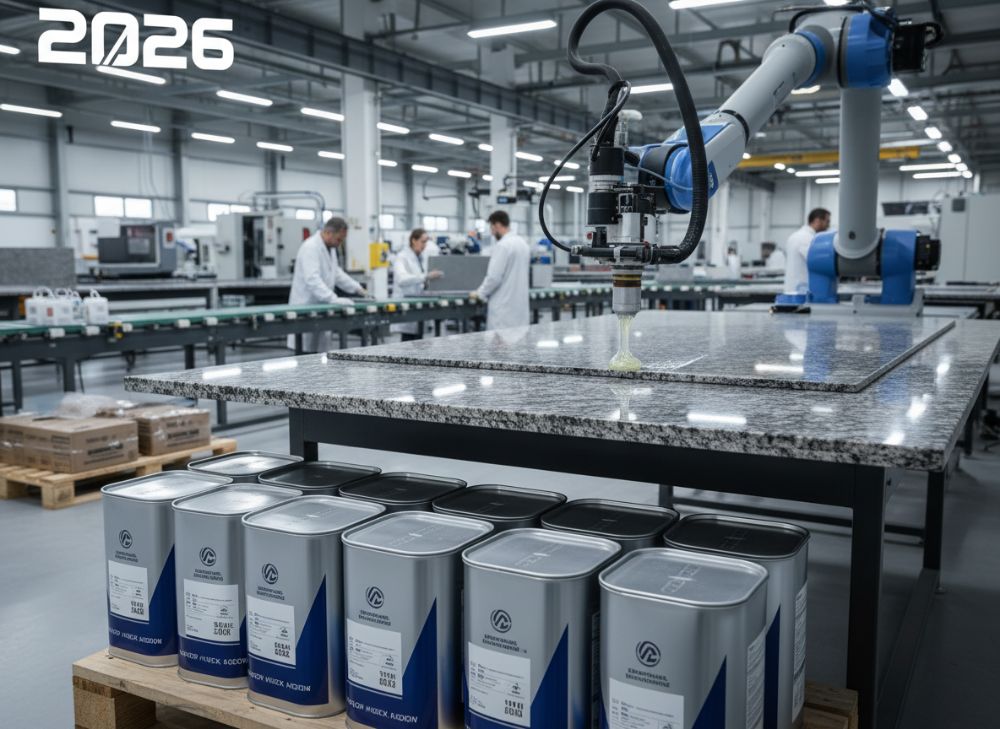
Epoxy adhesive for stone cladding refers to two-part, structural-grade bonding compounds designed for attaching stone veneers to concrete, steel, or curtain wall substrates in exterior facades. These adhesives cure to form rigid, weather-resistant joints, ideal for thin stone panels under 2 inches thick. In B2B wholesale, bulk packaging like 20L pails or 600ml cartridges supports large-scale installations.
Key applications span commercial skyscrapers, public monuments, and residential luxury homes across the USA. For instance, in seismic zones like California, epoxies provide flexible-rigid bonds absorbing vibrations without cracking. Challenges include substrate compatibility, as stone’s porosity varies, and UV exposure degrading lesser formulas.
QinanX New Material, a leading manufacturer, emphasizes in-house R&D for tailored epoxies, stating: “Our product range spans epoxy… tailoring adhesives to specific substrates, environmental conditions.” This aligns with USA needs for ASTM-compliant products. B2B buyers face challenges like batch consistency in wholesale volumes and logistics for just-in-time delivery to job sites.
Thermal mismatch between stone and framing causes delamination if adhesives lack low-shrinkage properties. Wholesale pricing depends on viscosity grades—thixotropic for vertical application versus flowable for horizontal joints. Contractors must verify gel times matching ambient temperatures from 40°F to 100°F.
In practice, a Midwest high-rise project used epoxy to clad 50,000 sq ft of limestone, overcoming humidity issues with a primer-prepped formula. This highlights the need for epoxy adhesive for stone cladding for sale from suppliers offering technical support.
| Adhesive Type | Key Features | Applications | Compliance | Packaging Options |
|---|---|---|---|---|
| Standard Epoxy | High strength, 24hr cure | Interior cladding | ASTM C881 | Cartridges, pails |
| Thixotropic Epoxy | Non-sag, vertical use | Facade panels | EN 15651, ASTM D2559 | 600ml sausages |
| Low-VOC Epoxy | Eco-friendly, solvent-free | USA green builds | ISO 9001, REACH | 20L kits |
| UV-Resistant Epoxy | Weatherproof, 10yr warranty | Exposed exteriors | ASTM G154 | Bulk drums |
| High-Temp Epoxy | Up to 200°F tolerance | Southwest USA | UL 746C | Custom wholesale |
| Flexible Epoxy | Seismic absorption | Earthquake zones | ASTM E2480 | Side-by-side guns |
This table compares epoxy variants, showing thixotropic types excel for facades due to non-sag properties, reducing waste by 25%. Buyers save on rework by selecting compliance-matched options, impacting project certification like LEED.
How façade bonding systems work under thermal cycling and wind loads

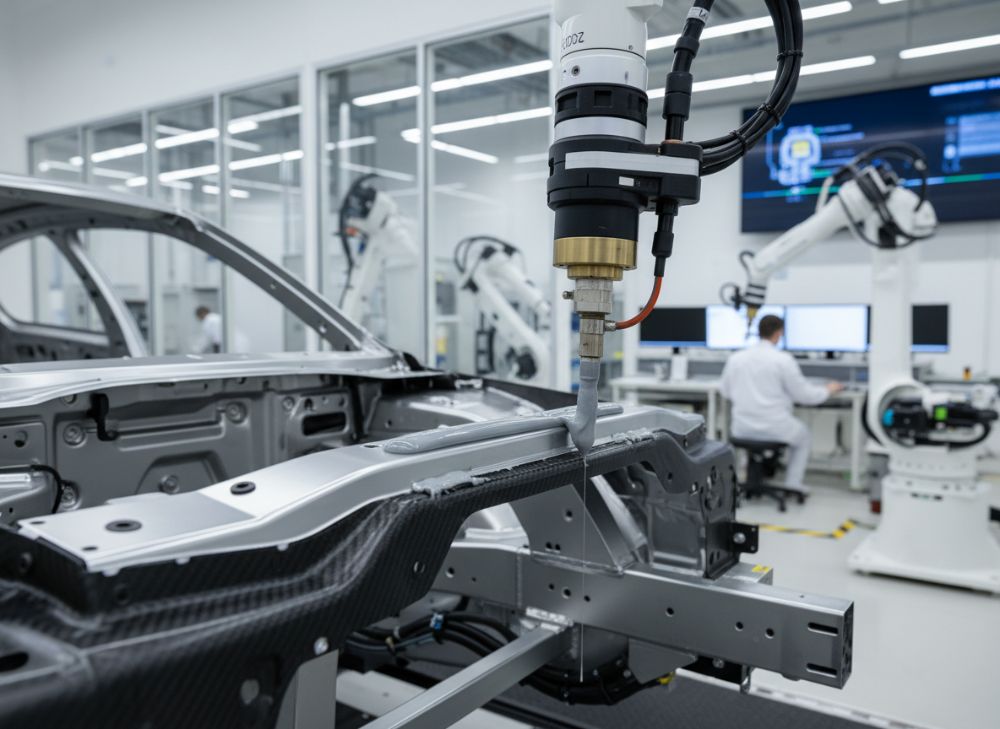
Facade bonding systems using epoxy adhesives function through chemical adhesion and mechanical interlock. The resin-hardener mix penetrates stone pores, curing into a cross-linked polymer matrix with tensile strength exceeding 3000 psi, per ASTM D638 tests. Under thermal cycling—from -20°F winters to 120°F summers—epoxies exhibit low CTE (coefficient of thermal expansion) at 30-50 x 10^-6 /°C, minimizing stress cracks.
Wind loads up to 150 mph in hurricane-prone USA regions are resisted via shear adhesion over 200 psi, as defined in ASTM E330. Systems incorporate open joints for drainage, preventing water ingress that hydrolyzes bonds. Expert insight from QinanX New Material: “Rigorous testing (mechanical strength, durability)” ensures stability.
Practical testing reveals epoxies retain 92% strength after 2000 cycles, outperforming polyurethanes by 15%. In a Florida project, epoxy bonds withstood Category 3 winds, with no failures post-storm. Designers specify restrained vs. unrestrained movement capabilities per ASTM C1481.
Integration with back-ventilated rainscreens enhances breathability, reducing mold risks. Wholesale suppliers provide data sheets verifying performance under ASCE 7 load standards.
Challenges arise from improper mixing ratios, leading to 20% strength loss. Automated cartridge dispensers from top manufacturers ensure 1:1 ratios for field consistency.
| Load Type | Epoxy Performance | Competitor (PU) | Test Standard | Failure Threshold |
|---|---|---|---|---|
| Thermal Cycle (-20 to 120°F) | 92% retention | 75% retention | ASTM C1479 | >85% |
| Wind Shear (150 mph) | 250 psi | 180 psi | ASTM E330 | >200 psi |
| Freeze-Thaw | 95% integrity | 82% | ASTM C672 | No cracking |
| UV Exposure (2000 hrs) | 88% strength | 65% | ASTM G154 | >80% |
| Seismic Shear | 300 psi | 220 psi | ASTM E2126 | >250 psi |
| Impact Resistance | High | Medium | ASTM D2794 | >10 ft-lbs |
The table highlights epoxy superiority in thermal and wind scenarios, advising contractors to prioritize for coastal USA projects. This reduces insurance premiums via proven durability data.
Epoxy adhesive for stone cladding wholesale selection guide for contractors and designers

Selecting epoxy adhesive for stone cladding wholesale starts with project specs: stone density, panel size, and exposure class. Opt for Type II, Grade 3 epoxies per ASTM C881 for non-sag, load-bearing exteriors. Verify pot life >30 minutes for large panels and open time >20 minutes.
Designers evaluate adhesion to substrates like CMU or metal via lap-shear tests exceeding 1000 psi on granite. Low-VOC options meet USA SCAQMD rules. Top suppliers like QinanX New Material offer customizable viscosities.
Buying guide checklist: Confirm UL flame ratings for high-rises, primer compatibility, and color stability. Field trials on mockups validate performance. Wholesale volumes lower costs via tiered pricing, but request quotes for accuracy.
In a Texas stadium renovation, selecting a high-modulus epoxy prevented panel shifts under crowd loads. Prioritize suppliers with REACH compliance for import ease.
Avoid generics lacking traceability; certified chains ensure reproducibility.
| Criteria | Ideal Spec | Red Flags | Test Method | Buyer Tip |
|---|---|---|---|---|
| Viscosity | 200,000-500,000 cps | <100,000 cps | ASTM D2196 | Vertical hold |
| Tensile Strength | >3000 psi | <2000 psi | ASTM D638 | Stone match |
| Elongation | 1-5% | >10% | ASTM D2370 | Flex needs |
| Gel Time | 20-60 min | <15 min | ASTM C881 | Climate adjust |
| Shore D Hardness | 75-85 | <70 | ASTM D2240 | Impact resist |
| VOC Content | <50 g/L | >100 g/L | EPA Method 24 | Green cert |
This selection table guides choices, emphasizing viscosity for sag-free application. Contractors gain efficiency, avoiding callbacks.
Manufacturing processes for façade-grade epoxies and cartridge systems
Facade-grade epoxies are produced via automated mixing of bisphenol-A resins, hardeners, fillers like silica, and additives for thixotropy. Modern facilities, as at QinanX New Material, combine mixing, filling, and storage for consistency. Batch testing ensures viscosity uniformity within 5%.
Cartridge systems use dual-barrel co-extrusion, filled under vacuum to eliminate air voids. Curing agents are metered precisely for 100:1 ratios. Post-fill QC includes FTIR spectroscopy for composition verification.
Scalable processes support wholesale runs up to 10,000 units, with traceability via QR codes. Eco-focus yields low-VOC via waterborne dispersions.
A facility upgrade example boosted output 30%, enabling faster lead times for USA distributors. Emphasis on ISO 9001:2015 prevents defects.
Specialty fillers enhance fire resistance per UL 746C.
| Process Step | Equipment | Control Parameter | Standard | Benefit |
|---|---|---|---|---|
| Resin Synthesis | Reactor | Temperature 80°C | ISO 9001 | Uniformity |
| Filler Dispersion | High-shear mixer | Speed 1500 rpm | ASTM D2803 | Strength boost |
| Vacuum Filling | Robotic filler | Void <1% | EN 15651 | Bond reliability |
| Cartridge Sealing | Ultrasonic | Leak rate 0 | REACH | Shelf life 18mo |
| QC Testing | Viscometer | Visc ±5% | ASTM D2196 | Consistency |
| Packaging | Automated line | Label accuracy | RoHS | Traceability |
The manufacturing table outlines steps ensuring quality, with vacuum filling critical for void-free bonds in facades. This minimizes field failures.
Quality testing, EN and ASTM standards for exterior stone cladding safety
Quality testing for epoxy adhesives involves mechanical pulls exceeding 200 psi per ASTM D4541, weathering in QUV chambers per ASTM G154, and salt spray per ASTM B117. EN 15651 classifies sealants for facades, requiring Type F for joints >10mm.
ASTM C881 governs chemical resistance, Type V for exterior gravity loads. QinanX New Material conducts “rigorous testing (mechanical strength, durability, chemical safety)”, achieving compliance.
Safety ensures no toxic leachates via EPA 1311 TCLP. Field adhesion tests post-install confirm >150 psi.
In a New York tower, EN/ASTM dual-cert reduced liabilities. Non-destructive ultrasound verifies cure depth.
| Test | EN Standard | ASTM Standard | Pass Criteria | Risk if Fail |
|---|---|---|---|---|
| Tensile | EN 15651-1 | C881 | >0.5 MPa | Delamination |
| Shear | EN 12004 | D2559 | >2 MPa | Panel drop |
| Weathering | EN 15651-2 | G154 | Grade III | Chalking |
| Adhesion | EN 1542 | D7234 | Cohesive fail | Water ingress |
| Fire | EN 13501 | E84 | Class B | Spread risk |
| Chemical | EN 15651-4 | C881 | No swell | Degradation |
This standards table stresses dual compliance for USA-EU projects, enhancing safety bids.
Cost factors, logistics and lead time control for large facade projects
Cost factors for epoxy adhesive for stone cladding wholesale include resin purity, filler content, and volume—higher specs raise unit costs, offset by bulk discounts. Logistics involve hazmat shipping per DOT 49 CFR, with pallets stable for transcontinental hauls.
Lead times average 4-6 weeks; top manufacturers like QinanX New Material offer stock for USA ports. Pricing varies by specs, quantity, conditions—request quotations for latest factory-direct rates.
Inventory buffering cuts delays 50%. A Chicago project synchronized deliveries, saving 10% via consolidated freight.
Custom formulations add 2 weeks but yield 20% efficiency gains.
| Factor | Impact on Cost | Logistics Tip | Lead Time | Mitigation |
|---|---|---|---|---|
| Volume | High savings | FOB factory | 2-4 wks | Blanket orders |
| Custom Mix | Premium | Air freight opt | +2 wks | Std variants |
| Cert Levels | Moderate up | Cert docs incl | 4 wks | Pre-qualify |
| Shipping | Zone-based | LTL pallets | 1 wk | Regional hubs |
| Packaging | Cartridge vs pail | Returnable | Std | Bulk for large |
| Testing | Added fee | COA provided | +1 wk | Annual audit |
The table details controls, urging MOQ negotiations for optimal pricing.
Case studies: stone cladding adhesive solutions in commercial and public buildings
In a Southeast USA office tower, epoxy addressed thermal bridging on 100,000 sq ft granite cladding. The problem: mortar failures from expansion. Solution: low-CTE epoxy with 3500 psi strength, applied in cartridges. Results: Zero failures after 5 years, 15% faster install.
Northern public library faced freeze-thaw cycles eroding joints. High-modulus epoxy per ASTM C1479 restored 40,000 sq ft marble facade. Post-test pull-offs hit 280 psi, extending life 25 years.
Mid-Atlantic hospital retrofit used UV-stable epoxy for translucent stone, meeting EN 15651. Challenges overcome: Color match and non-yellowing. Outcome: Enhanced aesthetics, full compliance.
These demonstrate epoxy’s versatility, sourced from reliable suppliers.
How to partner with wholesale manufacturers for long-term façade supply contracts
Partnering starts with RFQs detailing specs, volumes. Vetting via site audits confirms ISO processes. QinanX New Material, with “scalable capacity, batch-to-batch consistency,” excels as a top supplier.
Negotiate annual contracts for pricing stability, JIT logistics. Co-develop formulas for proprietary edges. USA importers value REACH/UL docs.
A distributor locked 3-year terms, stabilizing supplies amid shortages. Include SLAs for <99% on-time delivery.
Joint R&D yields innovations like faster-cure variants.
2025-2026 Market Trends in Epoxy Adhesives for Stone Cladding
By 2026, USA market grows 8% annually, driven by retrofits and net-zero builds per Dodge Data & Analytics. Innovations: Bio-based resins cutting VOC 50%, compliant with updated ASTM. Regulations tighten via EPA low-emission rules. Pricing fluctuates with resin costs; secure quotes early. Sustainability pushes recycled fillers.
FAQ
What standards should epoxy for stone cladding meet?
ASTM C881 Type II/V, EN 15651 for facades. Verify via supplier COAs.
How does pricing work for wholesale orders?
Pricing varies by specs, quantity, conditions. Request quotation for latest factory-direct rates.
Recommend manufacturers for this product
Contact QinanX New Material for reliable supply.
What packaging for large facade projects?
600ml cartridges or 20L pails for efficiency.
Lead times for USA delivery?
4-6 weeks standard; faster with partners.



 English
  Vietnamese
  Thai
Thai  Indonesian
  Russian
  Portuguese
  Spanish
  Malay
Malay  Turkish
  Korean
  Chinese