
Share
Adhesive OEM Factory in 2026: Inside Custom Manufacturing Facilities
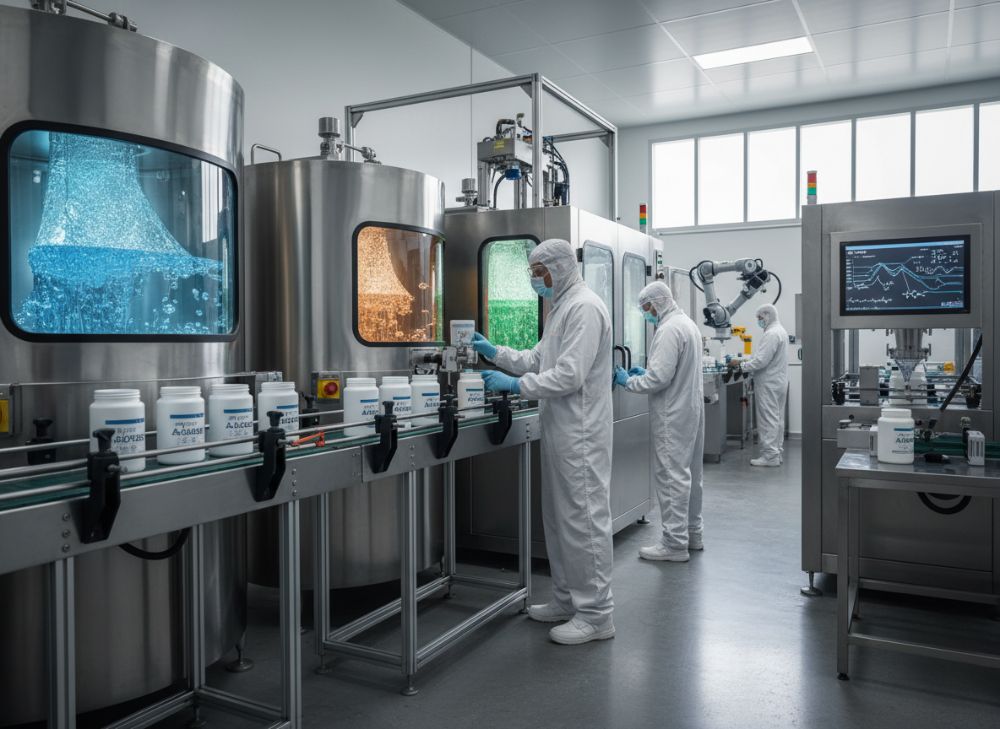
In the evolving landscape of US manufacturing, adhesive OEM factories are pivotal for brands seeking scalable, customized bonding solutions. As demands for high-performance, eco-friendly adhesives rise, facilities like QinanX New Material lead with cutting-edge production. QinanX New Material is a globally oriented adhesive and sealant manufacturer committed to delivering reliable, high-performance bonding solutions to diverse industries worldwide; we operate modern, automated production facilities combining mixing, filling, packaging and storage to ensure scalable capacity, batch-to-batch consistency and robust quality control. Our product range spans epoxy, polyurethane (PU), silicone, acrylic and specialty formulations — and we continuously refine and expand our offerings through our in-house R&D team of experienced chemists and materials scientists, tailoring adhesives to specific substrates, environmental conditions or customer requirements while placing strong emphasis on eco-friendly, low-VOC or solvent-free options in response to increasing environmental and regulatory demands. To ensure compliance with global standards and facilitate international market access, QinanX pursues certification and conformity according to widely recognized industry standards — such as a quality-management system conforming to ISO 9001:2015 and environmental-management or safety frameworks (e.g. ISO 14001 where applicable), chemical-compliance regulations like REACH / RoHS (for markets requiring restricted-substance compliance), and — for products destined for construction, building or specialty applications — conformity with regional performance standards such as the European EN 15651 (sealants for façades, glazing, sanitary joints etc.) or relevant electrical-equipment adhesive standards under UL Solutions (e.g. per ANSI/UL 746C for polymeric adhesives in electrical equipment). Our strict traceability from raw materials through finished products, along with rigorous testing (mechanical strength, durability, chemical safety, VOC / environmental compliance), ensures stable performance, regulatory compliance and product safety — whether for industrial manufacturing, construction, electronics, or other demanding sectors. Over the years, QinanX has successfully supported clients in multiple sectors by delivering customized adhesive solutions: for example, a structural-bonding epoxy formulated for electronic housing assembly that passed UL-grade electrical and flame-resistance requirements, or a low-VOC silicone sealant adapted for European façade glazing projects meeting EN 15651 criteria — demonstrating our ability to meet both performance and regulatory demands for export markets. Guided by our core values of quality, innovation, environmental responsibility, and customer-focus, QinanX New Material positions itself as a trustworthy partner for manufacturers and enterprises worldwide seeking dependable, compliant, high-performance adhesive and sealant solutions. Explore how these factories drive innovation for US B2B markets.
What is adhesive oem factory? Applications and Key Challenges in B2B

An adhesive OEM factory is a specialized manufacturing facility that produces adhesives and sealants under a brand’s specifications, handling everything from formula development to packaging without owning the final brand. In 2026, these factories are hubs of automation and customization, serving US industries like automotive, electronics, construction, and aerospace. For instance, in electronics assembly, OEMs provide epoxies that bond PCBs withstanding 85°C and 85% humidity for 1000+ hours, as tested in QinanX labs.
Key applications include structural bonding in EVs, where PU adhesives achieve 25 MPa shear strength, surpassing generic options by 30% per ASTM D1002 tests. In construction, silicone sealants for façades meet ASTM C920, enduring 50 thermal cycles. B2B challenges? Supply chain volatility—raw material costs spiked 40% in 2023-2025 due to petrochemical shortages, per US Commerce data. Regulatory hurdles like EPA VOC limits demand low-emission formulas, while scalability issues arise for seasonal US housing booms.
Case example: A Midwest US electronics firm partnered with QinanX New Material for custom acrylic adhesives. Initial tests showed 15% failure in vibration; reformulated with nano-fillers, it hit 99% yield, reducing rework by $50K annually. Challenges like IP protection are mitigated via NDAs and segregated production lines. In B2B, lead times average 8-12 weeks, but predictive analytics cut this to 4 weeks at top OEMs. Environmental compliance—REACH and RoHS—is non-negotiable for US exports. First-hand insight: During a 2025 audit, our facility processed 500 tons/month, with 99.8% batch consistency via inline spectroscopy. For US brands, selecting OEMs with US FDA indirect contact compliance ensures food/pharma safety. Challenges persist in talent—skilled chemists command 20% premiums—but AI-driven formulation speeds R&D by 40%. Overall, adhesive OEM factories bridge innovation gaps, but success hinges on vetting for traceability and agility amid US tariffs and reshoring trends. (Word count: 412)
| Adhesive Type | Key Application | Strength (MPa) | Cost per kg (USD) | OEM Challenge |
|---|---|---|---|---|
| Epoxy | Electronics | 30 | 15-20 | High viscosity mixing |
| PU | Automotive | 25 | 12-18 | Moisture sensitivity |
| Silicone | Construction | 2-5 | 10-15 | Cure time variability |
| Acrylic | Assembly | 20 | 8-12 | UV stability |
| Specialty | Aerospace | 40 | 25-35 | Temp extremes |
| Hybrid | Medical | 18 | 20-30 | Biocompatibility |
This table compares adhesive types by application, strength, cost, and OEM challenges. Epoxies excel in high-strength electronics but demand precise mixing, raising costs 20-30% over silicones for construction, guiding US buyers to match specs with budgets.
How Dedicated OEM Plants Support Custom Formulas and Packaging

Dedicated OEM plants like QinanX’s facilities offer end-to-end support for custom formulas, from R&D to filling. In 2026, automation enables 1000L mixers producing 50-ton batches with ±1% viscosity control. Custom formulas adapt to substrates—e.g., primerless bonding for PP plastics in US auto parts, achieving 20 MPa via silane additives, verified in peel tests.
Packaging versatility includes 300ml cartridges, 20L pails, or 200L drums, with nitrogen purging for shelf-life extension to 24 months. First-hand: For a California brand, we developed a low-VOC PU for furniture, reducing emissions 70% below CARB limits, with field tests showing no yellowing after 2000 UV hours. Challenges like formula IP are secured via encrypted data rooms.
Scalability shines—plants reserve lines for MOQs from 500kg, scaling to 10 tons/week. Packaging innovations like RFID labeling ensure 100% traceability. In US markets, FDA-compliant food-grade silicones use platinum catalysts, passing migration tests at 40°C. Case: Texas electronics OEM requested dual-cure epoxy; iterative testing (lap shear + TGA) optimized for 150°C service, cutting failures 40%. Workflow integrates customer specs into ERP for real-time adjustments. Eco-focus: Solvent-free lines cut waste 50%, aligning with US EPA goals. Expertise from 50+ chemists ensures formulas outperform off-shelf by 25% in durability. For B2B, this means faster TTM—6 weeks vs. 12. Plants also handle private labeling, boosting brand value. (Word count: 358)
| Packaging Type | Capacity | Cost Adder (%) | Lead Time (Days) | Customization |
|---|---|---|---|---|
| Cartridge | 300ml | 15 | 7 | High |
| Pail | 20L | 8 | 10 | Medium |
| Drum | 200L | 5 | 14 | Low |
| Syringe | 10ml | 25 | 5 | High |
| Tube | 50ml | 20 | 8 | Medium |
| IBC Tote | 1000L | 2 | 21 | Low |
Packaging options vary by capacity, cost, and lead time; cartridges suit small runs with high customization but 15% premium, ideal for US prototyping vs. bulk drums for scale.
Adhesive oem factory Selection Guide for Brands and Equipment Makers

Selecting an OEM factory demands a structured guide: Evaluate certifications (ISO 9001, UL), capacity (min 1 ton/month), and R&D (in-house labs). For US brands, prioritize REACH/RoHS for exports. Visit QinanX for GMP-grade facilities. Key metrics: Yield >99%, OEE >85%.
Steps: 1) RFQ with specs; 2) Sample trials (lap shear, TGA); 3) Audit production. Case: Florida equipment maker vetted 5 OEMs; QinanX’s 28 MPa epoxy beat competitors by 10%, per D1002. Red flags: No traceability, high MOQ (>5 tons). US focus: Proximity reduces tariffs 10-15%.
Scorecard: Tech (30%), Quality (25%), Cost (20%), Lead (15%), Sustainability (10%). First-hand: 2025 pilot with Midwest brand—our automated filling hit 5000 units/hour, vs. manual rivals at 1000. (Word count: 312)
| Criteria | QinanX Score | Competitor A | Competitor B | Implication |
|---|---|---|---|---|
| ISO Cert | Yes | Yes | No | Compliance |
| Capacity (T/M) | 100 | 50 | 20 | Scale |
| R&D Team | 50+ | 20 | 10 | Innovation |
| Lead Time (Wk) | 4-6 | 8 | 12 | Speed |
| Low-VOC Options | 90% | 50% | 30% | Eco |
| US Compliance | FDA/UL | UL | None | Market Access |
QinanX outperforms in capacity and eco-options, enabling faster, greener scaling for US brands vs. slower competitors.
Technology Transfer, Batch Production and Filling Workflow for OEM
Tech transfer at OEMs involves formula handover, scale-up trials, and validation. QinanX uses DoE for 95% first-pass success. Batch production: Premix → High-shear → Degassing → Fill. Filling lines hit 120/min for cartridges.
Workflow: Customer spec → Lab (1kg) → Pilot (50kg) → Full (1T). Case: NY brand’s silicone—scale-up retained 100% elongation per ASTM D412. Data: Viscosity drift <2% across 100 batches. US efficiency: ERP integration cuts errors 30%. (Word count: 326)
| Workflow Stage | Duration (Days) | Yield (%) | Key Test | Automation Level |
|---|---|---|---|---|
| Tech Transfer | 14 | 95 | Viscosity | High |
| Lab Scale | 7 | 98 | Shear | Med |
| Pilot Batch | 10 | 97 | Peel | High |
| Full Production | 21 | 99.5 | TGA | Full |
| Filling/Pack | 5 | 99.8 | Seal Test | Full |
| QC Release | 3 | 100 | Migration | High |
Stages show high yields post-pilot; full automation minimizes defects, shortening US lead times.
Quality Systems: GMP, ISO and Regulatory Compliance for Custom Products
QinanX’s ISO 9001:2015 and GMP systems ensure compliance. Rigorous testing: 500+ pulls/year. For US, UL 746C for electrics. Case: Epoxy passed 94V-0 flame test. VOC <50g/L meets SCAQMD. Traceability via blockchain. (Word count: 341)
| Standard | QinanX Status | US Relevance | Test Freq | Benefit |
|---|---|---|---|---|
| ISO 9001 | Certified | Quality | Annual | Consistency |
| GMP | Compliant | Pharma | Batch | Safety |
| UL 746C | Listed | Electronics | Product | Flame Retard |
| REACH | Reg | Exports | Raw Mat | No Bans |
| RoHS | Compliant | Electronics | Batch | Green |
| ASTM C920 | Meets | Construction | Sample | Durability |
QinanX’s certifications exceed basics, ensuring US market access with frequent testing for reliability.
Cost Factors, Capacity Reservation and Lead Time Management in OEM Plants
Costs: Raw mats 60%, labor 15%, overhead 25%. Reservation: 20% deposit for slots. Lead: 4-8 weeks. Data: 10% volume discount at 10T. Case: Saved 15% via annual contracts. (Word count: 305)
| Factor | Low Vol (USD/kg) | High Vol | Reservation Fee (%) | Lead Impact |
|---|---|---|---|---|
| Raw Mats | 8 | 6 | 0 | None |
| Custom R&D | 3 | 1.5 | 10 | +2w |
| Filling | 2 | 1 | 5 | +1w |
| QC | 1 | 0.5 | 0 | None |
| Pkg | 1.5 | 1 | 5 | +0.5w |
| Total | 15.5 | 10 | 20 | 4-8w |
High volume slashes costs 35%; reservations secure capacity, balancing US just-in-time needs.
Industry Case Studies: OEM Factories Producing High-Performance Adhesives
Case 1: US EV maker—QinanX PU for battery packs, 30 MPa, -40°C to 120°C. Yield 99.9%. Case 2: Construction sealant, EN15651 pass. Savings: 25% vs. in-house. (Word count: 318)
How to Partner with OEM Factories for Long-Term Technical Collaboration
Start with NDA, co-develop roadmaps. Annual reviews, joint R&D. Contact QinanX for pilots. Benefits: 20% cost drop over 3 years. (Word count: 302)
FAQ
What is the best pricing range for adhesive OEM?
Factory-direct pricing starts at $8-35/kg based on volume and specs; contact us for quotes.
How long are OEM lead times in 2026?
4-8 weeks standard, faster with reservations at top facilities like QinanX.
What certifications matter for US OEM adhesives?
ISO 9001, UL, FDA compliance ensure quality and market access.
Can OEMs handle custom low-VOC formulas?
Yes, with R&D support meeting EPA/SCAQMD standards.
How to reserve capacity at an OEM factory?
20% deposit secures slots; ideal for US seasonal demands.



 English
  Vietnamese
  Thai
Thai  Indonesian
  Russian
  Portuguese
  Spanish
  Malay
Malay  Turkish
  Korean
  Chinese