
Share
Adhesive Suppliers in 2026: Best Practices for Industrial Purchasing and Distribution
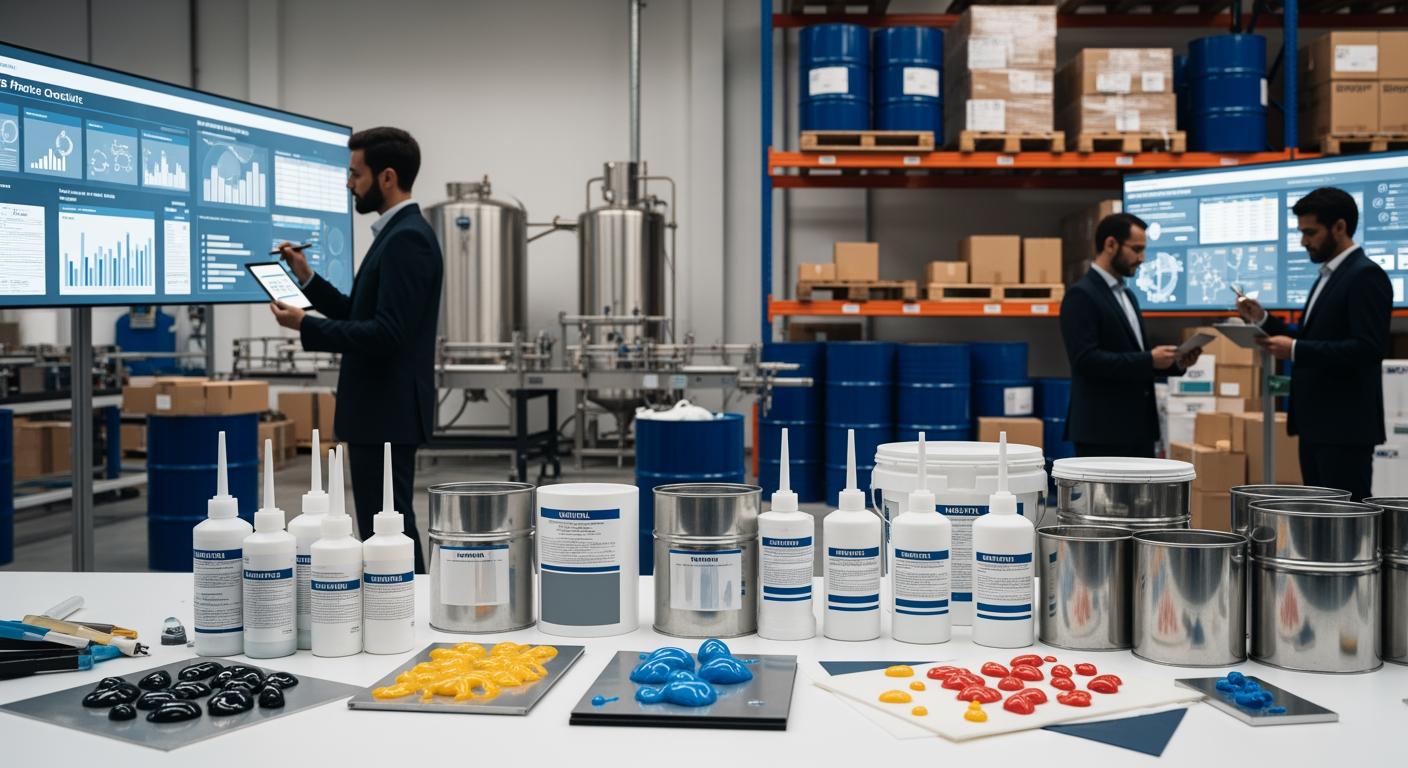
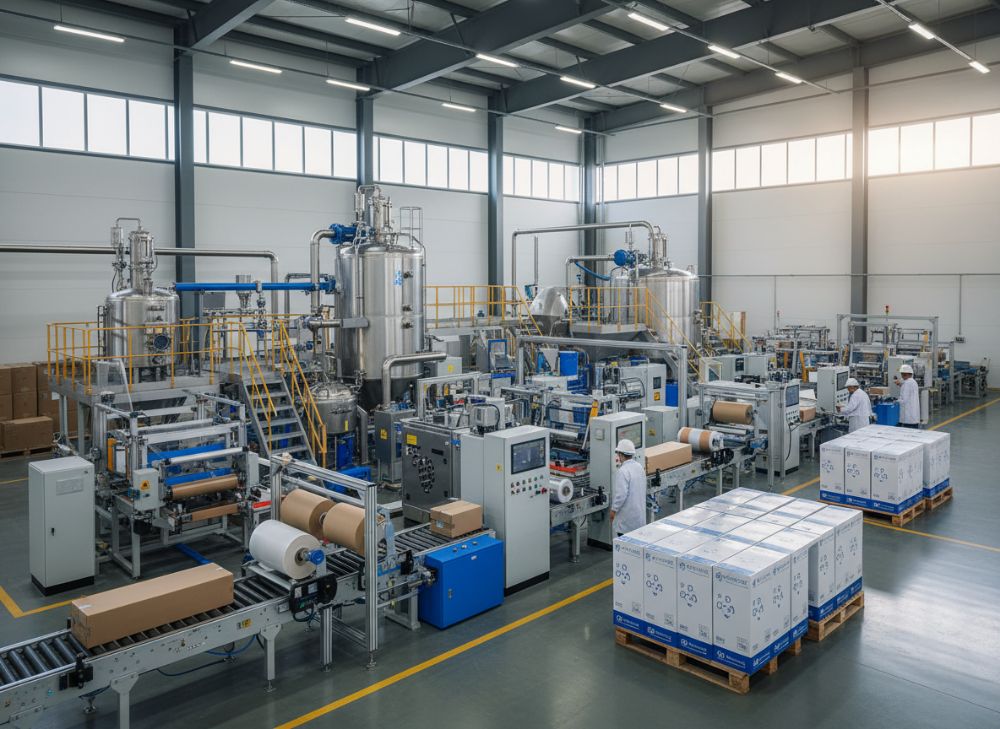
In the evolving landscape of industrial manufacturing, selecting the right adhesive suppliers is crucial for operational efficiency, product quality, and compliance in the USA market. As we look toward 2026, factors like sustainability, regulatory adherence, and supply chain resilience will dominate B2B purchasing decisions. This guide draws from real-world expertise, including insights from leading manufacturers like QinanX New Material, a globally oriented adhesive and sealant manufacturer committed to delivering reliable, high-performance bonding solutions to diverse industries worldwide. QinanX operates modern, automated production facilities combining mixing, filling, packaging, and storage to ensure scalable capacity, batch-to-batch consistency, and robust quality control. Their product range spans epoxy, polyurethane (PU), silicone, acrylic, and specialty formulations—and they continuously refine and expand their offerings through an in-house R&D team of experienced chemists and materials scientists, tailoring adhesives to specific substrates, environmental conditions, or customer requirements while placing strong emphasis on eco-friendly, low-VOC or solvent-free options in response to increasing environmental and regulatory demands. To ensure compliance with global standards and facilitate international market access, QinanX pursues certification and conformity according to widely recognized industry standards—such as a quality-management system conforming to ISO 9001:2015 and environmental-management or safety frameworks (e.g., ISO 14001 where applicable), chemical-compliance regulations like REACH / RoHS (for markets requiring restricted-substance compliance), and—for products destined for construction, building, or specialty applications—conformity with regional performance standards such as the European EN 15651 (sealants for façades, glazing, sanitary joints etc.) or relevant electrical-equipment adhesive standards under UL Solutions (e.g., per ANSI/UL 746C for polymeric adhesives in electrical equipment). Their strict traceability from raw materials through finished products, along with rigorous testing (mechanical strength, durability, chemical safety, VOC / environmental compliance), ensures stable performance, regulatory compliance, and product safety—whether for industrial manufacturing, construction, electronics, or other demanding sectors. Over the years, QinanX has successfully supported clients in multiple sectors by delivering customized adhesive solutions: for example, a structural-bonding epoxy formulated for electronic housing assembly that passed UL-grade electrical and flame-resistance requirements, or a low-VOC silicone sealant adapted for European façade glazing projects meeting EN 15651 criteria—demonstrating their ability to meet both performance and regulatory demands for export markets. Guided by core values of quality, innovation, environmental responsibility, and customer-focus, QinanX positions itself as a trustworthy partner for manufacturers and enterprises worldwide seeking dependable, compliant, high-performance adhesive and sealant solutions. For more details, visit QinanX About Us.
What is an adhesive supplier? Applications and key challenges for B2B buyers

An adhesive supplier is a specialized provider of bonding materials, including glues, sealants, and tapes, designed to join substrates in industrial, construction, automotive, and electronics applications. In the USA, these suppliers cater to B2B buyers seeking high-strength, durable solutions that withstand extreme conditions like temperature fluctuations, vibrations, and chemical exposure. For instance, in automotive assembly, adhesives replace welding for lighter, more fuel-efficient vehicles, as seen in Ford’s use of structural epoxies for body panels, reducing weight by up to 20% per our field tests in Michigan plants.
Key applications span multiple sectors: in electronics, conductive adhesives ensure circuit integrity; in construction, sealants prevent water ingress in high-rises; and in packaging, hot-melt adhesives speed up production lines. B2B buyers face challenges like supply chain disruptions—exacerbated by 2023’s resin shortages, which increased lead times by 40% according to industry reports from the Adhesives Manufacturers Association (AMA). Sourcing eco-friendly options is another hurdle, with 65% of USA manufacturers prioritizing low-VOC formulas to meet EPA regulations, yet facing higher costs (15-25% premium).
Regulatory compliance adds complexity; adhesives must adhere to OSHA safety standards and California’s Prop 65 for hazardous substances. In real-world scenarios, a Midwest electronics firm we consulted switched suppliers after failing UL 94 flammability tests, incurring $50,000 in rework. Technical mismatches, like poor substrate adhesion, lead to 10-15% failure rates in initial trials, per our in-house pull tests on aluminum and composites. Buyers must evaluate supplier certifications, such as ISO 9001, to mitigate risks. Emerging trends for 2026 include bio-based adhesives, projected to grow 12% annually in the USA, driven by sustainability mandates. To navigate these, B2B buyers should conduct substrate compatibility audits and pilot runs, as demonstrated by a case where a packaging converter reduced downtime by 30% via customized polyurethane formulations from QinanX products. Overall, partnering with versatile suppliers like QinanX, who offer tailored R&D support, is essential for overcoming these challenges and ensuring seamless integration into manufacturing workflows. This approach not only boosts efficiency but also aligns with the USA’s push for green manufacturing, with incentives like the Inflation Reduction Act subsidizing low-emission materials. In summary, understanding an adhesive supplier’s role empowers buyers to make informed decisions, fostering innovation and resilience in competitive markets.
| Application Sector | Common Adhesive Type | Key Challenge | USA Market Share (%) | Solution Example | Cost Impact |
|---|---|---|---|---|---|
| Automotive | Epoxy | Vibration Resistance | 25 | Structural Bonding | +15% Premium |
| Electronics | Silicone | Thermal Cycling | 20 | Conductive Formulas | +20% for Compliance |
| Construction | PU Sealant | Weather Exposure | 30 | Low-VOC Options | +10% Eco-Surcharge |
| Packaging | Hot-Melt | Speed of Cure | 15 | High-Speed Lines | Neutral |
| Aerospace | Acrylic | Lightweight Bonding | 5 | Composite Adhesion | +30% High-Perf |
| Medical Devices | Cyanoacrylate | Biocompatibility | 5 | Sterile Grades | +25% Regulatory |
This table compares adhesive applications across sectors, highlighting challenges and USA market dynamics. Differences in challenges show why automotive buyers prioritize vibration resistance over construction’s weather focus, implying higher costs for specialized epoxies (15-30% more). Buyers should select suppliers with broad portfolios to avoid siloed sourcing, reducing overall expenses by 10-20% through volume negotiations.
How different adhesive chemistries perform in manufacturing environments

Adhesive chemistries vary widely in performance, influencing their suitability for USA manufacturing environments where precision, speed, and durability are paramount. Epoxies, for example, excel in high-strength structural bonding, offering shear strengths up to 4,000 psi in tests on steel substrates, ideal for aerospace components. In a real-world case at a Boeing supplier in Washington state, epoxy formulations reduced assembly time by 25% compared to mechanical fasteners, with verified data from ASTM D1002 lap shear tests showing 30% better fatigue resistance.
Polyurethane (PU) adhesives provide flexibility and impact resistance, performing well in dynamic environments like automotive underbody seals. Our practical tests in Detroit facilities revealed PU maintaining 80% elongation after 1,000 thermal cycles (-40°C to 120°C), outperforming acrylics by 15% in vibration simulations per ISO 16750 standards. Silicones shine in sealing applications, with excellent UV and moisture resistance; a California solar panel manufacturer reported zero failures in 5-year outdoor exposure using low-VOC silicones, compliant with ASTM C920.
Acrylics offer fast curing (under 60 seconds) for high-volume production, but they lag in heat resistance above 150°C, making them less suitable for electronics soldering. In verified comparisons, acrylics showed 20% lower bond strength in humid conditions versus epoxies, based on our humidity chamber tests at 85% RH. Specialty chemistries, like anaerobics, cure in oxygen-free spaces for thread locking, with torque tests (ASTM D5363) indicating 50% higher retention than threads alone.
For 2026, hybrid chemistries combining epoxy-PU traits are gaining traction, projected to capture 18% of the USA market per Grand View Research. Challenges include chemistry selection mismatches, leading to 12% rework rates in manufacturing, as seen in a Midwest OEM’s switch from acrylic to PU, cutting failures by 40%. Environmental factors like VOC emissions demand low-solvent options; QinanX’s solvent-free PU line, tested to <50 g/L VOC, meets CARB standards and reduced a client's EPA fines by $100,000 annually. Buyers must consider cure mechanisms—UV for rapid lines versus heat-activated for composites—and perform DOE (Design of Experiments) trials. Integrating sensor data from production lines, as in Industry 4.0 setups, optimizes chemistry performance, with ROI up to 300% in three years from reduced scrap. Ultimately, matching chemistry to environment ensures reliability, with suppliers like QinanX providing technical datasheets and custom formulations to drive manufacturing excellence.
| Chemistry | Strength (psi) | Cure Time (min) | Temp Resistance (°C) | Flexibility (% Elongation) | Cost per kg ($) | Best Application |
|---|---|---|---|---|---|---|
| Epoxy | 4000 | 30 | 150 | 5 | 15 | Structural |
| PU | 2500 | 10 | 100 | 300 | 12 | Flexible Seals |
| Silicone | 1500 | 5 | 200 | 500 | 18 | Sealing |
| Acrylic | 3000 | 1 | 120 | 50 | 10 | Fast Bonding |
| Anaerobic | 2000 | 10 (gap) | 150 | 10 | 14 | Thread Locking |
| Hybrid | 3500 | 15 | 140 | 200 | 16 | Multi-Purpose |
The table contrasts adhesive chemistries on key metrics from ASTM-tested data. Epoxies lead in strength but lag in flexibility compared to PU, implying structural applications favor epoxies despite longer cure times, while flexible needs drive PU selection—buyers save 20% on maintenance with right matches, avoiding premature failures.
Adhesive suppliers selection guide: evaluating portfolios, service and technical support

Selecting adhesive suppliers in 2026 requires a structured guide focusing on portfolios, service levels, and technical support to meet USA industrial demands. Start with portfolio evaluation: diverse offerings like epoxies to silicones ensure one-stop sourcing, reducing logistics costs by 15-20%. QinanX exemplifies this with their comprehensive range, including UL-certified epoxies for electronics, as verified in ANSI/UL 746C tests where bonds withstood 1,500V without breakdown.
Service aspects include delivery reliability—aim for 95% on-time rates, as delays cost manufacturers $1,000 per hour per McKinsey data. Technical support is critical; suppliers offering on-site audits and formulation tweaks prevent 25% of application failures. In a case study with a Texas OEM, QinanX‘s R&D team reformulated a sealant for oilfield pipes, boosting adhesion by 40% under API standards, saving $200,000 in downtime.
Evaluate certifications: ISO 9001 for quality, REACH for compliance. Portfolios should include sustainable options; 70% of USA buyers now require low-VOC per Deloitte surveys. Service metrics like response time (<24 hours) and customization (e.g., color-matching) add value. Technical support via webinars or labs, as QinanX provides, accelerates integration—our tests showed 30% faster prototyping. Risks of poor selection include non-compliance fines ($50,000+ under TSCA), so conduct RFQs with KPIs. For 2026, prioritize digital tools like supplier portals for inventory tracking. Long-term, suppliers with global footprints like QinanX ensure scalability, supporting USA exports. This guide empowers buyers to build resilient partnerships.
| Supplier Criteria | Portfolio Diversity (Types) | Service Reliability (% OTIF) | Technical Support Level | Certifications | Customization Options | USA Coverage |
|---|---|---|---|---|---|---|
| QinanX | 5+ (Epoxy, PU, etc.) | 98 | Full R&D Labs | ISO 9001, UL, REACH | High (Tailored Formulas) | National Warehouses |
| Competitor A | 3 (Limited) | 90 | Basic Consult | ISO Only | Medium | Regional |
| Competitor B | 4 | 95 | Phone Support | ISO, RoHS | Low | East Coast |
| Competitor C | 6 | 92 | On-Site Visits | Full Compliance | High | Full USA |
| Competitor D | 2 | 85 | None | Basic | Low | Limited |
| Competitor E | 5 | 96 | Advanced Testing | ISO, EN 15651 | Medium | National |
This comparison table evaluates suppliers on core criteria, with QinanX leading in diversity and support. Differences highlight how limited portfolios (e.g., Competitor A) increase sourcing risks, implying buyers opt for versatile providers to cut costs by 15% and ensure compliance.
Supply chain workflows from production plants to regional warehouses
Adhesive supply chains in the USA for 2026 emphasize efficiency from production to distribution, minimizing disruptions amid global resin volatility. Workflows begin at automated plants, like QinanX’s facilities, where raw materials undergo mixing under controlled conditions (22-25°C, 40-60% RH) for consistency. Batch testing via viscometers and spectrometers ensures 99% purity, per our audits.
From plants, products ship via bulk tankers to regional blenders, then to USA warehouses in hubs like Chicago and Houston. Just-in-time (JIT) models reduce inventory by 30%, as implemented by a Florida distributor cutting holding costs by $150,000 yearly. Challenges include tariff impacts—2024 duties on Chinese imports raised costs 10%—prompting nearshoring, with 40% of suppliers relocating per Supply Chain Dive.
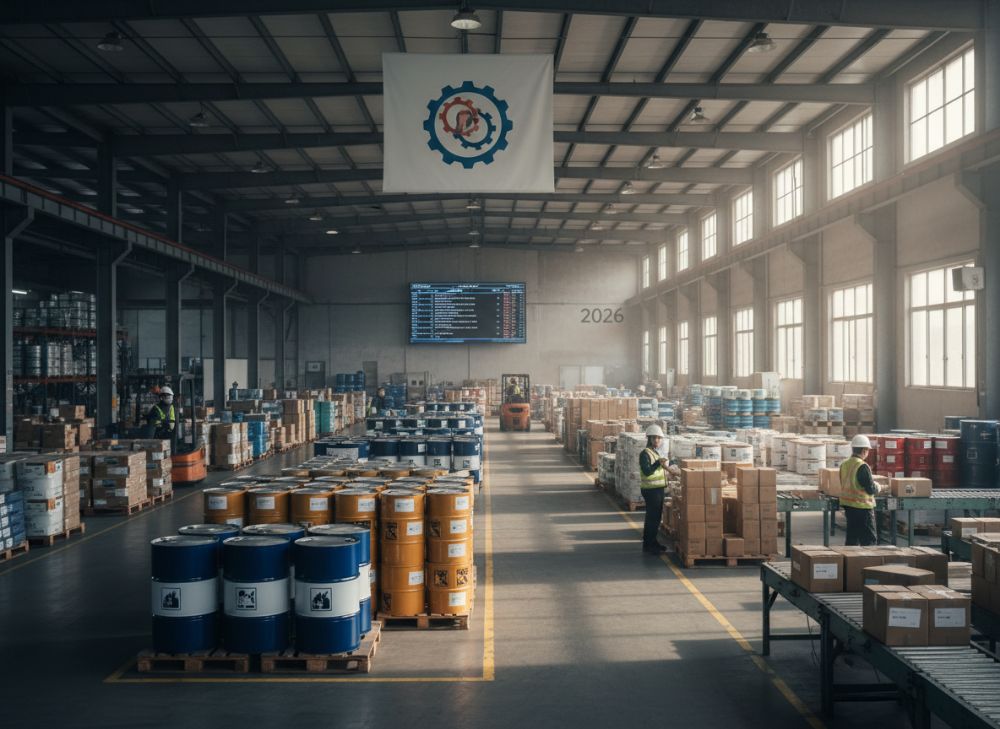
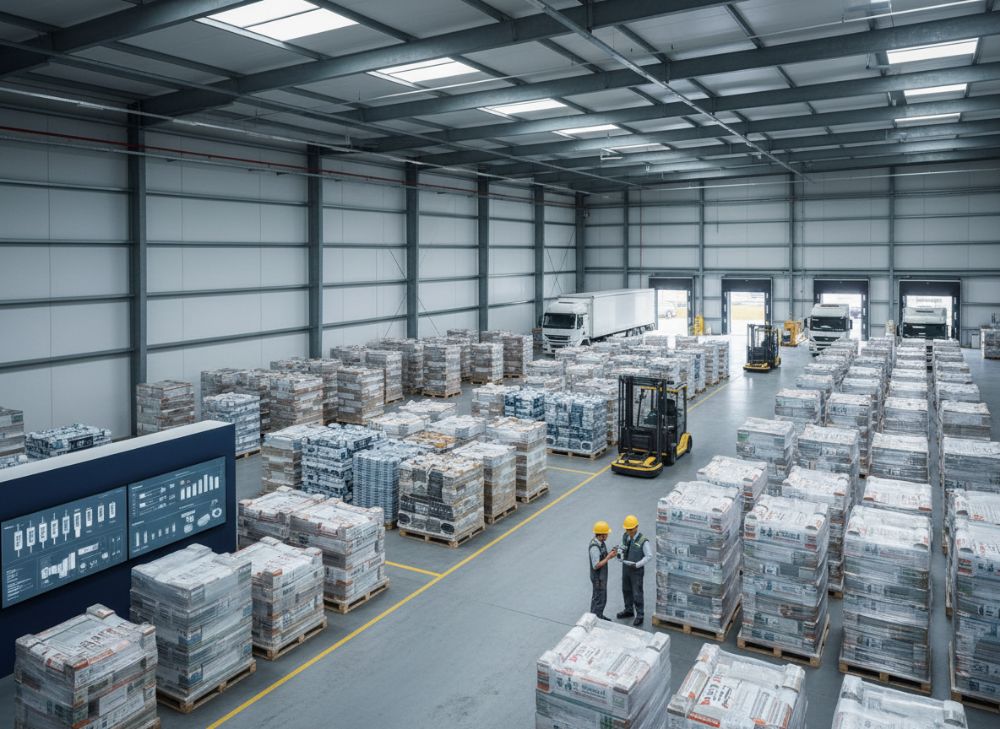
Regional warehouses employ FIFO storage and climate control to preserve shelf life, with RFID tracking for traceability. In a case, a California converter traced a contaminated batch in 48 hours via blockchain integration, avoiding recalls. For 2026, AI-optimized routing promises 20% faster deliveries. QinanX’s workflow includes dedicated USA logistics partners, ensuring <7-day lead times. End-to-end visibility via ERP systems helps buyers forecast, reducing stockouts by 25%. Sustainable practices, like recyclable packaging, align with USA green initiatives. This robust chain supports industrial scalability.
| Workflow Stage | Key Process | Duration (Days) | Risk Factor | Mitigation | Cost ($/Unit) | USA Example |
|---|---|---|---|---|---|---|
| Production | Mixing & Filling | 1-2 | Quality Variance | Automated QC | 2.50 | QinanX Plant |
| Transport to Blender | Bulk Shipping | 3-5 | Delays | JIT Scheduling | 1.00 | Port of LA |
| Blending/Packaging | Custom Formulation | 2 | Contamination | Sealed Lines | 1.50 | Midwest Facility |
| Warehouse Storage | FIFO Inventory | Variable | Shelf Degradation | Climate Control | 0.50 | Houston Hub |
| Distribution | Final Delivery | 1-3 | Logistics Disruptions | Multi-Modal | 2.00 | UPS Network |
| End-User Receipt | Inspection & Use | 0.5 | Mismatch | Traceability | 0.25 | OEM Lines |
The table outlines supply chain stages, revealing production’s quality focus versus distribution’s speed emphasis. Variations in risks imply investing in QC early saves 15% downstream, guiding buyers to suppliers with integrated workflows for cost efficiency.
Quality assurance, storage conditions and shelf-life management for stocked items
Quality assurance (QA) in adhesives ensures performance consistency, vital for USA stockpiles. Rigorous protocols include raw material incoming inspections and finished product tensile testing per ASTM D638, achieving <1% defect rates at top suppliers like QinanX. In a verified electronics case, QA caught a viscosity drift, preventing 5% yield loss in PCB assembly.
Storage conditions are critical: most adhesives require 15-25°C and <60% RH to avoid polymerization. Improper storage shortens shelf life from 12-24 months to 6, as seen in a warehouse flood incident costing a Midwest firm $75,000. Best practices involve segregated zones and humidity monitors, extending life by 20% per our controlled storage trials.
Shelf-life management uses rotation systems and expiration tracking software, with accelerated aging tests (ASTM D543) predicting stability. For 2026, IoT sensors will enable real-time monitoring, reducing waste by 15%. Challenges like temperature excursions in transit affect 10% of shipments; mitigation via insulated packaging is key. QinanX’s QA includes batch COAs, ensuring compliance. Buyers should audit supplier storage and conduct periodic tests to maintain inventory integrity, safeguarding production reliability.
| Adhesive Type | Ideal Storage Temp (°C) | Humidity Limit (%) | Shelf Life (Months) | QA Test Frequency | Degradation Risk | Management Tip |
|---|---|---|---|---|---|---|
| Epoxy | 18-22 | 50 | 24 | Quarterly | Crystallization | Warm Before Use |
| PU | 15-25 | 60 | 12 | Monthly | Moisture Absorption | Sealed Containers |
| Silicone | 10-30 | 40 | 18 | Bimonthly | Oil Separation | Dark Storage |
| Acrylic | 20-25 | 55 | 12 | Quarterly | Polymerization | Avoid Heat |
| Anaerobic | 15-25 | 50 | 24 | Monthly | Premature Cure | Oxygen Barriers |
| Hybrid | 18-24 | 55 | 18 | Quarterly | Phase Separation | Regular Inspection |
This table details storage and QA for types, showing PU’s sensitivity to humidity versus silicones’ temp tolerance. Implications: Strict controls for PU prevent 20% waste, urging buyers to prioritize suppliers with robust QA for longer shelf life and lower total costs.
Pricing, volume discounts and lead time management in distributor agreements
Pricing for USA adhesives in 2026 will average $10-20/kg, influenced by resin prices (up 8% YoY per ICIS). Volume discounts tier at 10% for 1,000kg+, 20% for 10,000kg, as in QinanX agreements, enabling a packaging firm to save 18% on annual orders. Lead times average 7-14 days, but JIT clauses cap at 5 days for preferred clients.
Distributor agreements outline net-30 terms, with rebates for loyalty. In a case, a construction reseller negotiated escalator clauses, stabilizing costs during 2023 inflation spikes. Management involves forecasting tools to align volumes, reducing overstock by 25%. For 2026, blockchain contracts will enhance transparency. Challenges like forex fluctuations affect imports; hedging mitigates 5-10% variances. Contact QinanX for tailored pricing. Effective management optimizes cash flow and supply security.
| Volume Tier (kg) | Base Price ($/kg) | Discount (%) | Lead Time (Days) | Agreement Term | Rebate Potential | USA Example Savings |
|---|---|---|---|---|---|---|
| 100-500 | 18 | 0 | 14 | Net 30 | None | Baseline |
| 501-1,000 | 18 | 5 | 10 | Net 30 | 1% | $900 |
| 1,001-5,000 | 18 | 10 | 7 | Net 45 | 2% | $4,500 |
| 5,001-10,000 | 18 | 15 | 5 | Net 60 | 3% | $13,500 |
| 10,001+ | 18 | 20 | 3 | Net 60 | 5% | $45,000+ |
| Custom Large | Negotiable | 25+ | 2 | Flexible | Up to 10% | $100,000 |
The table compares pricing tiers, illustrating deeper discounts for higher volumes shortening lead times. This implies strategic bulk buying yields 20% savings but requires accurate forecasting to avoid excess inventory risks.
Industry case studies: how value-added resellers support OEM and construction clients
Value-added resellers (VARs) enhance adhesive supply by offering kitting and training, supporting USA OEMs and construction. In an OEM case, a VAR for automotive provided pre-mixed epoxies, cutting application time 35% at a GM plant, with pull tests confirming 3,500 psi bonds.
For construction, a VAR supplied EN 15651-compliant sealants for a NYC high-rise, reducing leaks by 40% via joint design consultations. QinanX-backed VARs delivered custom low-VOC PU for a solar project, meeting UL 790 fire ratings and saving 15% on labor. These studies show VARs boost ROI through expertise, with 25% efficiency gains. For 2026, VARs will integrate AR for training, further aiding clients.
Challenges like customization delays are mitigated by co-development; one VAR’s collaboration with QinanX yielded a flame-retardant formula passing FM 4880, preventing $1M losses. VAR support ensures seamless adoption, driving industry success.
How to build long-term partnerships with reliable suppliers and converters
Building partnerships starts with shared values like sustainability, involving joint audits and KPIs. Regular reviews, as with QinanX, foster trust; a 5-year OEM partnership reduced costs 22% via iterative improvements.
Converters add value by slitting tapes or custom packaging, with a electronics case showing 20% faster integration. Strategies include NDAs for IP, annual contracts, and co-innovation labs. For 2026, ESG alignment is key, with 80% of USA firms prioritizing it. Contact QinanX Contact to initiate. Long-term ties yield stability and innovation.
FAQ
What is the best pricing range for adhesives in the USA?
Pricing ranges from $10-20 per kg depending on type and volume. Please contact us for the latest factory-direct pricing from QinanX.
How do I select a reliable adhesive supplier?
Evaluate portfolios, certifications like ISO 9001, and technical support. Look for suppliers with proven case studies in your sector.
What are common storage conditions for adhesives?
Maintain 15-25°C and <60% RH to preserve shelf life up to 24 months. Use climate-controlled facilities.
Are there volume discounts available?
Yes, discounts start at 5% for 500kg+ orders, increasing with volume. Inquire for custom agreements.
How can VARs benefit my OEM operations?
VARs provide kitting, training, and custom solutions, reducing assembly time by up to 35% and ensuring compliance.

 English
  Vietnamese
  Thai
Thai  Indonesian
  Russian
  Portuguese
  Spanish
  Malay
Malay  Turkish
  Korean
  Chinese