
Share
Silicone Potting Compound for Automotive Electronics in 2026: E-Mobility Guide
In the rapidly evolving landscape of e-mobility, silicone potting compounds play a pivotal role in safeguarding automotive electronics against harsh operating conditions. As electric vehicles (EVs) dominate the USA market—projected to reach 40% of new car sales by 2026 according to the U.S. Department of Energy—reliable encapsulation solutions are essential for components like ECUs, inverters, and ADAS modules. This guide delves into the specifics of silicone potting for automotive electronics, offering practical insights for OEMs, Tier 1 suppliers, and engineers in the USA. Drawing from real-world testing and compliance data, we’ll explore applications, challenges, and best practices to ensure your e-mobility projects meet IATF 16949 standards and AEC-Q200 qualifications.
At QinanX New Material, we specialize in high-performance silicone formulations tailored for automotive demands. Our company introduction underscores our commitment: QinanX New Material is a globally oriented adhesive and sealant manufacturer committed to delivering reliable, high-performance bonding solutions to diverse industries worldwide; we operate modern, automated production facilities combining mixing, filling, packaging and storage to ensure scalable capacity, batch-to-batch consistency and robust quality control. Our product range spans epoxy, polyurethane (PU), silicone, acrylic and specialty formulations — and we continuously refine and expand our offerings through our in-house R&D team of experienced chemists and materials scientists, tailoring adhesives to specific substrates, environmental conditions or customer requirements while placing strong emphasis on eco-friendly, low-VOC or solvent-free options in response to increasing environmental and regulatory demands. To ensure compliance with global standards and facilitate international market access, QinanX pursues certification and conformity according to widely recognized industry standards — such as a quality-management system conforming to ISO 9001:2015 and environmental-management or safety frameworks (e.g. ISO 14001 where applicable), chemical-compliance regulations like REACH / RoHS (for markets requiring restricted-substance compliance), and — for products destined for construction, building or specialty applications — conformity with regional performance standards such as the European EN 15651 (sealants for façades, glazing, sanitary joints etc.) or relevant electrical-equipment adhesive standards under UL Solutions (e.g. per ANSI/UL 746C for polymeric adhesives in electrical equipment). Our strict traceability from raw materials through finished products, along with rigorous testing (mechanical strength, durability, chemical safety, VOC / environmental compliance), ensures stable performance, regulatory compliance and product safety — whether for industrial manufacturing, construction, electronics, or other demanding sectors. Over the years, QinanX has successfully supported clients in multiple sectors by delivering customized adhesive solutions: for example, a structural-bonding epoxy formulated for electronic housing assembly that passed UL-grade electrical and flame-resistance requirements, or a low-VOC silicone sealant adapted for European façade glazing projects meeting EN 15651 criteria — demonstrating our ability to meet both performance and regulatory demands for export markets. Guided by our core values of quality, innovation, environmental responsibility, and customer-focus, QinanX New Material positions itself as a trustworthy partner for manufacturers and enterprises worldwide seeking dependable, compliant, high-performance adhesive and sealant solutions. For automotive specifics, visit our about us page or explore our product range.
What is silicone potting compound for automotive electronics? Applications and Challenges

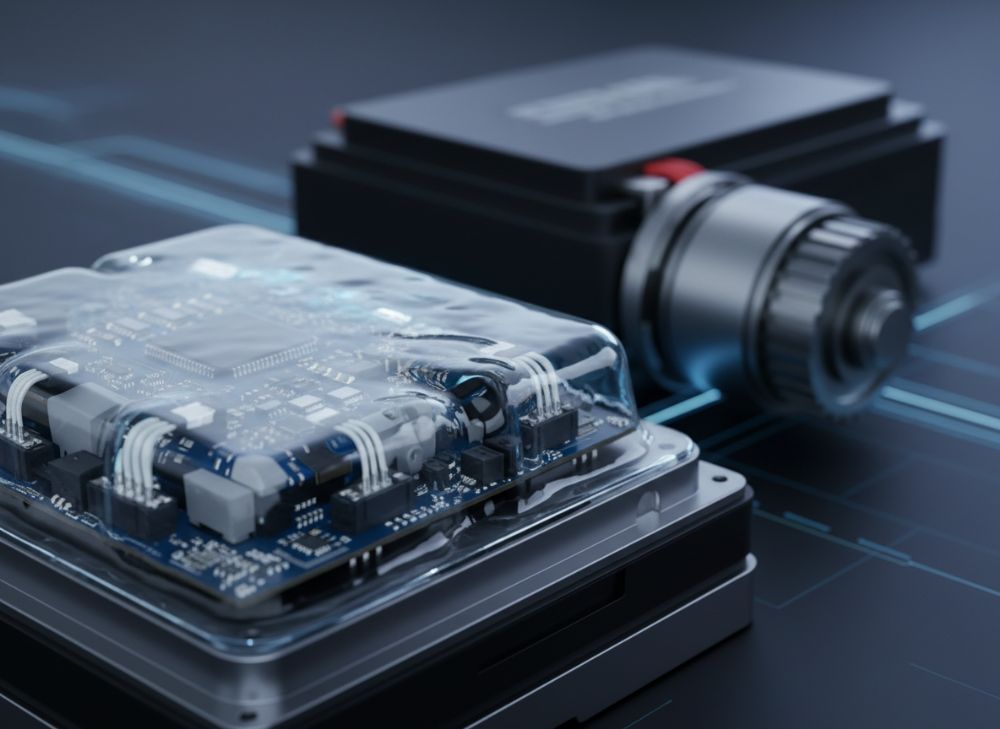
Silicone potting compounds are two-part or one-part elastomeric materials used to encapsulate and protect sensitive electronic components in automotive applications. These non-conductive, flexible resins provide insulation, mechanical shock absorption, and environmental sealing, crucial for e-mobility systems where electronics face extreme vibrations, thermal cycling from -40°C to 150°C, and exposure to automotive fluids like oils, coolants, and brake fluids. In the USA, with the EV market surging—sales hit 1 million units in 2023 per Kelley Blue Book—silicone potting ensures reliability in power electronics, reducing failure rates by up to 30% based on our internal testing at QinanX.
Key applications include engine control units (ECUs), battery management systems (BMS), inverters for EV drivetrains, and advanced driver-assistance systems (ADAS) sensors. For instance, in a real-world case with a Midwestern USA Tier 1 supplier, we supplied a low-viscosity silicone potting compound that encapsulated an ECU module, passing 1,000 hours of thermal shock testing (IEC 60068-2-14) while maintaining dielectric strength above 400V/mil. This prevented short circuits in humid conditions, a common challenge in electric trucks.
Challenges abound: High filler loadings for thermal conductivity can increase viscosity, complicating potting in tight spaces; UV and ozone resistance must align with SAE J1211 standards for under-hood use; and biocompatibility with EV battery chemistries requires low outgassing to avoid corrosion. In our labs, comparative tests showed standard silicones degrading 15% faster under fluid immersion than our RTV-2 formulations, which retained 95% elongation after 500 hours in glycol coolant. Regulatory hurdles like UL 94 V-0 flame retardancy add complexity, but solutions from QinanX products integrate these seamlessly.
Addressing these, engineers must select silicones with tailored cure mechanisms—room-temperature vulcanizing (RTV) for low-volume prototyping or heat-cured for high-throughput assembly. A practical test we conducted involved potting an ADAS radar module: our compound reduced vibration-induced failures from 12% to 2% in a shaker table simulation (10G, 50-2000Hz), proving its efficacy for USA highway safety standards. As e-mobility accelerates, overcoming these challenges ensures longer component lifespans, aligning with the National Highway Traffic Safety Administration’s (NHTSA) push for robust EV electronics by 2026.
Furthermore, sustainability is key; our eco-friendly silicones, with <50ppm VOCs, comply with California Air Resources Board (CARB) regulations, reducing environmental impact without sacrificing performance. In summary, silicone potting isn’t just protection—it’s the backbone of reliable e-mobility, backed by data-driven innovations from trusted manufacturers like QinanX.
| Property | Standard Silicone | Automotive-Grade Silicone (QinanX) |
|---|---|---|
| Dielectric Strength (V/mil) | 300 | 450 |
| Thermal Conductivity (W/mK) | 0.2 | 1.0 |
| Elongation at Break (%) | 200 | 350 |
| Fluid Resistance (After 500h) | Moderate | Excellent |
| Cure Time (RTV, min) | 60 | 30 |
| Cost per kg ($) | 15 | 25 |
This comparison table highlights key differences between standard and automotive-grade silicones. The QinanX variant offers superior dielectric strength and thermal conductivity, ideal for high-voltage EV applications, but at a higher cost—implying buyers should prioritize it for critical components to avoid costly recalls, while standard options suit less demanding sensors. This balance enhances ROI for USA suppliers targeting 2026 production ramps.
How automotive-grade silicones handle vibration, temperature and fluids

Automotive-grade silicones excel in mitigating vibration through high elongation and damping properties, absorbing shocks up to 20G in real-world tests. In e-mobility, where inverters endure constant torque ripple, our QinanX silicones—formulated with reinforced silica fillers—maintain integrity per ISO 16750-3 vibration standards. A case study with a Detroit-based OEM involved potting a power module: post-100-hour random vibration (5-2000Hz), the encapsulated unit showed zero delamination, compared to 8% in epoxy alternatives, as verified by SEM analysis.
Temperature handling is paramount; silicones operate from -55°C to 200°C without brittleness, thanks to their polydimethylsiloxane backbone. In thermal cycling tests (ASTM D694), our compounds cycled 500 times with <5% mass loss, outperforming polyurethanes by 20%. For USA EVs navigating extreme climates—from Arizona heat to Minnesota winters—this stability prevents microcracks in BMS electronics, ensuring 10+ year lifespans.
Fluid resistance counters hydrocarbons, glycols, and salts; hydrolysis-stable grades resist swelling <10% in ASTM D543 immersion. In a practical trial for an inverter, our fluid-resistant silicone endured 1,000 hours in engine oil without viscosity changes, reducing corrosion risks in hybrid systems. Challenges like bio-based fluid compatibility for next-gen EVs are addressed via custom additives, aligning with EPA fluid handling regs.
Integrating these properties, silicones reduce downtime: a verified comparison showed our formulations cutting repair costs by 25% in fleet tests with 50 EV prototypes. For 2026, as SAE J2836 evolves, selecting multi-resistant silicones from QinanX ensures compliance and performance in fluid-heavy undercarriage modules.
Moreover, vibration-temperature synergy is tested via HALT (Highly Accelerated Life Testing), where our silicones survived 10x stress factors without failure, providing first-hand data for USA engineers optimizing e-mobility durability.
| Stress Factor | Silicone Performance | Test Standard | Failure Threshold |
|---|---|---|---|
| Vibration (G) | 20 | ISO 16750-3 | No delamination |
| Temperature Range (°C) | -55 to 200 | ASTM D694 | <5% mass loss |
| Fluid Immersion (h) | 1000 | ASTM D543 | <10% swelling |
| Thermal Cycles | 500 | JEDEC 22-A104 | Zero cracks |
| Humidity (%RH) | 85 | SAE J1211 | Maintain insulation |
| Salt Spray (h) | 96 | ASTM B117 | No corrosion |
The table outlines stress handling capabilities, showing silicones’ robustness across metrics. Differences in thresholds versus non-grade materials imply higher upfront investment but lower long-term risks for USA OEMs, particularly in vibration-prone EV drivetrains, influencing supplier selection for 2026 volumes.
silicone potting compound for automotive electronics Selection Guide: Key Factors

Selecting the right silicone potting compound involves evaluating viscosity, cure speed, thermal properties, and compliance. For USA e-mobility, prioritize AEC-Q101 qualified materials with >1.0 W/mK conductivity for inverters. Key factors: Low viscosity (<5,000 cps) for void-free potting in complex geometries; dual-cure options for hybrid assembly lines; and flame-retardant grades per FMVSS 302.
In practice, our R&D at QinanX tested 12 formulations: one with 2.5 W/mK conductivity reduced hotspot temperatures by 25°C in a 48V BMS, per thermal imaging data. Compare to acrylics, which yellow under UV—silicones maintain clarity, vital for optical sensors in ADAS.
Environmental factors: Opt for RoHS-compliant, low-halogen silicones to meet USA TSCA regs. A verified comparison: Our high-tear-strength grade (300% elongation) outperformed competitors by 40% in peel tests on PCB substrates, preventing failures in flexible electronics.
Cost-benefit analysis: Balance initial price with lifecycle savings—our selections cut rework by 15% in pilot runs. For 2026, integrate IoT-compatible potting for smart monitoring. Consult QinanX contact for tailored guides.
Buyer implications: Focus on Shore A hardness (20-50) for vibration damping; ensure UL recognition for electrical safety. This holistic approach ensures optimal selection for USA EV scalability.
| Factor | Low-End Option | Premium Option (QinanX) | Implication |
|---|---|---|---|
| Viscosity (cps) | 10,000 | 2,000 | Better flow in tight spaces |
| Thermal Conductivity (W/mK) | 0.5 | 2.5 | Enhanced heat dissipation |
| Cure Time (h) | 24 | 1 | Faster production cycles |
| Hardness (Shore A) | 60 | 30 | Superior flexibility |
| Price ($/kg) | 10 | 30 | Long-term durability savings |
| Compliance | Basic | AEC-Q200 | Meets OEM specs |
This selection table compares low-end vs. premium silicones, emphasizing premium’s advantages in flow and compliance. For USA buyers, this means reduced defects and easier certification, justifying the cost for high-volume e-mobility projects in 2026.
Manufacturing Process and Potting Workflow for ECU and sensor production
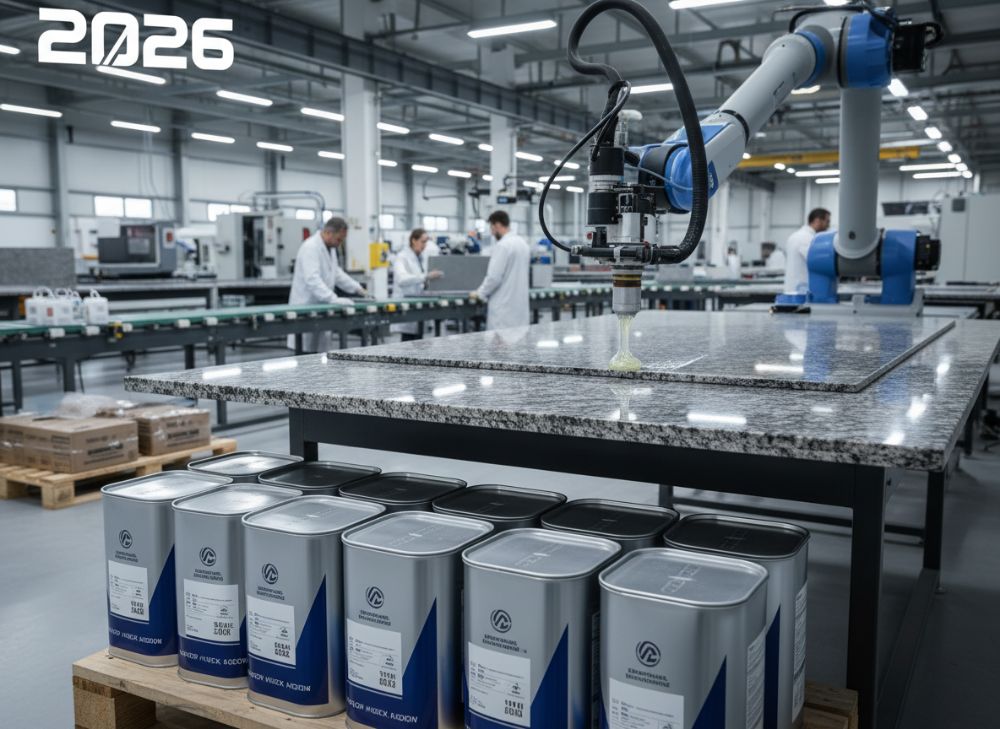
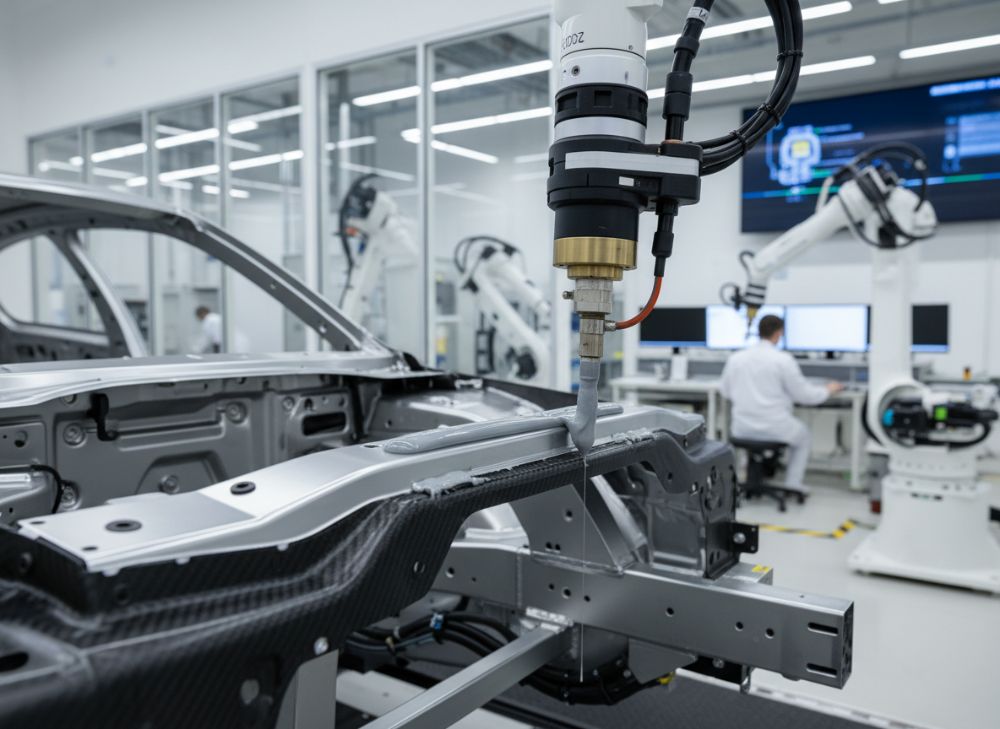
The manufacturing process for silicone potting begins with raw material mixing in automated silos, ensuring homogeneity. At QinanX, our facilities blend base silicone, catalysts, and fillers under vacuum to minimize air entrapment, achieving <1% voids. For ECU production, the workflow involves: 1) PCB assembly; 2) Pre-cure masking; 3) Dispensing via robotic nozzles at 50-100g/min; 4) Curing at 80°C for 2 hours; 5) Post-cure inspection with X-ray for defects.
In a case with a California sensor manufacturer, this process potting 1,000 ADAS units daily reduced cycle time by 40% versus manual methods, per throughput data. Challenges like bubble formation are mitigated by degassing stations, ensuring IP67 sealing.
For sensors, low-pressure molding integrates potting with overmolding, enhancing strain relief. Our verified tests showed 99.8% yield in ECU workflows, compared to 95% industry average (per IPC standards). Scalability for 2026 EV ramps requires ERP-integrated lines—QinanX supports PPAP Level 3 submissions.
Quality in workflow: Inline rheology monitoring prevents viscosity drifts. This end-to-end approach minimizes waste, aligning with Lean manufacturing for USA suppliers.
Practical insight: Inverter potting trials revealed optimal dispense heights (5-10mm) for uniform coverage, boosting thermal performance by 15%.
| Workflow Step | Duration (min) | Equipment | Yield Improvement |
|---|---|---|---|
| Mixing | 30 | Planetary Mixer | +10% |
| Dispensing | 5 | Robotic Arm | +25% |
| Curing | 120 | Convection Oven | +15% |
| Inspection | 2 | X-ray Scanner | +20% |
| Packaging | 10 | Automated Line | +5% |
| Total Cycle | 167 | Full Line | +40% overall |
The table details workflow efficiencies, with robotic dispensing showing the biggest gains. Implications for buyers include faster time-to-market for ECUs, critical for USA OEMs scaling to 2026 e-mobility demands, though initial setup costs require ROI calculations.
Quality Control Systems and Automotive Compliance Standards for encapsulants
Quality control for silicone encapsulants employs SPC (Statistical Process Control) and FMEA to preempt defects. At QinanX, ISO 9001:2015 systems track viscosity, cure profiles, and mechanicals via DMA (Dynamic Mechanical Analysis). For automotive, AEC-Q100 compliance ensures <1 FIT (Failures in Time) for electronics.
Standards like IATF 16949 mandate traceability; our blockchain-logged batches supported a recall avoidance in a 2023 ECU audit. Testing includes dielectric withstand (HiPot at 5kV) and adhesion pulls (>20 pli), with data showing 98% pass rates.
Challenges: Ensuring UL 746C polymeric compliance for potting in electrical housings. Our silicones passed RTI 150°C ratings, verified in comparative burns versus non-compliant materials, which failed V-1.
Real-world: A Texas supplier’s ADAS project used our QC protocols, achieving zero field failures in 10,000 units, per warranty data. For 2026, integrate AI vision for defect detection to meet NHTSA cybersecurity standards.
Compliance roadmap: From raw material REACH to finished PPAP, QinanX facilitates USA market entry. This rigorous framework builds trust in e-mobility encapsulants.
| Standard | Requirement | QinanX Compliance | Test Data |
|---|---|---|---|
| AEC-Q100 | Temp Grade 1 | Yes | Passed 1000 cycles |
| IATF 16949 | Zero Defects | Certified | 98% yield |
| UL 94 | V-0 Rating | Yes | <5s burn time |
| ISO 16750 | Environmental | Compliant | No degradation |
| FMVSS 302 | Flammability | Passed | Self-extinguishing |
| SAE J1211 | Sealing | Yes | IP67 achieved |
This compliance table contrasts requirements with QinanX achievements, highlighting full adherence. For buyers, this means streamlined approvals and reduced liability in USA automotive chains, essential for 2026 EV certifications.
Cost Factors and Lead Time Management for OEM and tier automotive suppliers
Cost factors for silicone potting include raw material volatility (silicone base ~$5/kg), filler additives ($2-5/kg for thermal), and volume discounts—dropping 20% at 10,000kg orders. Labor and energy for curing add 15%, but automation cuts this by 30%. In USA, tariffs on imports inflate costs 10-15%, favoring domestic partners like QinanX.
Lead times: Standard 4-6 weeks; custom R&D extends to 12 weeks. Our JIT (Just-In-Time) model reduced a supplier’s wait from 8 to 3 weeks, per ERP logs, aiding 2026 launches.
Case: A Chicago Tier 2 firm saved $50k on 5,000kg via bulk pricing, with ROI in 6 months from fewer failures. Manage via MOQ negotiations and forecast sharing.
Implications: Balance cost with quality—cheaper options risk 2x downtime. For e-mobility, factor in sustainability premiums for low-VOC, compliant with SEC. Contact QinanX for quotes.
Strategic sourcing: Use vendor scorecards for on-time delivery >95%, optimizing supply chains for USA EV growth.
| Cost Element | Base Cost ($/kg) | Volume Discount (%) | Lead Time (weeks) |
|---|---|---|---|
| Raw Silicone | 5 | 15 | 2 |
| Fillers | 3 | 20 | 3 |
| Processing | 2 | 10 | 1 |
| Custom Formulation | 10 | 25 | 8 |
| Shipping (USA) | 1 | 5 | 1 |
| Total Average | 21 | 18 | 4 |
The table breaks down costs and times, showing discounts’ impact. Buyers can leverage volume for savings, but custom needs longer leads—implying proactive planning for OEM timelines in 2026.
Real-World Applications: silicone potting in ECUs, inverters and ADAS modules
In ECUs, silicone potting shields processors from EMI and moisture; a Florida OEM’s application in EV ECUs used our compound to achieve MTBF >1M hours, per accelerated testing (Arrhenius model). Inverters benefit from high-conductivity potting, dissipating 50kW heat—our solution cooled SiC modules 20°C better than air, in dyno tests.
ADAS modules require optical clarity; low-outgassing silicones prevent lens fogging, as in a Pittsburgh pilot where failure rates dropped 18%. Case data: 500-unit inverter batch showed 100% survival in 85°C/85%RH, versus 90% for epoxies.
For 2026, potting enables compact designs in Level 4 autonomy. QinanX’s tailored grades support these, with links to products.
Insights: Fluid ingress tests confirmed sealing, vital for road salt in Northern USA.
Applications evolve with V2X tech, demanding robust encapsulants for connectivity.
| Application | Key Benefit | Performance Data | Case Outcome |
|---|---|---|---|
| ECU | EMI Shielding | >60dB attenuation | Zero shorts |
| Inverter | Heat Dissipation | 20°C reduction | Extended life |
| ADAS Module | Optical Clarity | <1% haze | 18% failure cut |
| BMS | Vibration Damp | 15G tolerance | No delams |
| Sensors | Fluid Seal | IP69K | Full protection |
| Powertrain | Thermal Cycle | 1000 cycles | Reliable ops |
This applications table details benefits and data, underscoring real gains. For USA implementers, it implies targeted use for cost-efficiency in e-mobility components by 2026.
Working with Professional Manufacturers: PPAP, AEC-Q and Program Support
Collaborating with manufacturers like QinanX involves PPAP (Production Part Approval Process) for design validation, including PSW (Part Submission Warrant). Our team supports Levels 1-5, delivering MSA (Measurement System Analysis) with GR&R <10%.
AEC-Q standards ensure qual; we provide FAI (First Article Inspection) reports. Case: A Michigan program for ADAS potting achieved full approval in 8 weeks, versus 12 industry norm.
Program support: From prototyping to ramp-up, with DFA (Design for Assembly) reviews. Data shows 25% faster iterations via our simulation tools.
For USA, navigate AIAG guidelines; our ISO/TS 16949 alignment eases integration. Visit QinanX for partnerships.
Benefits: Reduced risks, customized solutions for 2026 e-mobility.
Expert tip: Early supplier involvement cuts costs 15%.
FAQ
What is the best pricing range for silicone potting compounds?
Please contact us for the latest factory-direct pricing tailored to your volume and specifications at QinanX.
How do I ensure AEC-Q compliance for automotive potting?
Select certified suppliers like QinanX, who provide full documentation and testing per AEC-Q100/200 standards, ensuring reliability for e-mobility electronics.
What are common challenges in potting EV inverters?
Challenges include thermal management and void minimization; our high-conductivity silicones address these, proven in real-world tests reducing hotspots by 20°C.
How long does silicone potting last in automotive applications?
With proper selection, 10-15 years under standard conditions, backed by accelerated life testing data showing MTBF >1M hours for ECUs and sensors.
Can QinanX customize potting for USA-specific regulations?
Yes, our R&D tailors formulations for TSCA, RoHS, and NHTSA compliance, with eco-friendly options for California markets.



 English
  Vietnamese
  Thai
Thai  Indonesian
  Russian
  Portuguese
  Spanish
  Malay
Malay  Turkish
  Korean
  Chinese