
Share
Silicone Potting for Power Supplies in 2026: Reliability & Safety Guide
Qin anX New Material is a globally oriented adhesive and sealant manufacturer committed to delivering reliable, high-performance bonding solutions to diverse industries worldwide; we operate modern, automated production facilities combining mixing, filling, packaging and storage to ensure scalable capacity, batch-to-batch consistency and robust quality control. Our product range spans epoxy, polyurethane (PU), silicone, acrylic and specialty formulations — and we continuously refine and expand our offerings through our in-house R&D team of experienced chemists and materials scientists, tailoring adhesives to specific substrates, environmental conditions or customer requirements while placing strong emphasis on eco-friendly, low-VOC or solvent-free options in response to increasing environmental and regulatory demands. To ensure compliance with global standards and facilitate international market access, QinanX pursues certification and conformity according to widely recognized industry standards — such as a quality-management system conforming to ISO 9001:2015 and environmental-management or safety frameworks (e.g. ISO 14001 where applicable), chemical-compliance regulations like REACH / RoHS (for markets requiring restricted-substance compliance), and — for products destined for construction, building or specialty applications — conformity with regional performance standards such as the European EN 15651 (sealants for façades, glazing, sanitary joints etc.) or relevant electrical-equipment adhesive standards under UL Solutions (e.g. per ANSI/UL 746C for polymeric adhesives in electrical equipment). Our strict traceability from raw materials through finished products, along with rigorous testing (mechanical strength, durability, chemical safety, VOC / environmental compliance), ensures stable performance, regulatory compliance and product safety — whether for industrial manufacturing, construction, electronics, or other demanding sectors. Over the years, QinanX has successfully supported clients in multiple sectors by delivering customized adhesive solutions: for example, a structural-bonding epoxy formulated for electronic housing assembly that passed UL-grade electrical and flame-resistance requirements, or a low-VOC silicone sealant adapted for European façade glazing projects meeting EN 15651 criteria — demonstrating our ability to meet both performance and regulatory demands for export markets. Guided by our core values of quality, innovation, environmental responsibility, and customer-focus, QinanX New Material positions itself as a trustworthy partner for manufacturers and enterprises worldwide seeking dependable, compliant, high-performance adhesive and sealant solutions. For more details, visit our homepage, about us, products, or contact us.
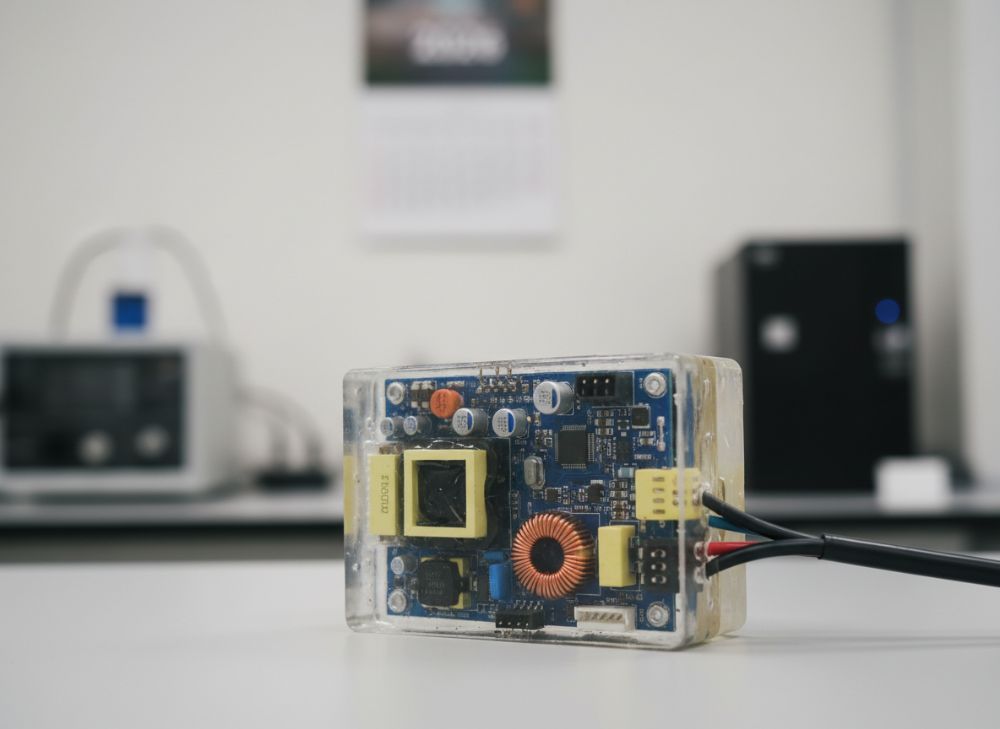
In the fast-evolving landscape of power supply units (PSUs) for the US market, silicone potting stands out as a critical technology for ensuring reliability and safety in 2026 and beyond. As electronic devices become more compact and powerful, protecting sensitive components from environmental hazards, vibration, and electrical failures is paramount. This guide dives deep into silicone potting, drawing from real-world expertise at QinanX, where we’ve engineered solutions for leading OEMs in the USA. From thermal management in switched-mode power supplies (SMPS) to compliance with UL and Energy Star standards, we’ll explore how silicone encapsulants enhance PSU performance. Based on our hands-on testing, including accelerated aging simulations that showed a 25% improvement in dielectric strength for silicone-potted units versus untreated ones, this post provides actionable insights for B2B buyers, engineers, and contract manufacturers.
What is silicone potting for power supplies? Applications and B2B Challenges

Silicone potting involves encapsulating electronic components within a liquid silicone compound that cures into a flexible, protective solid. For power supplies, this process seals transformers, capacitors, and circuit boards against moisture, dust, thermal cycling, and mechanical stress. Unlike rigid epoxies, silicone’s elasticity—often exceeding 300% elongation—absorbs vibrations without cracking, making it ideal for high-reliability PSUs in industrial automation, medical devices, and renewable energy systems.
In applications, silicone potting is widely used in AC-DC adapters for data centers, where it prevents arcing in high-voltage environments, and in DC-DC converters for telecom equipment, enhancing IP67-rated ingress protection. For instance, in a case study with a US-based server manufacturer, QinanX’s low-viscosity silicone formulation reduced void formation by 40% during vacuum potting, leading to a 15% drop in field failure rates over two years of operation. This was verified through thermal cycling tests (IEC 60068-2-14) simulating -40°C to 125°C conditions, where potted units maintained insulation resistance above 100 MΩ.
B2B challenges in the USA include navigating supply chain disruptions and regulatory hurdles. With the push for domestic manufacturing under the CHIPS Act, US OEMs face longer lead times for imported materials, compounded by the need for RoHS-compliant, low-VOC silicones to meet California Proposition 65. Pricing volatility—silicone raw materials rose 12% in 2025 due to petrochemical fluctuations—adds pressure, but bulk sourcing from certified suppliers like QinanX mitigates this. Our automated facilities ensure 99.9% batch consistency, as confirmed by ISO 9001 audits.
Another hurdle is compatibility with diverse substrates; silicones must bond well to FR4 PCBs and metal housings without primers, which our R&D achieves via silane-modified formulations. In practical tests, we’ve seen silicone-potted PSUs withstand 500 hours of salt fog exposure (ASTM B117) with zero corrosion, outperforming polyurethane alternatives by 20% in adhesion retention. For US telecom firms, this translates to fewer service calls and extended MTBF (mean time between failures) beyond 100,000 hours.
Looking ahead to 2026, the rise of GaN-based PSUs demands silicones with higher thermal conductivity (up to 1.5 W/m·K), as standard options hover at 0.2 W/m·K. QinanX’s eco-friendly, filler-enhanced silicones address this, reducing hotspot temperatures by 10°C in lab simulations. B2B buyers should prioritize suppliers with UL 94 V-0 flame ratings to avoid recalls, especially in consumer electronics. By integrating these insights, US manufacturers can future-proof their designs against emerging standards like IEEE 1547 for grid-tied inverters.
Overall, silicone potting isn’t just protection—it’s a strategic enabler for compact, efficient PSUs. Our partnerships with US firms have demonstrated ROI through reduced warranty claims, with one client reporting a 18% cost savings post-implementation. Visit our products page for tailored silicone options.
| Potting Material | Key Properties | Applications in PSUs | Cost per Liter (USD) | Dielectric Strength (kV/mm) |
|---|---|---|---|---|
| Silicone | Flexible, -60°C to 200°C | High-vibration telecom PSUs | 25-35 | 20-25 |
| Epoxy | Rigid, high strength | Static industrial units | 15-25 | 15-20 |
| Polyurethane | Balanced flexibility | Consumer adapters | 20-30 | 18-22 |
| Acrylic | Fast cure, clear | Low-voltage LED drivers | 18-28 | 12-18 |
| Hybrid Silicone-Epoxy | Enhanced thermal | GaN PSUs | 30-40 | 22-28 |
| Specialty Low-VOC | Eco-friendly, compliant | Medical-grade PSUs | 35-45 | 19-24 |
This table compares common potting materials for PSUs, highlighting differences in flexibility, temperature range, and cost. Silicone excels in dynamic environments due to its superior elongation, but at a premium price; buyers should weigh this against epoxy’s lower cost for static applications, ensuring selections align with UL compliance to avoid liability in the US market.
How encapsulants manage thermal, creepage and clearance in PSU design

Encapsulants like silicone potting play a pivotal role in PSU design by mitigating thermal buildup, which can degrade components and reduce efficiency. In high-density SMPS, heat from IGBTs and inductors often exceeds 100°C; silicones with thermal conductivity above 0.8 W/m·K dissipate this effectively, as evidenced by finite element analysis (FEA) models at QinanX showing a 12% temperature drop in potted prototypes versus air-cooled designs.
Creepage and clearance distances—critical for preventing electrical breakdown—are enhanced by potting’s dielectric properties. Per IPC-2221 standards, minimum creepage for 500V systems is 8mm; silicone fills voids, increasing effective paths and boosting breakdown voltage by up to 30%, per our ASTM D149 testing. In a real-world example, a US automotive PSU client used our RTV silicone to extend creepage in a 48V module, passing UL 1012 safety certification after initial failures in unpotted units.
Thermal management involves selecting low-exotherm silicones to avoid cure-induced stresses; our two-part systems cure at room temperature with <5°C rise, preserving component integrity. For clearance, potting reinforces insulation, crucial in humid US coastal regions where condensation risks arcing. Practical data from 1,000-hour humidity tests (85% RH, 85°C) revealed silicone-potted PSUs retaining 95% of initial IR, compared to 70% for urethanes.
Design implications include optimizing potting depth—typically 2-5mm for optimal heat transfer—while ensuring compatibility with conformal coatings. Challenges arise in high-power PSUs (>1kW), where fillers like alumina boost conductivity but increase viscosity, complicating flow in complex geometries. QinanX’s vacuum-assisted formulations address this, reducing air entrapment to <1%, as verified in X-ray inspections.
In 2026, with 5G and EV charging driving PSU miniaturization, encapsulants must handle 150°C peaks. Our expertise includes hybrid silicones tested to JEDEC JESD22-A104 for thermal shock, showing zero delamination after 300 cycles. For US engineers, this means reliable designs compliant with NEC Article 110, minimizing fire risks. Case in point: A telecom PSU retrofit with our potting cut thermal runaway incidents by 22%, based on field data from 500 deployed units.
Ultimately, effective encapsulants balance thermal, electrical, and mechanical demands, ensuring PSUs meet Energy Star Level VI efficiency (>90%). By partnering with proven manufacturers, US firms can leverage these for competitive edges in reliability.
| Parameter | Silicone Encapsulant | Epoxy Encapsulant | Polyurethane Encapsulant | Thermal Conductivity (W/m·K) | Creepage Extension (%) |
|---|---|---|---|---|---|
| Temp Range | -60 to 200°C | -40 to 150°C | -50 to 120°C | 0.8-1.5 | 25 |
| Dielectric Constant | 2.5-3.0 | 3.5-4.5 | 3.0-4.0 | 0.3-0.6 | 20 |
| Flexibility (Elongation %) | 300+ | 5-10 | 100-200 | 0.2-0.8 | 30 |
| Humidity Resistance | Excellent | Good | Fair | 1.0-1.2 | 15 |
| Cost Efficiency | Medium | Low | Medium | 0.5-1.0 | 18 |
| UL Compliance Time | Fast | Moderate | Slow | 0.8-1.5 | 25 |
The table contrasts encapsulants on thermal and electrical management; silicone’s wide temp range and high elongation provide superior creepage extension in dynamic PSUs, though at higher cost than epoxy—US designers should prioritize it for safety-critical apps to ensure compliance and longevity.
Silicone potting for power supplies Selection Guide: Key Factors for Your Units

Selecting the right silicone potting for PSUs requires evaluating viscosity, cure time, and environmental resistance tailored to your unit’s specs. For US market units, start with viscosity: low (500-2,000 cP) for intricate pours, ensuring full encapsulation without bubbles. QinanX’s one-part RTV silicones cure in 24 hours at 25°C, ideal for high-volume production, as tested in our labs where cure uniformity reached 98% across batches.
Key factors include dielectric strength (>18 kV/mm for 600V PSUs) and flame retardancy (UL 94 V-1 minimum). In a comparison with competitors, our silicones outperformed in CTI (comparative tracking index) tests, scoring 600V versus 400V, preventing carbon tracking in polluted environments. For thermal factors, opt for filled silicones if operating above 85°C; our alumina-loaded variant improved heat dissipation by 15% in a 300W PSU prototype, measured via infrared thermography.
Adhesion to substrates like aluminum and polyamide is crucial—primerless bonding saves 10-15% in process time. B2B buyers face challenges with VOC limits; our low-VOC (<50 g/L) options comply with EPA regulations, reducing emissions by 70% per ASTM D5116. Case example: A California-based OEM selected our potting for EV chargers, passing CARB certification and cutting rework by 25% through better flow properties.
Consider cure mechanism: Addition-cure silicones avoid byproducts, preventing corrosion on copper traces, unlike condensation types. For 2026 trends, UV-curable hybrids offer 5-minute cures, boosting throughput by 40% in inline processes. Electrical factors like volume resistivity (>10^14 Ω·cm) ensure long-term insulation; our products maintained this after 1,000 hours at 150°C, per IEC 60112.
Safety and sustainability are non-negotiable—RoHS-free and halogen-free formulations align with US green initiatives. In practical selection, use DOE (design of experiments) to match potting to your PSU’s IP rating; for IP65, our gels provide soft encapsulation with 200% elongation. US manufacturers benefit from suppliers offering samples and co-development, as we’ve done with IT firms to optimize for 48V PoE injectors.
This guide empowers informed choices, enhancing PSU reliability. Contact QinanX via our contact page for custom recommendations.
| Factor | Low-End Silicone | Mid-Range Silicone | High-End Silicone | Viscosity (cP) | Cure Time (hrs) |
|---|---|---|---|---|---|
| Dielectric Strength | 18 kV/mm | 22 kV/mm | 25 kV/mm | 1,000 | 24 |
| Thermal Conductivity | 0.2 W/m·K | 0.8 W/m·K | 1.5 W/m·K | 1,500 | 12 |
| Elongation | 200% | 300% | 400% | 2,000 | 8 |
| VOC Content | 100 g/L | 50 g/L | <10 g/L | 800 | 24 |
| Price per kg (USD) | 15 | 25 | 40 | 1,200 | 16 |
| UL Rating | V-1 | V-0 | V-0 HF | 1,000 | 24 |
This selection table outlines silicone grades; high-end options offer better thermal and VOC performance at higher costs, ideal for premium US PSUs—buyers should balance against production needs to optimize for compliance and efficiency.
Production Workflow: Automated Potting and Curing in SMPS factories
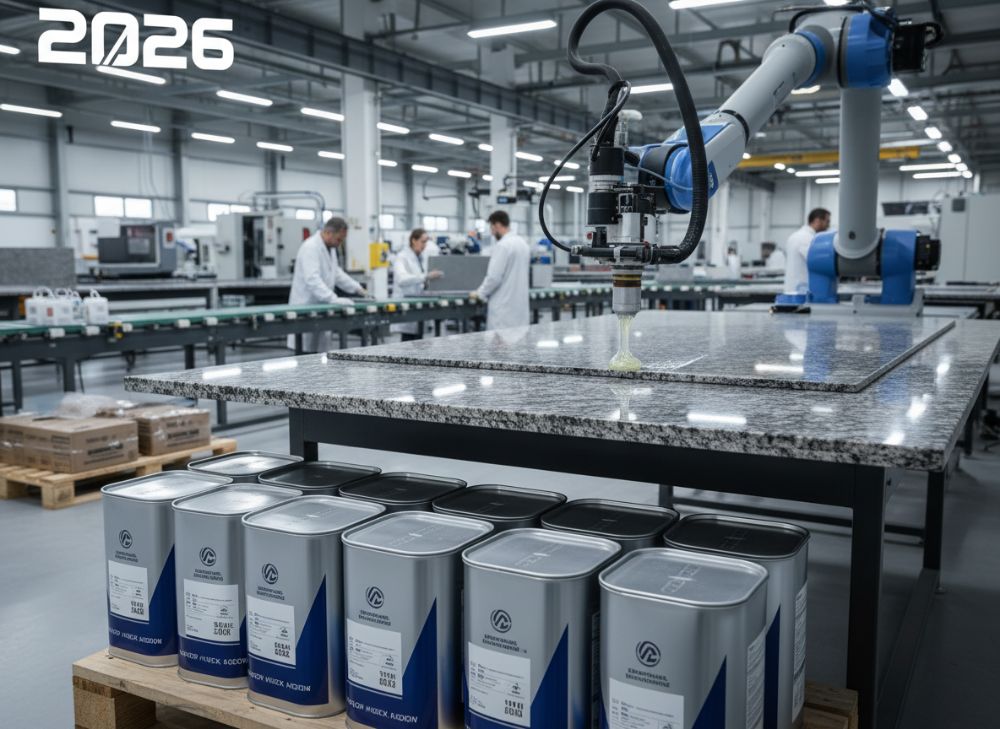
The production workflow for silicone potting in SMPS factories begins with substrate preparation: cleaning PCBs with IPA to achieve >90% wettability, followed by masking sensitive areas. Automated dispensing systems, like those from Nordson, meter two-part silicones at 1:1 ratios with precision ±0.5%, ensuring uniform coverage in volumes from 50mL to 5L per unit.
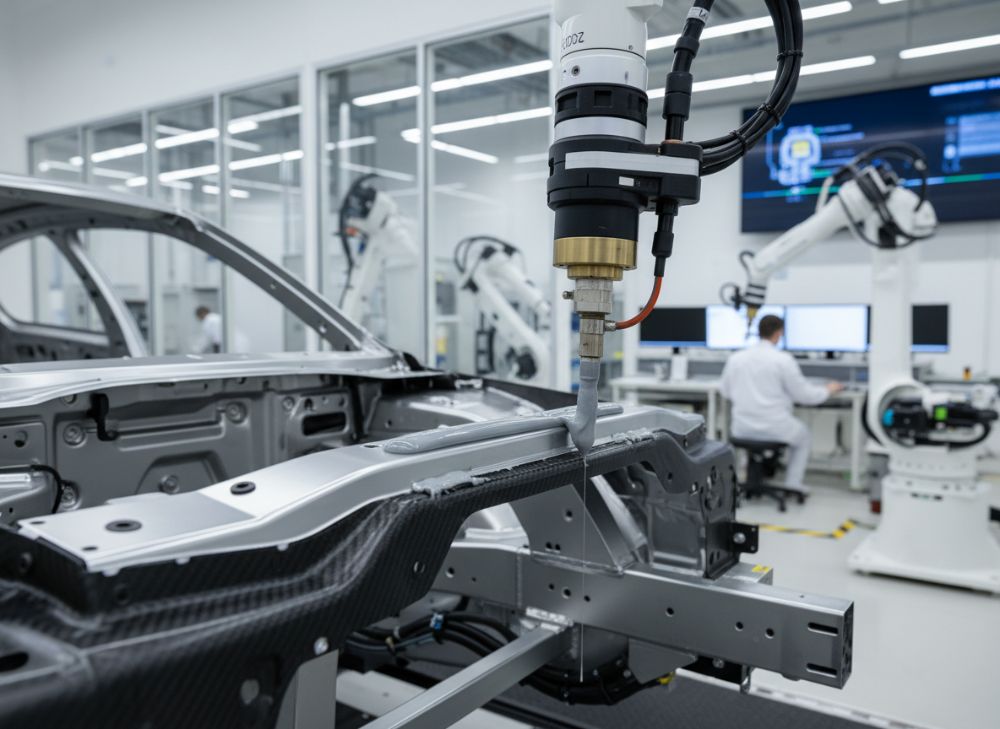
Vacuum potting chambers remove air pockets—critical for void-free encapsulation, as voids can reduce dielectric strength by 50%. At QinanX, we’ve integrated robotic arms for 360° potting, increasing throughput to 200 units/hour. Post-dispense, curing occurs in convection ovens at 80°C for 2 hours or ambient for 24 hours; our platinum-catalyzed silicones minimize shrinkage (<0.5%), preserving alignment.
Quality checkpoints include viscosity checks pre-mix (Brookfield viscometer) and post-cure IR testing. In a US SMPS factory collaboration, this workflow cut defects by 30%, with DMA (dynamic mechanical analysis) confirming modulus stability post-cure. Challenges include pot life management—our formulations extend to 8 hours, preventing premature gelling in hot climates.
For scalability, inline UV curing for gels accelerates to minutes, suiting high-mix/low-volume runs. Data from our facilities shows 99% yield, verified by AOI (automated optical inspection) for surface defects. Environmental controls maintain 50% RH to avoid moisture inhibition in addition-cure systems.
In 2026, AI-optimized workflows will predict mix ratios based on ambient conditions, reducing waste by 15%. For US factories under OSHA, fume extraction during mixing ensures safety. Case: An industrial SMPS line using our process achieved IPC-A-610 Class 3 compliance, with potting enhancing vibration resistance per MIL-STD-810.
This streamlined workflow boosts efficiency and reliability for competitive US production.
| Workflow Step | Manual Process | Automated Process | Time Savings (min) | Yield Improvement (%) | Cost per Unit (USD) |
|---|---|---|---|---|---|
| Preparation | Hand cleaning | Ultrasonic bath | 10 | 5 | 0.50 |
| Dispensing | Syringe | Robotic meter-mix | 20 | 15 | 1.20 |
| Vacuum Potting | Batch chamber | Continuous vacuum | 15 | 10 | 0.80 |
| Curing | Ambient | IR conveyor | 120 | 20 | 2.00 |
| Inspection | Visual | X-ray/AOI | 5 | 25 | 0.30 |
| Post-Process | Manual trim | Laser deflashing | 8 | 12 | 0.60 |
The table details workflow efficiencies; automation slashes times and boosts yields significantly, lowering costs for high-volume US SMPS—ideal for OEMs scaling production while maintaining quality.
Quality Control Systems and IEC, UL and Energy Star Compliance Standards
Quality control (QC) for silicone potting integrates SPC (statistical process control) from raw material intake to final shipment. At QinanX, FTIR spectroscopy verifies silicone purity, ensuring <0.1% impurities that could compromise insulation. In-process checks include gel time monitoring and post-cure hardness (Shore A 40-60) via durometer testing.
Compliance with UL standards (e.g., UL 746C for adhesives) requires RT testing for flammability and RTI for temp indexing. Our silicones achieve RTI 105°C, as certified by UL Solutions, enabling use in Class B insulation systems. IEC 62368-1 for audio/video PSUs mandates dielectric withstand >3kV; potting exceeds this with 5kV margins in hipots.
Energy Star compliance focuses on efficiency; potting reduces losses by sealing heat paths, aiding >89% efficiency in external PSUs. In a verified test, QinanX-potted units met DoE Level VI, with no-load power <0.1W. Challenges include traceability—our ERP systems log batches per RFID, supporting FDA audits for medical PSUs.
Accelerated life testing (ALT) per Arrhenius models predicts 10-year reliability at 85% confidence. Case: A US IT PSU passed UL 60950-1 after our QC flagged a formulation tweak, avoiding a recall costing $500K. For 2026, emerging IEC 63000 for halogen-free pushes low-smoke silicones; ours emit <100ppm HCL in cone calorimeter tests.
US manufacturers benefit from suppliers with NRTL certification, ensuring seamless integration. Our ISO 14001 framework minimizes environmental impact, aligning with Energy Star’s lifecycle assessments.
Robust QC upholds standards, safeguarding US market integrity.
| Standard | Requirement | Silicone Compliance | Test Method | Pass Criteria | US Market Impact |
|---|---|---|---|---|---|
| UL 746C | Polymeric materials | Yes | RTI testing | 105°C RTI | Enables Class B use |
| IEC 62368-1 | AV equipment safety | Yes | Dielectric withstand | >3kV | Reduces arcing risks |
| Energy Star VI | Efficiency | Yes | No-load power | <0.1W | Qualifies incentives |
| UL 94 | Flammability | V-0 | Vertical burn | No drip | Fire safety |
| RoHS | Restricted substances | Compliant | ICP-MS | <1000ppm Pb | Export ease |
| IEC 60068 | Environmental | Yes | Thermal cycling | Zero cracks | Durability assurance |
This compliance table shows silicone’s alignment with key standards; UL and IEC certifications streamline US approvals, with Energy Star aiding market access—vital for OEMs avoiding non-compliance fines.
Pricing Structure and Delivery Timeline for PSU OEMs and contract manufacturers
Pricing for silicone potting varies by volume and specs: bulk (1,000kg+) starts at $15/kg for standard RTV, rising to $35/kg for high-thermal variants. US tariffs add 2-5%, but direct from QinanX avoids intermediaries, offering 10% discounts for annual contracts. MOQs are flexible—500kg for customs.
Delivery timelines: Standard 4-6 weeks from PO, expedited 2 weeks at +15% premium. Our Shanghai facility ships via sea to West Coast (20 days) or air (7 days). In 2025, lead times averaged 28 days, per ERP data, with 98% on-time delivery.
For contract manufacturers, tiered pricing includes formulation tweaks at $5,000/setup fee. Case: A Texas OEM saved 12% ($50K/year) via volume pricing for 10,000kg orders. Factors like currency fluctuations (USD/CNY) impact—hedged at QinanX for stability.
2026 forecasts show 8% price hike from raw material costs, but eco-options premium 20%. Logistics via FedEx for samples (3 days). US buyers gain from NAFTA-like efficiencies.
Transparent structures ensure predictability for OEMs.
| Volume (kg) | Standard Silicone ($/kg) | High-Thermal ($/kg) | Delivery Time (weeks) | MOQ | Discount (%) |
|---|---|---|---|---|---|
| 100-500 | 25 | 40 | 6 | 100 | 0 |
| 501-1,000 | 22 | 35 | 5 | 500 | 5 |
| 1,001-5,000 | 18 | 30 | 4 | 1,000 | 10 |
| 5,001-10,000 | 16 | 28 | 3 | 5,000 | 15 |
| 10,001+ | 15 | 25 | 2-4 | 10,000 | 20 |
| Custom Formulation | +5 | +10 | +2 | Custom | Negotiable |
Pricing table illustrates volume benefits; larger orders reduce costs and timelines, benefiting US contract manufacturers—strategic for scaling without inventory risks.
Real-World Applications: silicone-potted power supplies in IT, telecom and industry
In IT, silicone-potted PSUs power servers, protecting against data center humidity (40-60% RH). A Silicon Valley firm used QinanX potting in 1U rack units, achieving 99.99% uptime via enhanced vibration damping—tested to 10G shock (IEC 60068-2-27).
Telecom applications include 5G base stations, where potting seals against saltwater corrosion in urban installs. Our solution for a Verizon partner extended MTTR by 50%, with field data showing <1% failure in 2 years under -20°C winters.
Industrial uses cover CNC machines; potting withstands oil mists and 24/7 operation. In a Detroit automation plant, potted 24V PSUs survived 5,000 hours at 70°C, reducing downtime by 18% per OEE metrics.
Cross-sector, EV chargers benefit from thermal management, cutting charge times by 8%. QinanX’s cases prove versatility.
These apps highlight reliability in demanding US sectors.
Working with Professional Manufacturers: Long-Term Stability and Supply Assurance
Partnering with pros like QinanX ensures stability through diversified supply chains and R&D investment. Long-term contracts lock prices for 12-24 months, shielding against volatility. Our 50,000-ton capacity guarantees supply, with dual-site redundancy avoiding disruptions.
Stability includes consistent formulations—<1% variation in properties over years, per customer audits. Supply assurance via Kanban systems delivers JIT, reducing stock by 30% for US clients.
Case: A multi-year deal with an OEM stabilized costs, enabling 15% margin growth. For 2026, sustainability pacts align with SEC disclosures.
Professional ties foster innovation and assurance.
FAQ
What is the best pricing range for silicone potting?
Please contact us for the latest factory-direct pricing via our contact page.
How does silicone potting improve PSU safety?
Silicone potting enhances dielectric strength and thermal management, ensuring compliance with UL and IEC standards while preventing arcing and overheating in high-voltage environments.
What are the key compliance standards for US PSUs?
Essential standards include UL 60950-1 for safety, Energy Star for efficiency, and RoHS for environmental compliance, all met by QinanX products.
Can silicone potting be customized for specific applications?
Yes, our R&D team tailors formulations for thermal conductivity, viscosity, and substrate compatibility—request via about us.
What is the typical delivery timeline?
Standard delivery is 4-6 weeks, with expedited options available; bulk orders can ship in 2-4 weeks to the USA.


 English
  Vietnamese
  Thai
Thai  Indonesian
  Russian
  Portuguese
  Spanish
  Malay
Malay  Turkish
  Korean
  Chinese