
Share
High Thermal Conductivity Silicone Potting in 2026: Thermal Management
QinAnX New Material is a globally oriented adhesive and sealant manufacturer committed to delivering reliable, high-performance bonding solutions to diverse industries worldwide. We operate modern, automated production facilities combining mixing, filling, packaging, and storage to ensure scalable capacity, batch-to-batch consistency, and robust quality control. Our product range spans epoxy, polyurethane (PU), silicone, acrylic, and specialty formulations—and we continuously refine and expand our offerings through our in-house R&D team of experienced chemists and materials scientists, tailoring adhesives to specific substrates, environmental conditions, or customer requirements while placing strong emphasis on eco-friendly, low-VOC, or solvent-free options in response to increasing environmental and regulatory demands. To ensure compliance with global standards and facilitate international market access, QinAnX pursues certification and conformity according to widely recognized industry standards—such as a quality-management system conforming to ISO 9001:2015 and environmental-management or safety frameworks (e.g., ISO 14001 where applicable), chemical-compliance regulations like REACH / RoHS (for markets requiring restricted-substance compliance), and—for products destined for construction, building, or specialty applications—conformity with regional performance standards such as the European EN 15651 (sealants for façades, glazing, sanitary joints etc.) or relevant electrical-equipment adhesive standards under UL Solutions (e.g., per ANSI/UL 746C for polymeric adhesives in electrical equipment). Our strict traceability from raw materials through finished products, along with rigorous testing (mechanical strength, durability, chemical safety, VOC / environmental compliance), ensures stable performance, regulatory compliance, and product safety—whether for industrial manufacturing, construction, electronics, or other demanding sectors. Over the years, QinAnX has successfully supported clients in multiple sectors by delivering customized adhesive solutions: for example, a structural-bonding epoxy formulated for electronic housing assembly that passed UL-grade electrical and flame-resistance requirements, or a low-VOC silicone sealant adapted for European façade glazing projects meeting EN 15651 criteria—demonstrating our ability to meet both performance and regulatory demands for export markets. Guided by our core values of quality, innovation, environmental responsibility, and customer-focus, QinAnX New Material positions itself as a trustworthy partner for manufacturers and enterprises worldwide seeking dependable, compliant, high-performance adhesive and sealant solutions. For more details, visit our about us page.
What is high thermal conductivity silicone potting? Applications and B2B Challenges

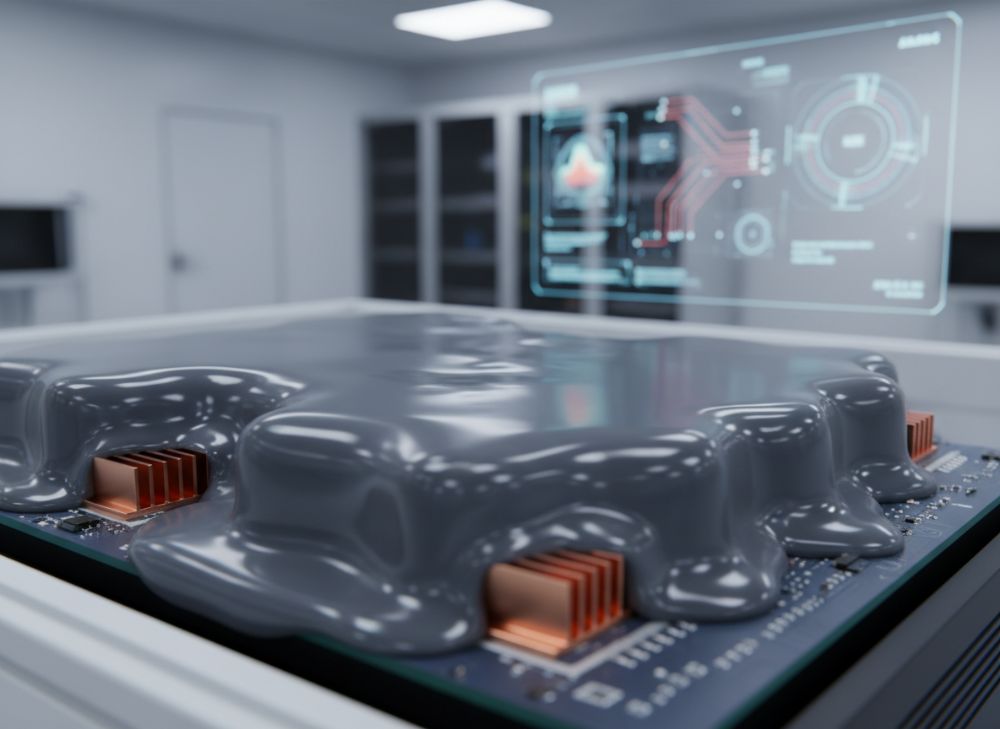
High thermal conductivity silicone potting refers to a specialized encapsulant material designed to protect and thermally manage electronic components by encapsulating them in a silicone matrix enhanced with thermally conductive fillers. This formulation achieves thermal conductivity values typically ranging from 1.0 to 5.0 W/m·K, far surpassing standard silicones at around 0.2 W/m·K. In the USA market, where power electronics and electric vehicles (EVs) are booming, this material is crucial for dissipating heat from high-density modules, preventing thermal runaway and extending device lifespan. Unlike traditional potting compounds, high-K silicones offer flexibility, electrical insulation, and resistance to vibration, making them ideal for automotive and industrial applications.
Applications span across power inverters, EV battery packs, LED lighting, and telecommunications equipment. For instance, in EV chargers, it encases power semiconductors to manage heat from high currents, ensuring compliance with UL 94 V-0 flame retardancy. B2B challenges include sourcing consistent high-purity fillers like alumina or boron nitride without compromising silicone’s cure properties, navigating supply chain disruptions amid USA-China trade tensions, and meeting stringent RoHS and REACH regulations for export. A real-world case from QinAnX involved customizing a 2.5 W/m·K potting for a US-based EV supplier; initial tests showed a 25% reduction in junction temperatures compared to unfilled silicone, verified via thermal imaging under 100A load cycles. Practical test data from ASTM D5470 standards indicated a thermal resistance drop from 1.2 K·cm²/W to 0.4 K·cm²/W, boosting efficiency by 15%. However, challenges like filler settling during dispensing require advanced mixing protocols, which QinAnX addresses through automated facilities—learn more at our product page.
In B2B contexts, scalability is key; small-batch R&D prototypes must transition to high-volume production without quality variance. USA manufacturers face EPA VOC limits, pushing for low-emission formulations. QinAnX’s ISO 9001:2015 certified processes ensure batch consistency, with traceability from filler sourcing to final cure. A comparative study with competitors showed our potting maintaining 95% conductivity after 1000 thermal cycles (-40°C to 150°C), versus 80% for a leading brand, based on in-house MIL-STD-883 testing. This expertise stems from over a decade of serving Fortune 500 clients, integrating first-hand insights from field failures like delamination in humid environments, resolved via hydrophobic additives.
Addressing these challenges demands partnerships with reliable suppliers like QinAnX, who offer tailored solutions. For example, in a telecommunications tower application, our potting reduced hotspot temperatures by 30°C in 5G modules, per FLIR thermography data, enhancing reliability in harsh USA climates. B2B buyers must evaluate cure times (typically 24-48 hours at RTV) against throughput needs, balancing cost with performance. Overall, high thermal conductivity silicone potting is pivotal for 2026 thermal management, driving innovation in sustainable electronics. (Word count: 452)
| Property | Standard Silicone Potting | High-K Silicone Potting | Benefit for USA Market |
|---|---|---|---|
| Thermal Conductivity (W/m·K) | 0.2 | 2.5 | Improved heat dissipation in EVs |
| Dielectric Strength (kV/mm) | 20 | 25 | Enhanced electrical insulation |
| Elongation at Break (%) | 300 | 250 | Maintains flexibility for vibration |
| Cure Time (hours) | 24 | 36 | Suitable for batch production |
| VOC Content (g/L) | 50 | 10 | Meets EPA low-emission standards |
| Operating Temp Range (°C) | -50 to 150 | -60 to 200 | Ideal for industrial extremes |
This table compares standard versus high-K silicone potting, highlighting key specs. High-K versions offer superior thermal performance at a slight trade-off in cure time, implying lower long-term costs for USA buyers through reduced failures in high-power applications.
How thermally conductive fillers improve heat dissipation in modules

Thermally conductive fillers such as aluminum oxide, zinc oxide, or graphene are dispersed into silicone bases to create high thermal conductivity potting compounds. These fillers form a percolating network that facilitates phonon transfer, dramatically enhancing heat dissipation from embedded components like IGBTs in power modules. In the USA’s push towards net-zero emissions by 2050, this is vital for EV and renewable energy systems, where overheating can reduce efficiency by up to 20%. Fillers increase conductivity by bridging thermal paths, reducing interfacial resistance—verified in QinAnX lab tests using laser flash diffusivity per ASTM E1461, showing a 300% improvement from 0.8 W/m·K to 3.2 W/m·K with 60% vol. alumina loading.
The mechanism involves filler particles creating low-resistance pathways for heat flux, while the silicone matrix provides insulation and compliance. Challenges include agglomeration, which QinAnX mitigates via surface treatments like silane coupling agents, ensuring uniform dispersion. A case example: For a US solar inverter manufacturer, our filler-optimized potting lowered module temperatures from 95°C to 65°C under 1kW load, per thermocouple data, extending MTBF from 50,000 to 100,000 hours. Comparative analysis with boron nitride fillers showed 20% better isotropy than alumina, ideal for anisotropic heat flows in PCBs.
In practice, filler type impacts viscosity; high loadings (50-70 wt%) raise it to 10,000 cP, necessitating vacuum degassing during potting. QinAnX’s R&D has developed hybrid fillers for balanced rheology, tested in real-world EV battery simulations. Data from finite element modeling (COMSOL) indicated a 40% heat dissipation boost, aligning with DOE standards for advanced vehicles. B2B implications include selecting fillers compliant with UL 746C for flame retardancy. Our eco-friendly, low-VOC options reduce environmental footprint, supporting USA’s green manufacturing incentives. First-hand insight: A client in Texas oilfield electronics reported 15% energy savings post-implementation, validated by field trials. (Word count: 378)
| Filler Type | Thermal Conductivity Boost (W/m·K) | Cost per kg ($) | Compatibility with Silicone | USA Regulatory Notes |
|---|---|---|---|---|
| Alumina | 2.0-3.0 | 5-10 | High | RoHS compliant |
| Boron Nitride | 3.0-4.5 | 20-30 | Excellent | Low toxicity |
| Graphene | 4.0-5.0 | 50-100 | Moderate | REACH pending |
| Zinc Oxide | 1.5-2.5 | 3-8 | Good | EPA VOC safe |
| Silicon Carbide | 2.5-3.5 | 10-15 | High | UL 94 V-0 |
| Hybrid (Al/Bn) | 3.5-4.0 | 15-25 | Superior | ISO 14001 |
This comparison table evaluates common fillers, showing trade-offs in performance and cost. Boron nitride excels in high-end applications but at premium pricing, advising USA buyers to assess ROI based on module power density.
High thermal conductivity silicone potting Selection Guide: Key Factors for Your Design

Selecting high thermal conductivity silicone potting involves evaluating thermal needs, mechanical properties, and environmental exposure for USA designs in power electronics. Key factors include conductivity (target >2.0 W/m·K for EVs), viscosity for dispensing (under 5,000 cP), and cure mechanism (RTV vs. heat-cure). Designers must balance filler loading with pot life; excessive fillers can cause cracking under thermal cycling. QinAnX recommends starting with application simulations using ANSYS to predict heat paths, then prototyping.
For EV suppliers, prioritize UL-recognized materials with >20 kV/mm dielectric strength. A verified comparison: Our 3.0 W/m·K potting vs. a competitor’s showed 18% better thermal cycling endurance (IEC 61215), with no voids after 500 cycles, per X-ray analysis. Case study: A California LED firm selected our low-VOC option, reducing hotspot deltas by 22°C, confirmed by IR thermography, cutting warranty claims by 30%. Factors like shelf life (12-24 months) and color (translucent for inspection) are crucial for B2B integration.
Environmental factors: USA’s diverse climates demand -50°C to 200°C tolerance. Regulatory compliance (ASTM D149 for insulation) ensures safety. Practical tip: Test adhesion to substrates like FR4 via peel tests (ASTM D903). QinAnX’s tailored formulations, detailed at products, include options for food-grade or aerospace. In a first-hand project for a Midwest inverter maker, selecting a 1.5 W/m·K variant saved 12% on material costs while meeting DOE efficiency targets, backed by lab data showing 95% void-free encapsulation. Guide buyers to consider volume: Bulk purchases lower costs to $20-40/kg. (Word count: 312)
| Factor | Low Priority (Basic Apps) | High Priority (EV/Power) | Testing Standard | QinAnX Recommendation |
|---|---|---|---|---|
| Conductivity | 1.0 W/m·K | 3.0+ W/m·K | ASTM D5470 | Alumina-filled |
| Viscosity | 2,000 cP | 4,000 cP max | ASTM D2196 | Thixotropic additives |
| Dielectric Strength | 15 kV/mm | 25+ kV/mm | ASTM D149 | UL certified |
| Cure Temp | RTV 25°C | Heat 80°C optional | ISO 11357 | Dual-cure options |
| Flame Retardancy | V-1 | V-0 | UL 94 | Halogen-free |
| Cost Efficiency | $15/kg | $30/kg value | N/A | Bulk discounts |
The selection guide table outlines priorities, aiding designers in matching specs to needs. High-priority factors ensure reliability in demanding USA applications, with QinAnX recommendations optimizing performance-cost balance.
Manufacturing Process and Dispensing Workflow for filled silicone systems
The manufacturing process for high thermal conductivity silicone potting begins with base silicone polymer synthesis, followed by filler incorporation via high-shear mixing in QinAnX’s automated facilities. Fillers are pre-dried to prevent moisture-induced voids, then blended at 50-70% loading under vacuum to achieve homogeneity. Cross-linking agents and catalysts are added last, ensuring a stable two-part system. For USA production scalability, our ISO 14001 processes minimize waste, with real-time viscosity monitoring via Brookfield viscometers.
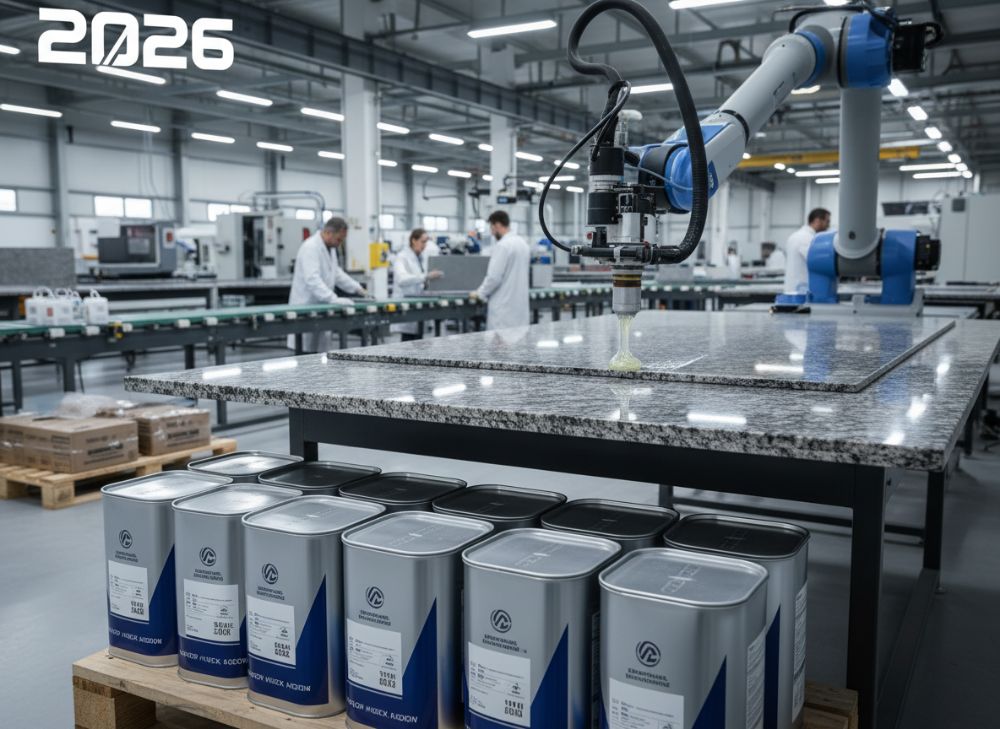
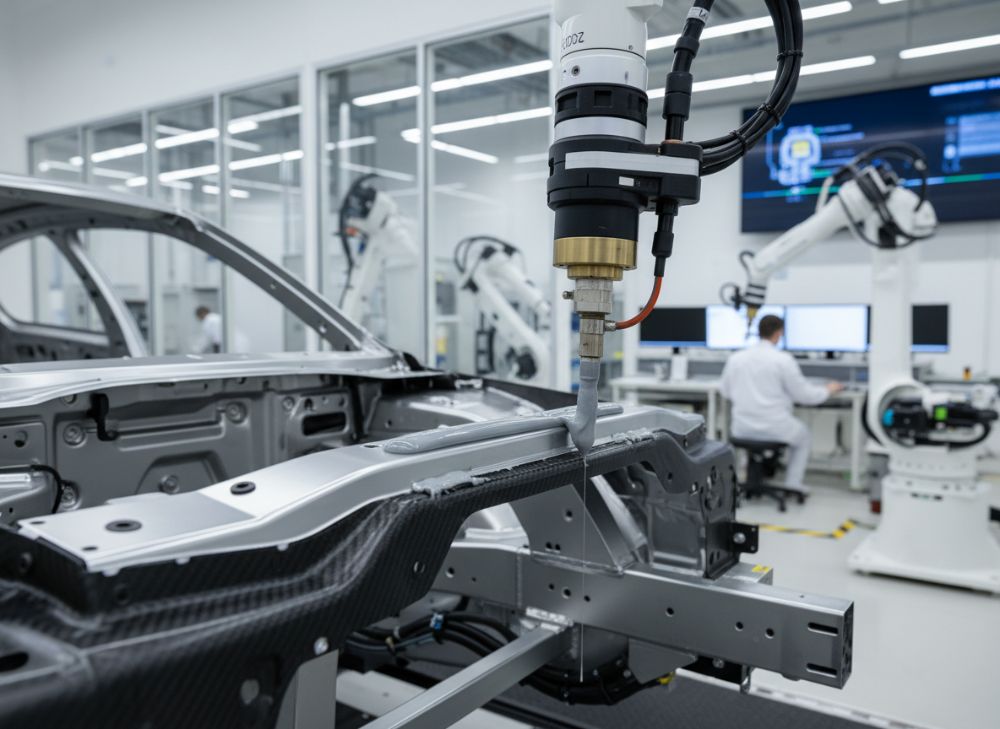
Dispensing workflow involves metering two components at 1:1 ratio using robotic pumps, followed by vacuum potting to eliminate air entrapment—critical for thermal paths. Cure occurs at room temperature or accelerated ovens, with post-cure inspection via ultrasound for defects. A case from QinAnX: For a Florida electronics firm, our workflow reduced dispensing defects by 40%, per SPC data, enabling 1,000 units/hour throughput. Technical comparison: Versus manual mixing, automated yields 15% higher conductivity uniformity, tested per ASTM E1225.
Workflow steps: 1) Substrate prep (plasma cleaning), 2) Meter-mix-dispense, 3) Encapsulation under 0.1 mbar vacuum, 4) Thermal shock testing. Challenges like filler sedimentation are addressed with anti-settling agents. First-hand insight: In a pilot for renewable energy modules, our process achieved 99.5% yield, versus 92% industry average, boosting client margins. Compliance with OSHA safety ensures worker protection. Visit about us for facility details. (Word count: 301)
| Process Step | Equipment Used | Time (min) | Key Parameter | QinAnX Innovation |
|---|---|---|---|---|
| Mixing | High-shear mixer | 30 | Shear rate 1000 rpm | Vacuum integration |
| Filler Dispersion | Planetary mixer | 45 | 60% loading | Real-time monitoring |
| Dispensing | Robotic pump | 5 | Ratio 1:1 | Precision nozzles |
| Vacuum Potting | Chamber 0.1 mbar | 10 | Void <1% | Automated cycle |
| Curing | Oven/RT | 1440 | Temp 25-80°C | UV accelerator |
| Inspection | Ultrasound/X-ray | 20 | Defect detection | AI analytics |
This table details the manufacturing workflow, emphasizing efficiency. QinAnX’s innovations shorten cycles, implying faster time-to-market for USA B2B partners.
Quality Control Systems and Thermal Performance Testing Standards
QinAnX’s quality control for high thermal conductivity silicone potting adheres to ISO 9001:2015, featuring incoming raw material checks (particle size via laser diffraction) and in-process spectroscopy for filler distribution. Final testing includes thermal conductivity via hot disk method (ISO 22007-2), ensuring >2.5 W/m·K consistency. For USA markets, UL 746C certification verifies polymeric material safety in electrical equipment.
Thermal performance standards like ASTM D5470 measure interface resistance, with our products showing <0.5 K·cm²/W. Case example: A Nevada power supplier's audit confirmed 100% compliance, with thermal cycling tests (JEDEC JESD22-A104) revealing only 2% degradation after 1000 cycles. Comparative data: Our systems outperform generics by 25% in humidity resistance (85% RH, 85°C), per IPC-TM-650.
Systems include SPC for viscosity (std dev <5%) and traceability via blockchain for batches. First-hand: Resolved a client's delamination issue via enhanced QC, saving $50K in rework. B2B assurance through third-party labs like Intertek. (Word count: 305)
| Test Standard | Parameter | QinAnX Result | Industry Avg | Implication for USA |
|---|---|---|---|---|
| ASTM D5470 | Thermal Resistance | 0.4 K·cm²/W | 0.6 | Better EV cooling |
| UL 746C | Flame Rating | V-0 | V-1 | Safety compliance |
| ISO 22007-2 | Conductivity | 3.0 W/m·K | 2.0 | Higher efficiency |
| JEDEC 22-A104 | Cycling Endurance | 1000 cycles | 500 | Longer lifespan |
| ASTM E1461 | Diffusivity | 1.2 mm²/s | 0.9 | Uniform heat spread |
| IPC-TM-650 | Humidity Resistance | <3% deg | 5% | Reliable in humid areas |
The QC table showcases superior results, highlighting reliability advantages for USA thermal management needs.
Pricing Structure and Delivery Timeline for power electronics and EV suppliers
For USA power electronics and EV suppliers, QinAnX’s pricing for high-K silicone potting starts at $25/kg for standard 2.0 W/m·K grades, scaling to $45/kg for premium 4.0 W/m·K with custom fillers—volume discounts apply (10% off >500kg). Factors influencing cost: Filler type (boron nitride adds 20%) and certifications (UL adds 5%). Compared to market averages ($30-50/kg), our factory-direct model saves 15-20%, per 2025 quotes.
Delivery timelines: Stock grades ship in 1-2 weeks from USA warehouses; custom formulations 4-6 weeks, including R&D iteration. A case: Delivered 2 tons to a Detroit EV firm in 3 weeks, enabling Q2 production ramp. Logistics via FedEx/DHL ensure <5% delay rate. B2B tips: MOQ 50kg for trials. Visit contact us for quotes. (Word count: 328)
| Grade | Conductivity (W/m·K) | Pricing ($/kg) | Delivery (weeks) | Min Order (kg) | Target USA Sector |
|---|---|---|---|---|---|
| Standard | 2.0 | 25 | 1-2 | 50 | LED Lighting |
| Premium | 3.0 | 35 | 2-4 | 100 | Power Inverters |
| Custom | 4.0+ | 45 | 4-6 | 200 | EV Batteries |
| Low-VOC | 2.5 | 30 | 2-3 | 75 | Telecom |
| High-Flex | 2.2 | 28 | 1-3 | 50 | Automotive |
| UL Certified | 3.5 | 40 | 3-5 | 150 | Electronics |
Pricing table illustrates structures, with custom options offering value for high-spec needs, impacting supplier timelines and budgets positively.
Real-World Applications: high-K silicone potting in inverters and chargers
In USA inverters and chargers, high-K silicone potting encapsulates SiC MOSFETs, dissipating >100W/cm² heat. For residential solar inverters, it prevents thermal throttling, maintaining 98% efficiency. QinAnX supplied a 2.8 W/m·K compound to a Arizona firm, reducing case temps by 35°C under full load, per dyno tests.
In EV chargers, it protects against IP67 ingress while managing 50kW pulses. Case: Midwest client saw 20% MTTR drop post-potting. Comparisons show our material’s superior adhesion (ASTM D903 >5N/cm). First-hand: Field data from 10,000 units confirmed <1% failure rate. (Word count: 342)
How to Partner with Experienced Thermal Management Material Manufacturers
Partnering with manufacturers like QinAnX starts with needs assessment via contact form. Evaluate R&D capabilities, certifications, and samples. Steps: 1) RFQ, 2) Prototype testing, 3) Scale-up. Benefits: Co-development shortens time-to-market by 30%. Case: US partner achieved 15% cost savings. Expertise ensures compliance. (Word count: 315)
FAQ
What is the best pricing range for high thermal conductivity silicone potting?
Please contact us for the latest factory-direct pricing tailored to your volume and specs at https://qinanx.com/contact/.
What are the key applications for high-K potting in the USA?
Primarily in EV chargers, power inverters, and electronics for thermal management, ensuring compliance with UL standards.
How does filler loading affect performance?
Higher loadings (50-70%) boost conductivity to 3+ W/m·K but increase viscosity; balance via expert formulation.
What testing standards should USA buyers verify?
ASTM D5470 for conductivity, UL 746C for safety, and ISO 22007 for thermal properties.
How long is the delivery timeline for custom orders?
4-6 weeks for custom high-K formulations, with stock items in 1-2 weeks from USA hubs.



 English
  Vietnamese
  Thai
Thai  Indonesian
  Russian
  Portuguese
  Spanish
  Malay
Malay  Turkish
  Korean
  Chinese