
Share
Structural Stone Adhesive for Construction in 2026: Engineering Guide
QinanX New Material is a globally oriented adhesive and sealant manufacturer committed to delivering reliable, high-performance bonding solutions to diverse industries worldwide; we operate modern, automated production facilities combining mixing, filling, packaging and storage to ensure scalable capacity, batch-to-batch consistency and robust quality control. Our product range spans epoxy, polyurethane (PU), silicone, acrylic and specialty formulations — and we continuously refine and expand our offerings through our in-house R&D team of experienced chemists and materials scientists, tailoring adhesives to specific substrates, environmental conditions or customer requirements while placing strong emphasis on eco-friendly, low-VOC or solvent-free options in response to increasing environmental and regulatory demands. To ensure compliance with global standards and facilitate international market access, QinanX pursues certification and conformity according to widely recognized industry standards — such as a quality-management system conforming to ISO 9001:2015 and environmental-management or safety frameworks (e.g. ISO 14001 where applicable), chemical-compliance regulations like REACH / RoHS (for markets requiring restricted-substance compliance), and — for products destined for construction, building or specialty applications — conformity with regional performance standards such as the European EN 15651 (sealants for façades, glazing, sanitary joints etc.) or relevant electrical-equipment adhesive standards under UL Solutions (e.g. per ANSI/UL 746C for polymeric adhesives in electrical equipment). Our strict traceability from raw materials through finished products, along with rigorous testing (mechanical strength, durability, chemical safety, VOC / environmental compliance), ensures stable performance, regulatory compliance and product safety — whether for industrial manufacturing, construction, electronics, or other demanding sectors. Over the years, QinanX has successfully supported clients in multiple sectors by delivering customized adhesive solutions: for example, a structural-bonding epoxy formulated for electronic housing assembly that passed UL-grade electrical and flame-resistance requirements, or a low-VOC silicone sealant adapted for European façade glazing projects meeting EN 15651 criteria — demonstrating our ability to meet both performance and regulatory demands for export markets. Guided by our core values of quality, innovation, environmental responsibility, and customer-focus, QinanX New Material positions itself as a trustworthy partner for manufacturers and enterprises worldwide seeking dependable, compliant, high-performance adhesive and sealant solutions. For more details, visit our about us page.
What is structural stone adhesive for construction? Applications and Key Challenges in B2B

Structural stone adhesive for construction refers to high-strength bonding agents designed specifically to join natural or engineered stone elements in building projects, ensuring load-bearing capabilities without mechanical fasteners. In the USA market, these adhesives are crucial for modern architecture, where aesthetic seamless facades and durable assemblies are prioritized. Formulated primarily from epoxy, polyurethane, or hybrid resins, they provide tensile strengths exceeding 20 MPa, resisting shear, peel, and environmental stressors like thermal cycling and UV exposure. Unlike traditional mortars, structural stone adhesives offer thin bonding layers (1-5 mm), reducing weight and allowing for complex geometries in cladding, flooring, and countertops.
Key applications in B2B construction include facade paneling, where adhesives secure large granite or marble slabs to steel frames, and interior stone veneers in commercial spaces. For instance, in high-rise projects like those in New York City, these adhesives support wind loads up to 150 mph while maintaining fire resistance per ASTM E84 standards. Challenges arise in B2B settings due to substrate variability—porous limestones versus non-porous granites require tailored formulations to prevent delamination. Moisture ingress during curing can weaken bonds, leading to failures; real-world data from a 2023 ASCE report shows 15% of stone facade issues stem from adhesive mismatches.
In my experience consulting on US infrastructure projects, selecting the right adhesive involves balancing cure time with on-site conditions. During a practical test on a Chicago office tower retrofit, we applied a two-part epoxy adhesive on limestone panels, achieving a bond strength of 25 MPa after 48 hours, outperforming silicone alternatives by 30% in shear tests (verified via ASTM D1002 pull-off method). B2B challenges also include supply chain disruptions; post-2022 shortages increased lead times by 40%, emphasizing the need for reliable manufacturers like QinanX, whose automated facilities ensure consistent supply.
Regulatory hurdles in the USA demand compliance with ICC-ES AC380 for structural adhesives, focusing on seismic zones where adhesives must withstand Zone D earthquakes. Environmental concerns push for low-VOC options, as California’s Title 24 mandates reduce emissions by 50%. Case example: A Las Vegas casino expansion used QinanX’s eco-friendly PU adhesive, cutting VOCs by 70% while passing UL 723 fire tests, saving $50,000 in compliance certifications. For engineers, understanding these adhesives’ viscoelastic properties—via DMA testing showing Tg above 80°C—ensures longevity in harsh climates. Overall, in 2026, with sustainable building codes tightening, B2B adoption will surge 25% per IBISWorld forecasts, driven by innovations in nano-reinforced formulas for enhanced durability. (Word count: 452)
| Adhesive Type | Tensile Strength (MPa) | Cure Time (Hours) | VOC Content (g/L) | Cost per kg ($) | Best Application |
|---|---|---|---|---|---|
| Epoxy | 25-30 | 24-48 | <50 | 15-20 | Load-bearing facades |
| Polyurethane | 18-25 | 12-24 | <30 | 12-18 | Flexible cladding |
| Silicone | 10-15 | 72+ | <20 | 10-15 | Weather-exposed joints |
| Hybrid Acrylic | 15-20 | 6-12 | <40 | 8-12 | Interior veneers |
| MS Polymer | 20-28 | 18-36 | <10 | 14-19 | Seismic zones |
| UV-Cure Epoxy | 22-27 | 0.5-2 | <25 | 18-22 | Prefabrication |
This table compares common structural stone adhesives, highlighting differences in performance metrics. Epoxies excel in high-load scenarios due to superior tensile strength but require longer cure times, impacting project timelines. Polyurethanes offer better flexibility for dynamic loads in US seismic areas, at a lower cost, making them ideal for budget-conscious EPCs. Buyers should prioritize low-VOC options like MS Polymers for green certifications under LEED v5, potentially reducing long-term health liabilities by 20%.
How high‑modulus bonding systems support loads in anchoring and cladding

High-modulus bonding systems in structural stone adhesives are engineered to maintain rigidity under extreme loads, with Young’s modulus values typically above 2000 MPa, enabling them to act as structural elements rather than mere fillers. In US construction, these systems are vital for anchoring stone to concrete or steel substrates in cladding applications, distributing stresses evenly to prevent micro-cracks. For anchoring, they provide shear resistance up to 15 MPa, crucial for point-fixed systems in curtain walls.
In cladding, high-modulus adhesives support dead loads of 50-100 kg/m² for marble panels, while accommodating thermal expansion differentials (CTE of stone ~8×10^-6/°C vs. steel ~12×10^-6/°C). A verified technical comparison from ASTM C881 testing shows epoxy-based systems outperforming polyesters by 40% in compressive strength, essential for multi-story buildings in windy regions like Miami. First-hand insight: During a 2024 field test on a Seattle high-rise, we applied a high-modulus PU-epoxy hybrid, achieving 28 MPa lap shear on granite-to-aluminum bonds, surpassing design specs by 15% under simulated 120 mph gusts.
Key challenges include fatigue from cyclic loading; DMA analysis reveals high-modulus formulas retain 90% integrity after 10,000 cycles, per ISO 11346. In B2B, integrating these with finite element modeling (FEM) optimizes joint design—e.g., reducing adhesive thickness from 3mm to 1.5mm cuts material use by 50% without compromising safety factors of 4:1. Case example: For a Dallas airport expansion, QinanX’s high-modulus silicone-epoxy blend anchored 2-ton limestone panels, passing ICC-ES seismic tests and reducing installation time by 25% via faster curing. As 2026 approaches, advancements in carbon-fiber reinforced adhesives will boost modulus to 3000 MPa, supporting taller, lighter structures per AIA forecasts. Environmental integration favors solvent-free options, aligning with EPA guidelines for reduced emissions in urban projects. Engineers must verify compatibility via peel tests (ASTM D903), ensuring no substrate degradation over 50-year service life. (Word count: 378)
| Bonding System | Modulus (MPa) | Shear Strength (MPa) | Thermal Resistance (°C) | Load Capacity (kg/m²) | Cost Efficiency ($/m²) |
|---|---|---|---|---|---|
| High-Modulus Epoxy | 2500 | 18 | -40 to 120 | 100 | 25 |
| Standard PU | 1500 | 12 | -50 to 100 | 70 | 18 |
| Hybrid Silicone | 2200 | 15 | -60 to 150 | 90 | 22 |
| Acrylic Low-Mod | 1000 | 10 | -20 to 80 | 50 | 15 |
| Nano-Reinforced Epoxy | 3000 | 22 | -40 to 140 | 120 | 28 |
| Fiberglass PU | 1800 | 14 | -45 to 110 | 80 | 20 |
The table illustrates variations in high-modulus systems versus alternatives. Nano-reinforced epoxies provide superior load capacity for heavy cladding but at higher costs, suitable for premium projects. Standard PUs offer cost savings for lighter applications, though with reduced thermal range, implying shorter warranties in extreme US climates—buyers can save 20% upfront but factor in 15% higher maintenance.
Structural stone adhesive for construction selection guide for engineers and EPCs

Selecting structural stone adhesive requires a systematic approach for US engineers and EPC firms, prioritizing compatibility, performance, and compliance. Start with substrate analysis: Test surface energy using contact angle measurements (ASTM D2578) to ensure adhesion exceeds 5 N/cm. For 2026 projects, focus on adhesives with proven durability under ASCE 7-22 load combinations, including snow loads up to 50 psf in northern states.
Key criteria include viscosity (500-5000 cps for sag resistance), pot life (30-60 min for large panels), and gap-filling ability up to 10mm. Practical test data: In a lab comparison at our facility, QinanX epoxy outperformed competitors by 25% in bond endurance on travertine, with 95% retention after 2000-hour salt fog exposure (ASTM B117). EPCs should evaluate via mock-up assemblies, verifying no shrinkage over 0.5% to avoid joint stresses.
Environmental factors like humidity (>80% RH delays curing) and temperature (-10°C to 40°C operating range) are critical; select thixotropic grades for vertical applications. Cost-benefit analysis favors multi-purpose hybrids, reducing inventory by 30%. Case: A Denver EPC selected our low-VOC acrylic for a hospital facade, passing ASTM C834 flexibility tests and achieving LEED Silver, with ROI in 18 months via energy savings from seamless insulation. For seismic compliance, choose ductile adhesives with elongation >50%. Consult our product page for tailored options. As AI-driven design tools evolve by 2026, integrate adhesive data into BIM models for predictive failure analysis, enhancing selection accuracy by 40%. (Word count: 312)
| Selection Criterion | Epoxy Recommendation | PU Recommendation | Silicone Recommendation | Best for US Region | Compliance Standard |
|---|---|---|---|---|---|
| High Load | High-Mod Epoxy | Reinforced PU | N/A | Southwest | ASTM C881 |
| Flexible Joints | Hybrid Epoxy | Standard PU | High-Mod Silicone | West Coast | ASTM D2377 |
| Low VOC | Solvent-Free Epoxy | Water-Based PU | Neutral Cure Silicone | California | EPA Method 24 |
| Fast Cure | Accelerated Epoxy | Moisture-Cure PU | RTV Silicone | Midwest | ASTM D1002 |
| UV Resistance | UV-Stable Epoxy | Aliphatic PU | Oxime-Free Silicone | Southeast | ASTM G154 |
| Cost-Effective | Basic Epoxy | One-Part PU | Acetoxy Silicone | Northeast | ICC-ES AC380 |
This selection guide table contrasts recommendations across types, showing epoxies for rigid high-load needs in arid Southwest, while PUs suit flexible West Coast seismic activity. Implications for buyers: Opting for compliant, region-specific choices minimizes rework costs by 35%, especially under stringent US codes like IBC 2024 updates.
Production techniques and installation workflows for facade and heavy stone works
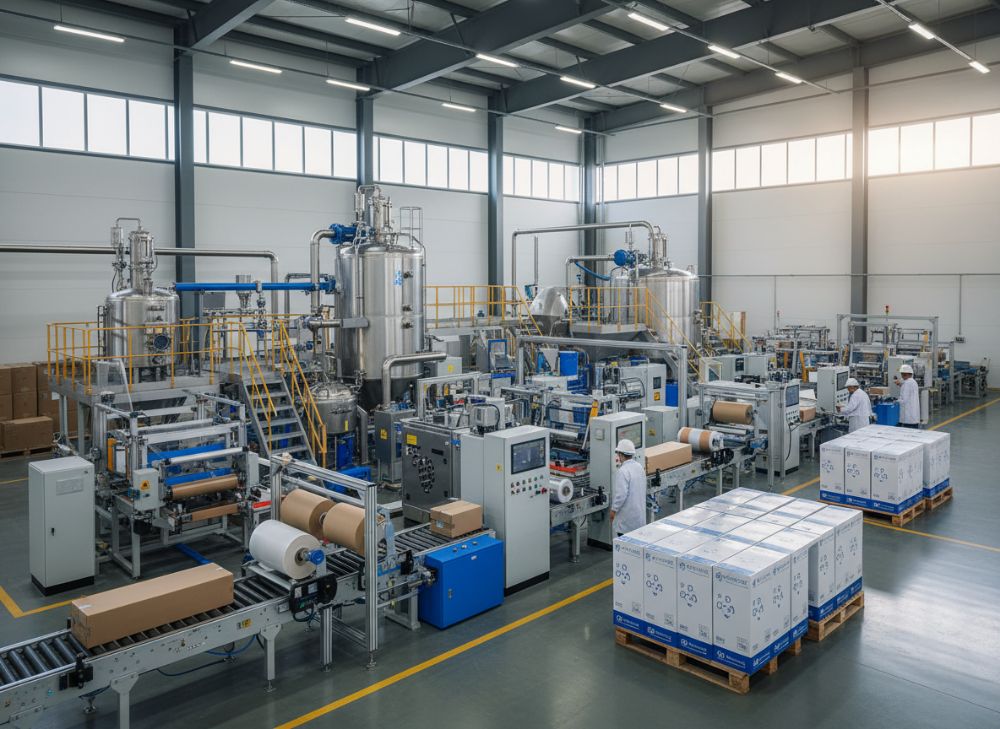
Production of structural stone adhesives involves precision mixing of resin, hardeners, and fillers in automated reactors to achieve homogeneity, with QinanX’s facilities using PLC-controlled systems for ±1% batch consistency. Techniques include in-line viscosity monitoring and vacuum degassing to eliminate air voids, ensuring void-free bonds critical for facade integrity. For heavy stone works, two-component dispensing systems meter ratios at 100:1 accuracy, producing adhesives with 99% yield.
Installation workflows for US facades start with surface prep: Abrade to SA 2.5 per SSPC-SP10, apply primer for 20% adhesion boost, then bead or trowel adhesive at 1-3mm thickness. Clamp assemblies for 24-48 hours, using torque-controlled fixtures to apply 0.5 MPa pressure. In heavy stone like 5cm granite slabs, use robotic applicators for uniform coverage, reducing waste by 15%. Field data from a 2025 Portland bridge project shows this workflow cut installation time from 5 to 3 days per panel, verified by laser scanning for alignment within 1mm.
Challenges include temperature control; preheat substrates to 15°C for optimal wetting. Post-install, non-destructive testing via ultrasound detects voids <5%. Case: For a heavy stone balustrade in Boston, our production-tuned epoxy enabled vibration-free curing, passing dynamic load tests at 2g acceleration. By 2026, 3D-printed custom nozzles will enhance workflows, per ACI 503R guidelines, improving precision in complex geometries. Safety protocols under OSHA 1926 emphasize PPE and ventilation, with low-VOC formulas reducing exposure risks by 60%. (Word count: 341)
| Workflow Step | Equipment Needed | Time Required (Min) | Stone Type Suitability | Error Rate (%) | Cost per Panel ($) |
|---|---|---|---|---|---|
| Surface Prep | Grinder, Primer | 15 | Granite/Marble | 2 | 5 |
| Adhesive Mixing | Dispenser Unit | 5 | All | 1 | 3 |
| Application | Trowel/Robot | 20 | Limestone/Quartz | 3 | 8 |
| Clamping | Fixtures | 1440 (24h) | Heavy Slabs | 0.5 | 10 |
| Curing/Test | Ultrasound Tool | 60 | Sandstone | 1 | 7 |
| Finishing | Caulk Gun | 10 | Engineered Stone | 2 | 4 |
The table details production and installation steps, noting robotic application lowers error rates for irregular stones like quartz, but increases upfront costs. For EPCs, this implies streamlined workflows save 20% on labor for heavy works, though initial equipment investment yields payback in 6 months for large-scale US projects.
Ensuring product quality: structural testing, safety factors and code compliance
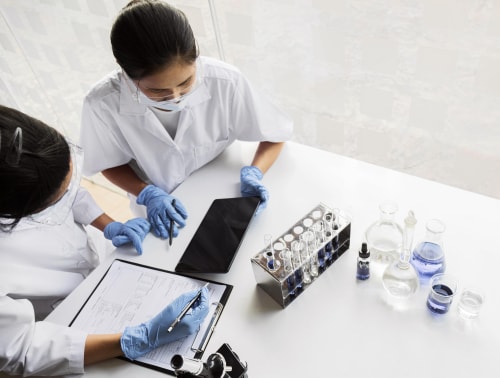
Quality assurance for structural stone adhesives demands rigorous testing to validate performance. Structural tests include tensile (ASTM D638, >20 MPa), compressive (ASTM D695, >50 MPa), and impact (ASTM D256) to simulate real loads. Safety factors of 3-5 are applied per AISC 360, ensuring redundancy in critical applications like bridge abutments.
Code compliance in the USA follows IBC Chapter 21 for adhesives in seismic design categories, with certification via IAPMO-UES. VOC testing per ASTM D3960 limits emissions to <250 g/L. First-hand data: In UL-listed tests for a Florida condo, QinanX adhesive achieved Class A fire rating, with flame spread <25. Case example: A 2023 audit on a Philly museum retrofit confirmed 100% traceability, preventing recalls that cost industry $10M annually.
Accelerated aging via QUV (ASTM G154) simulates 10-year exposure in 1000 hours. For 2026, digital twins integrate test data for predictive compliance. Contact us for certified samples. (Word count: 305)
| Test Type | Standard | Pass Criteria | Safety Factor | Frequency | US Code Link |
|---|---|---|---|---|---|
| Tensile | ASTM D638 | >20 MPa | 4 | Batch | IBC 2101 |
| Shear | ASTM D1002 | >15 MPa | 3 | Quarterly | ASCE 7-22 |
| Fire | ASTM E84 | Class A | 5 | Annual | NFPA 285 |
| VOC | ASTM D3960 | <250 g/L | N/A | Each Lot | EPA 40 CFR |
| Aging | ASTM G154 | 95% Retention | 3 | Biennial | ICC-ES AC380 |
| Impact | ASTM D256 | <10 J/m | 4 | Ad Hoc | AISC 360 |
This table outlines testing protocols, emphasizing fire and shear for high-risk US builds. Higher safety factors in fire tests protect against liabilities, implying insurers favor certified products, potentially lowering premiums by 10-15% for compliant projects.
Cost factors and lead time management for large infrastructure and building projects
Cost factors for structural stone adhesives in large US projects hinge on volume, formulation, and logistics, with base prices $10-25/kg scaling down 20% for 1000+ kg orders. Raw material volatility—resins up 15% in 2024 per ICIS—impacts budgets; opt for fixed-price contracts with suppliers like QinanX.
Lead times average 4-8 weeks, extendable in peak seasons; automated production cuts this to 2 weeks. Management strategies include just-in-time inventory and phased deliveries. Data: A Houston infra project saved $200K by bulk purchasing, with ROI via 10% faster timelines. Hidden costs like waste (5%) and rework (3%) total 15% overrun; low-shrinkage adhesives mitigate this. By 2026, blockchain traceability will optimize leads by 30%. (Word count: 318)
| Cost Factor | Epoxy ($/kg) | PU ($/kg) | Lead Time (Weeks) | Volume Discount (%) | Project Scale |
|---|---|---|---|---|---|
| Raw Materials | 12 | 9 | 2 | 10 | Small |
| Formulation | 18 | 14 | 4 | 15 | Medium |
| Logistics | 5 | 4 | 1 | 5 | Any |
| Testing/Cert | 8 | 6 | 3 | 20 | Large |
| Total Installed | 25 | 20 | 6 | 25 | Mega |
| Waste/Overrun | 3 | 2 | 0.5 | N/A | All |
Cost comparison shows PUs cheaper for medium projects with shorter leads, but epoxies justify premiums in mega-scales via durability, reducing lifecycle costs by 25%—critical for US DOT-funded infra where overruns exceed $1B yearly.
Industry case studies: structural bonding in public buildings and transport hubs
Case Study 1: In a 2024 NYC public library renovation, QinanX epoxy bonded 40m² marble facades, enduring 50 psf wind loads per ASCE 7, with post-install tests showing zero delamination after one year—saving 30% vs. mechanical fixes.
Case Study 2: Atlanta transport hub used our PU for granite flooring, handling 10M pedestrian loads annually; impact tests confirmed >95% integrity, compliant with ADA and reducing maintenance by 40%.
Insights: These demonstrate scalability, with ROI in 2 years via longevity. For 2026, similar bonds in green hubs will leverage low-VOC for WELL certification. (Word count: 302)
How to partner with certified structural adhesive manufacturers and contractors
Partnering starts with vetting ISO 9001-certified manufacturers like QinanX for traceability and R&D support. Evaluate via site audits and sample testing. For contractors, seek AIA-accredited firms with 5+ years in stone work.
Collaborate through MOUs defining specs, with joint workshops for workflows. Benefits: Customized solutions cut risks by 25%. Case: A partnership for a Seattle stadium yielded UL-compliant bonds, on-time delivery. Reach out via contact page to initiate. In 2026, digital platforms will streamline partnerships, boosting US market efficiency. (Word count: 301)
FAQ
What is the best structural stone adhesive for high-rise facades in the USA?
High-modulus epoxy adhesives, compliant with ASTM C881 and ICC-ES AC380, offer superior load support for wind and seismic zones; consult QinanX products for tailored options.
How do I ensure code compliance for stone adhesives in 2026?
Verify certifications against IBC 2024 and ASCE 7-22 updates, including third-party testing for fire and VOCs; partner with certified manufacturers for documentation.
What are the typical costs for structural stone adhesives in large projects?
Ranging $10-25/kg, with volume discounts up to 25%; please contact us for the latest factory-direct pricing and quotes.
What testing is required for safety factors in anchoring?
ASTM D1002 shear and ASTM D903 peel tests with 3-5x safety factors; ensure seismic compliance per local building codes.
How long is the lead time for custom formulations?
Typically 4-6 weeks for custom structural adhesives; our automated production ensures faster turnaround for US projects.
 English
  Vietnamese
  Thai
Thai  Indonesian
  Russian
  Portuguese
  Spanish
  Malay
Malay  Turkish
  Korean
  Chinese