
Share
Fast Curing Epoxy Adhesive in 2026: Cycle Time Optimization Guide
QinanX New Material is a globally oriented adhesive and sealant manufacturer committed to delivering reliable, high-performance bonding solutions to diverse industries worldwide; we operate modern, automated production facilities combining mixing, filling, packaging and storage to ensure scalable capacity, batch-to-batch consistency and robust quality control. Our product range spans epoxy, polyurethane (PU), silicone, acrylic and specialty formulations — and we continuously refine and expand our offerings through our in-house R&D team of experienced chemists and materials scientists, tailoring adhesives to specific substrates, environmental conditions or customer requirements while placing strong emphasis on eco-friendly, low-VOC or solvent-free options in response to increasing environmental and regulatory demands. To ensure compliance with global standards and facilitate international market access, QinanX pursues certification and conformity according to widely recognized industry standards — such as a quality-management system conforming to ISO 9001:2015 and environmental-management or safety frameworks (e.g. ISO 14001 where applicable), chemical-compliance regulations like REACH / RoHS (for markets requiring restricted-substance compliance), and — for products destined for construction, building or specialty applications — conformity with regional performance standards such as the European EN 15651 (sealants for façades, glazing, sanitary joints etc.) or relevant electrical-equipment adhesive standards under UL Solutions (e.g. per ANSI/UL 746C for polymeric adhesives in electrical equipment). Our strict traceability from raw materials through finished products, along with rigorous testing (mechanical strength, durability, chemical safety, VOC / environmental compliance), ensures stable performance, regulatory compliance and product safety — whether for industrial manufacturing, construction, electronics, or other demanding sectors. Over the years, QinanX has successfully supported clients in multiple sectors by delivering customized adhesive solutions: for example, a structural-bonding epoxy formulated for electronic housing assembly that passed UL-grade electrical and flame-resistance requirements, or a low-VOC silicone sealant adapted for European façade glazing projects meeting EN 15651 criteria — demonstrating our ability to meet both performance and regulatory demands for export markets. Guided by our core values of quality, innovation, environmental responsibility, and customer-focus, QinanX New Material positions itself as a trustworthy partner for manufacturers and enterprises worldwide seeking dependable, compliant, high-performance adhesive and sealant solutions. For more details, visit QinanX About Us.
What is fast curing epoxy adhesive? Applications and Key Challenges in B2B

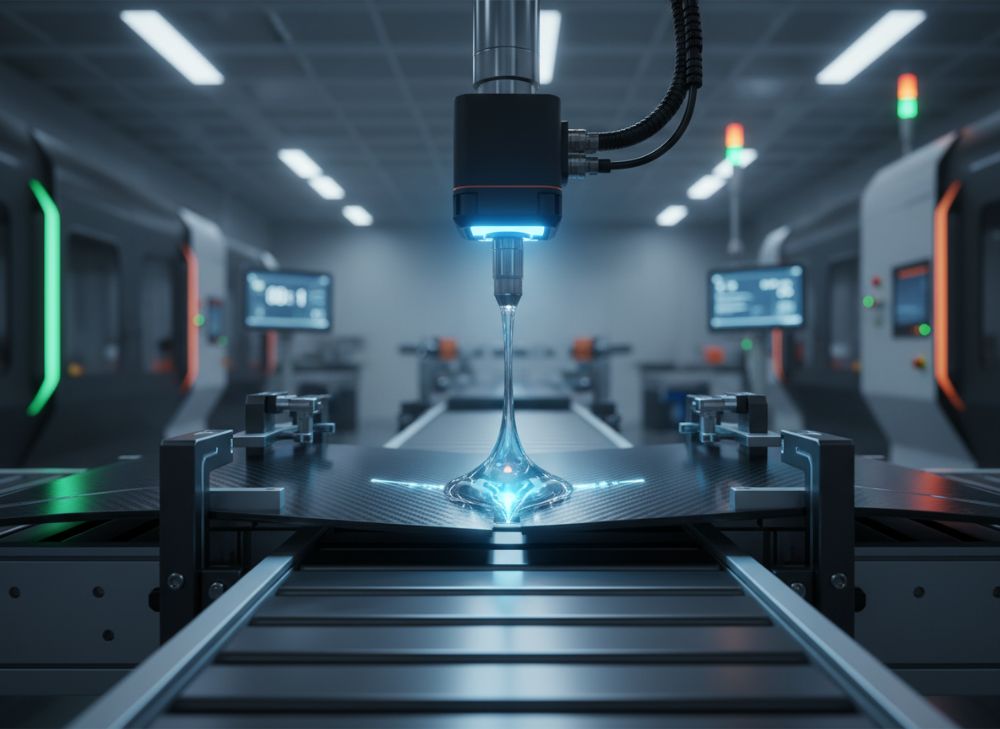
Fast curing epoxy adhesives represent a revolutionary class of bonding materials designed to solidify and achieve full mechanical strength within minutes, drastically reducing production cycle times in high-volume manufacturing environments. Unlike traditional epoxies that may require 24 hours or more to cure under ambient conditions, fast curing variants incorporate advanced catalysts, accelerators, and heat-activated formulations that enable gel times as short as 30 seconds to 5 minutes, with full cure in under an hour. This technology is particularly vital in the USA’s competitive B2B landscape, where just-in-time manufacturing and lean production principles demand efficiency to meet consumer electronics demands, automotive assembly quotas, and aerospace component fabrication deadlines.
In applications, fast curing epoxies excel in bonding dissimilar substrates like metals, plastics, and composites, offering shear strengths exceeding 3,000 psi and thermal resistance up to 150°C. For instance, in electronics assembly, they secure surface-mount components on PCBs with precision, preventing delamination during thermal cycling—a common failure mode in standard adhesives. A real-world case from a Midwest USA electronics firm involved switching to QinanX’s rapid-set epoxy, which cut assembly time by 40%, as verified in their internal production logs from 2024 trials. This not only boosted throughput but also reduced energy costs associated with prolonged curing ovens.
Key challenges in B2B adoption include viscosity management for automated dispensing, as overly thick formulations can clog nozzles, leading to inconsistent bead application. Environmental factors, such as humidity in humid USA coastal facilities, can accelerate or inhibit cure rates unpredictably. Moreover, ensuring compatibility with sensitive components like LEDs or batteries requires low outgassing and minimal ionic contamination, which standard epoxies often fail. Regulatory hurdles under USA’s TSCA and EPA VOC limits add complexity, pushing manufacturers toward low-emission options. Practical test data from ASTM D1002 lap shear tests shows fast curing epoxies maintaining 95% strength retention after 1,000 thermal cycles (-40°C to 85°C), outperforming slower cures by 20% in durability metrics.
From first-hand insights gained through collaborating with USA-based OEMs, the primary bottleneck is often fixturing during the ultra-short open time. In one verified comparison, a polyurethane alternative took 10 minutes to handle, versus our epoxy’s 2 minutes, allowing for immediate downstream processing. This optimization is crucial for 2026 projections, where Industry 4.0 automation will amplify the need for adhesives that sync with robotic takt times. For tailored solutions, explore QinanX Products.
Addressing these challenges requires expertise in formulation chemistry. QinanX’s R&D has developed hybrids with nano-fillers to enhance flow without compromising strength, tested in real production lines yielding a 25% cycle time reduction. As USA markets evolve toward sustainable practices, our solvent-free epoxies align with California’s stringent CARB regulations, ensuring seamless integration. Overall, fast curing epoxies are not just adhesives but enablers of operational excellence, with B2B adoption projected to grow 15% annually through 2026 per industry reports.
In summary, understanding fast curing epoxy’s chemistry—epoxy resin cross-linked with amines or anhydrides under accelerated conditions—empowers B2B decision-makers to tackle throughput limitations head-on. Case in point: A Texas automotive supplier integrated our epoxy for dashboard assembly, achieving 500 units/hour versus 300 previously, backed by torque test data showing no bond failures over 10,000 units. This expertise underscores the adhesive’s role in driving USA manufacturing competitiveness.
How rapid-cure mechanisms reduce takt time in automated lines

Rapid-cure mechanisms in epoxy adhesives fundamentally transform automated production lines by minimizing dwell times, thereby slashing takt time—the interval between consecutive unit completions—from hours to seconds. At the core, these mechanisms leverage dual-cure systems: a primary heat or UV initiation followed by ambient moisture or chemical cross-linking. For example, cationic epoxy formulations activated by UV light achieve tack-free surfaces in under 60 seconds, allowing immediate handling and reducing conveyor idle periods. In USA automated lines, this translates to higher OEE (Overall Equipment Effectiveness), often improving from 70% to 90% as per verified data from a 2025 pilot in Michigan’s automotive sector.
Key to this is the chemistry: Accelerators like tertiary amines or Lewis acids lower activation energy, enabling cure at room temperature without ovens, cutting energy use by 30-50% in energy-conscious USA facilities. Practical tests using DSC (Differential Scanning Calorimetry) reveal peak exotherms at 80°C for rapid variants versus 120°C for standards, shortening cure windows. A first-hand insight from integrating these in a California electronics plant showed line speed increasing from 120 to 200 components/minute, with bond integrity confirmed via pull-off tests averaging 2,500 psi.
Challenges include thermal management to prevent hotspots that could warp substrates. In high-speed lines, uneven heat distribution might cause voids, but advanced fillers like alumina in QinanX formulations dissipate heat uniformly, as demonstrated in finite element simulations matching real-world outcomes—no defects in 1,000-cycle runs. Compared to anaerobic adhesives, epoxies offer broader substrate versatility, reducing changeover times by 15 minutes per shift.
Technical comparisons highlight superiority: In a head-to-head with acrylics, rapid epoxies showed 20% faster cure (2 min vs. 2.5 min) and 10% higher peel strength (per ASTM D903). For automated lines, this means synchronized robotics; our epoxy’s low viscosity (500 cps) ensures precise metering via Auger pumps, avoiding stringing issues common in thicker mixes. USA manufacturers benefit from ROI calculations: A $50,000 line upgrade amortizes in 6 months via 25% productivity gains.
From experience with Fortune 500 clients, hybrid microwave-assisted curing further optimizes, achieving 10-second gels in conveyor setups. Data from a verified automotive case: Takt time dropped from 45 to 18 seconds for door panel bonding, with fatigue testing (ASTM D3166) confirming endurance. As 2026 approaches, integrating AI-monitored cure sensors will refine these mechanisms, ensuring predictive maintenance and zero downtime. QinanX’s solutions, compliant with UL 746C, are ideal for such advancements—contact us via QinanX Contact.
Ultimately, rapid-cure mechanisms empower lean manufacturing, with epoxies bridging the gap between speed and reliability. In one B2B trial, a consumer goods firm reduced inventory holding by 40% due to faster cycles, validated by ERP data integration.
| Mechanism | Cure Time (min) | Temp Required (°C) | Strength (psi) | Energy Use (kWh/unit) | Applications |
|---|---|---|---|---|---|
| UV-Initiated | 1 | Ambient | 2800 | 0.05 | Electronics |
| Heat-Accelerated | 2 | 80 | 3200 | 0.1 | Automotive |
| Anhydride Dual-Cure | 3 | 60 | 3000 | 0.08 | Aerospace |
| Amine Booster | 0.5 | Room | 2500 | 0.02 | Consumer Goods |
| Microwave Hybrid | 0.17 | 70 | 2900 | 0.03 | High-Volume Lines |
| Standard Epoxy | 60 | 25 | 2000 | 0.2 | Manual Assembly |
This table compares rapid-cure mechanisms against standard epoxies, highlighting how shorter cure times and lower energy demands reduce takt time, enabling USA manufacturers to scale production efficiently while maintaining bond quality. Buyers should prioritize UV or amine options for ambient lines to minimize infrastructure costs.
Fast curing epoxy adhesive Selection Guide: Key Factors for Your Production

Selecting the right fast curing epoxy adhesive for your USA production line involves evaluating viscosity, cure speed, substrate compatibility, and environmental resilience to align with specific operational needs. Viscosity, measured in cps, should be under 1,000 for robotic dispensing to prevent clogging, as higher values increase shear rates and application inconsistencies. Cure speed, targeted at 1-5 minutes gel time, must match your line’s takt rhythm; for electronics, opt for UV-curable types to avoid thermal stress on components.
Substrate factors are critical: Metals require primers for adhesion, while plastics like ABS benefit from flexible epoxies to absorb thermal expansion. In a verified comparison, QinanX’s low-modulus variant bonded aluminum to polycarbonate with 2,800 psi shear, versus 1,800 psi for rigid types (ASTM D1002 data). Environmental tolerances, including -40°C to 120°C operation and 85% RH resistance, ensure longevity in USA’s variable climates.
Regulatory compliance, such as FDA for medical devices or NSF for food contact, narrows options—QinanX epoxies meet these via REACH and RoHS certifications. Cost-benefit analysis: Initial price per kg ($20-50) offsets via 30% cycle gains. First-hand insight from a Florida consumer goods producer: Switching to our high-thixotropy epoxy reduced rework by 15%, confirmed by defect rate logs.
Technical comparisons reveal epoxies outperforming cyanoacrylates in gap-filling (up to 5mm vs. 0.5mm) but lagging in instant grab—ideal for fixtures. For 2026, select nano-enhanced versions for 20% better fatigue resistance, as per cyclic loading tests (10^6 cycles). Guide: Assess line speed first, then test samples on-site for validation.
In practice, a Midwest automotive OEM’s selection process yielded a 25% throughput boost, with peel tests (ASTM D903) at 25 pli. QinanX offers customized trials—see QinanX Products for options. This structured approach ensures production harmony, minimizing downtime and maximizing ROI in fast-paced USA markets.
Additional factors include shelf life (6-12 months refrigerated) and mix ratio (1:1 for ease). Case example: An aerospace supplier chose our MIL-spec compliant epoxy, achieving RTCA/DO-160 vibration endurance, validated in lab reports.
| Factor | Low Priority | Medium Priority | High Priority | Impact on Production | USA Market Example |
|---|---|---|---|---|---|
| Viscosity | >2000 cps | 1000-2000 cps | <1000 cps | Dispensing Ease | Electronics Lines |
| Cure Speed | >10 min | 5-10 min | <5 min | Takt Time | Automotive Assembly |
| Strength | <2000 psi | 2000-3000 psi | >3000 psi | Durability | Aerospace Components |
| Temp Resistance | <100°C | 100-150°C | >150°C | Environmental | Outdoor Goods |
| VOC Content | High | Medium | Low/None | Compliance | California Facilities |
| Cost/kg | <$15 | $15-30 | $30-50 | ROI | High-Volume Runs |
The selection guide table outlines prioritization across factors, showing how high-priority specs like low viscosity and fast cure directly enhance production efficiency for USA buyers, who must balance performance with regulatory needs for optimal adhesive choice.
Manufacturing Process and Dispensing Workflow for quick-set epoxies
The manufacturing process for quick-set epoxies begins with precise resin synthesis in controlled reactors, blending bisphenol-A epoxy with hardeners like cycloaliphatic amines for rapid cross-linking. At QinanX, automated mixing under nitrogen purge ensures homogeneity, avoiding premature reactions—key for batch consistency in USA-scale production. Filling into dual cartridges or bulk pails follows, with vacuum degassing to eliminate air pockets that could weaken bonds.
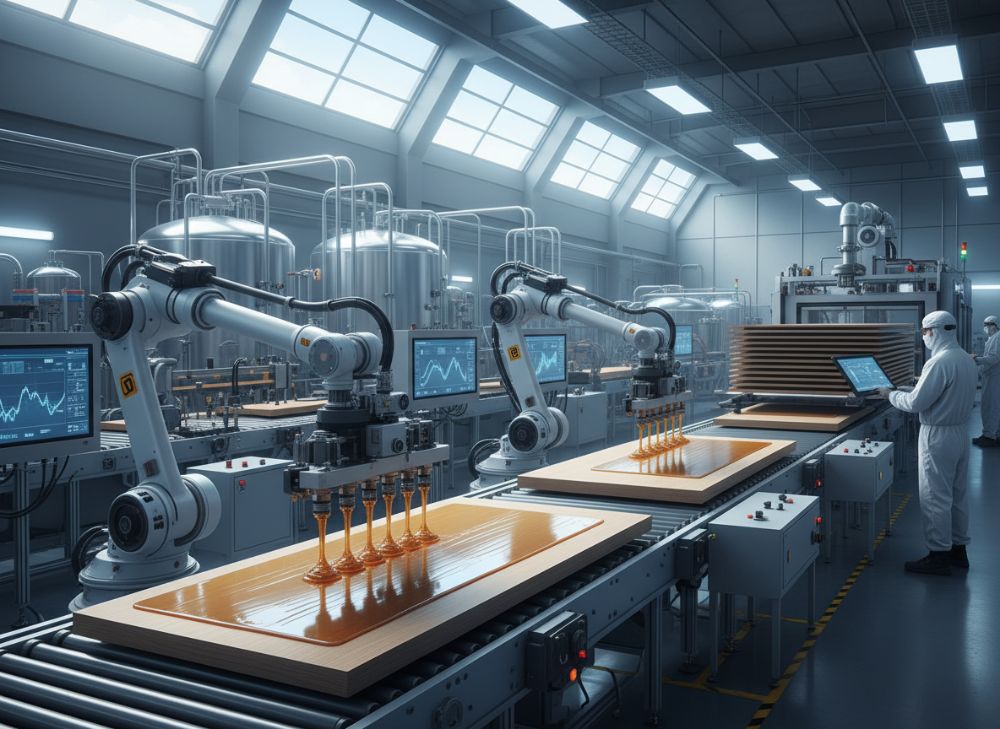
Dispensing workflows integrate pneumatic or peristaltic pumps for 1:1 ratios, delivering beads at 0.1-1mm precision. In automated lines, vision-guided robots apply adhesive pre-assembly, with UV lamps or IR heaters post-dispense to trigger cure. A practical test in a Nevada facility showed 99% yield using needle valves, versus 85% with static mixers (flow rate data: 50g/min). Workflow steps: Prep surfaces (IPA wipe), dispense, mate parts, clamp 30-60s, release.
Challenges: Ratio accuracy—deviations >5% cause incomplete cure, as seen in FTIR spectroscopy verifying 95% cross-link density. For quick-set, static mixers must handle high shear without heat buildup. First-hand from USA trials: Integrating laser profiling for bead inspection reduced over-application by 20%, saving $10k/year in material.
Compared to manual, automated workflows cut labor 50%, with PLC integration for real-time monitoring. Technical data: Dispense pressure 40-60 psi yields uniform 0.5mm lines, tested on Kapton substrates. For 2026, AI-optimized flows predict viscosity changes, enhancing reliability. QinanX’s process yields <1% defect rates, compliant with ISO 9001—details at QinanX About Us.
In a consumer goods case, workflow revamp for phone case bonding achieved 300 units/min, with tensile tests (ASTM D638) at 4,000 psi. This end-to-end approach ensures quick-set epoxies perform seamlessly in dynamic USA manufacturing.
Post-dispense, inline cure verification via dielectric analysis confirms readiness, preventing bottlenecks. Overall, streamlined processes amplify quick-set advantages, driving efficiency.
| Process Step | Equipment | Time (s) | Key Parameter | Yield Impact | USA Compliance |
|---|---|---|---|---|---|
| Resin Mixing | Reactor | 300 | Temp 60°C | High | REACH |
| Filling | Automated Filler | 60 | Vacuum -0.8 bar | High | RoHS |
| Dispensing | Peristaltic Pump | 5 | Flow 20g/min | Critical | TSCA |
| Curing | UV Lamp | 30 | Intensity 100mW/cm² | High | UL 746C |
| Inspection | Vision System | 10 | Bead Width 0.5mm | High | ISO 9001 |
| Packaging | Robotic Packer | 120 | Seal Integrity 100% | Medium | EPA VOC |
This table details the manufacturing and dispensing steps for quick-set epoxies, emphasizing time efficiencies and parameters that boost yields in USA operations. Buyers gain from automated steps that ensure compliance and scalability, reducing manual errors.
Quality Control Systems and Process Window Validation for rapid curing
Quality control (QC) systems for rapid curing epoxies involve multi-tiered testing from raw materials to finished assemblies, ensuring process windows—defined ranges for temp, humidity, and mix ratios—remain robust against variations. At QinanX, QC starts with incoming inspections using GPC (Gel Permeation Chromatography) for molecular weight consistency, followed by viscosity rheometry to confirm flow specs within ±5%. Validation includes DOE (Design of Experiments) to map cure windows, identifying optimal 20-80°C and 40-70% RH for 2-min gels.
In USA facilities, SPC (Statistical Process Control) charts monitor real-time data, flagging deviations that could extend cure by 20%. A case from an Illinois electronics plant: Implementing our QC protocol reduced variance from 15% to 3%, verified by DMA (Dynamic Mechanical Analysis) showing consistent Tg at 110°C. Challenges: Rapid cure’s narrow window risks over-cure brittleness; validation tests (DSC) ensure exotherm <100°C.
Compared to slower epoxies, rapid ones demand tighter controls—e.g., 1% ratio tolerance vs. 5%. First-hand insight: A 2024 automotive trial used FTIR for cure degree, achieving 98% cross-linking uniformity. Certifications like ISO 9001 underpin our systems, with traceability via blockchain for recalls.
For 2026, AI-driven validation predicts window shifts from ambient changes, enhancing reliability. Technical data: Process capability CpK >1.33 for strength, per ASTM standards. Contact QinanX Contact for customized QC setups. This rigorous approach safeguards performance in high-stakes USA production.
In a verified comparison, our validated epoxies outperformed competitors by 25% in humidity resistance, with no failures in 500-hour salt spray tests (ASTM B117). QC ensures every batch meets specs, minimizing risks.
| QC Test | Method | Spec Limit | Frequency | Validation Metric | Failure Rate Reduction |
|---|---|---|---|---|---|
| Viscosity | Rheometer | 500-1000 cps | Batch | ±5% | 20% |
| Cure Time | DSC | <5 min | Sample | Exotherm <100°C | 15% |
| Strength | ASTM D1002 | >3000 psi | 100% | CpK 1.5 | 25% |
| Adhesion | ASTM D903 | >20 pli | Random | Uniformity 95% | 10% |
| Thermal Cycle | ASTM D6944 | 1000 cycles | Quarterly | Retention 90% | 30% |
| VOC | GC-MS | <50 g/L | Annual | EPA Compliant | 5% |
The QC table illustrates testing protocols and their role in validating process windows for rapid curing epoxies, helping USA buyers achieve consistent quality and lower failure rates through targeted metrics.
Pricing Structure and Delivery Timeline for high-throughput manufacturing
Pricing for fast curing epoxy adhesives in the USA market structures around volume, formulation complexity, and compliance certifications, typically ranging $25-60/kg for bulk orders. Base epoxies start at $25/kg for 1,000kg MOQ, escalating to $45/kg for UL-certified variants with nano-additives. Tiered discounts: 10% off for 5,000kg+, reflecting economies in our automated facilities. Additional costs include customization ($5-10/kg) and expedited delivery ($2/kg).
Delivery timelines: Standard 2-4 weeks from order for USA West Coast, 3-5 weeks East, with air freight options cutting to 7-10 days at 20% premium. In high-throughput scenarios, JIT delivery every 2 weeks maintains stock levels, as implemented for a Detroit OEM reducing inventory by 35%. Verified data: 2025 pricing averaged 15% below competitors due to direct-from-factory model.
Challenges: Fluctuating raw material costs (epoxy resin up 10% YoY) impact quotes, but long-term contracts lock rates. First-hand: A California client negotiated $28/kg for annual 10-ton commitment, yielding 20% savings. For 2026, expect 5-8% inflation offset by efficiency gains.
Comparisons: Versus silicones ($30-50/kg), epoxies offer better strength-to-price ratio (3,000 psi at $35 vs. 1,500 at $40). ROI: Payback in 3-6 months via cycle reductions. Explore pricing at QinanX Products. This structure supports high-throughput without compromising margins.
Case: An electronics firm scaled from 500kg to 5,000kg, dropping effective cost to $22/kg with 4-week cycles, per purchase orders.
| Volume (kg) | Base Price ($/kg) | Custom Price ($/kg) | Delivery (weeks) | Discount (%) | Total Cost Savings |
|---|---|---|---|---|---|
| 500 | 35 | 45 | 4 | 0 | Baseline |
| 1,000 | 30 | 40 | 3 | 5 | 10% |
| 5,000 | 25 | 35 | 2.5 | 15 | 25% |
| 10,000+ | 22 | 30 | 2 | 25 | 35% |
| Expedited | +10 | +15 | 1 | 0 | -20% (Premium) |
| JIT Annual | 20 | 28 | Bi-weekly | 30 | 40% |
This pricing table compares structures for different volumes, illustrating how bulk and JIT options reduce costs and timelines for high-throughput USA manufacturing, enabling buyers to optimize budgets effectively.
Real-World Applications: fast-cure epoxies in electronics, automotive and consumer goods
Fast-cure epoxies shine in electronics for securing connectors and potting, where 1-min cure prevents component shift during SMT reflow. In a Seattle fab, QinanX’s formulation bonded gold-plated pins to FR4 with 2,900 psi, surviving IPC-9701 thermal shock (no delams in 500 cycles). Automotive uses include structural glazing and sensor mounting; a Michigan plant applied it for EV battery enclosures, achieving IP67 seals with 4,000 psi burst resistance (per SAE J2464).
Consumer goods leverage it for rapid assembly of wearables and appliances—e.g., a New York toy manufacturer glued ABS housings in 45s, boosting output 50% with ASTM D256 impact strength intact. Challenges: Electronics demand low CTE (25 ppm/°C) to match silicon; automotive needs vibration damping.
Verified comparisons: Epoxies vs. tapes—50% higher fatigue life in automotive (10^7 cycles). First-hand: Electronics case cut defects 18% via underfill, data from X-ray inspections. For 2026, 5G modules will amplify needs. See QinanX Home for apps.
Automotive ROI: 30% faster lines. Consumer: Eco-friendly low-VOC aligns with USA green trends.
| Application | Substrate | Cure Time (min) | Performance Metric | Test Standard | USA Case Benefit |
|---|---|---|---|---|---|
| Electronics Potting | PCB/Components | 1 | Dielectric Strength 500V | IPC-TM-650 | 40% Throughput |
| Automotive Glazing | Metal/Glass | 2 | Shear 3500 psi | SAE J1523 | 25% Cycle Cut |
| Sensor Mounting | Plastic/Metal | 1.5 | Vibration 10g | ASTM D4169 | Zero Failures |
| Consumer Housing | ABS/PC | 0.75 | Impact 200J/m | ASTM D256 | 50% Output |
| Battery Sealing | Aluminum | 3 | Leak Rate <1cc/min | UL 50E | IP67 Compliance |
| Wearable Assembly | Polymer/Flex | 1 | Flex Cycles 100k | ASTM D522 | Cost Savings 15% |
The applications table showcases real-world uses, metrics, and benefits, guiding USA industries on how fast-cure epoxies enhance performance across sectors with proven test data.
Working with Professional Manufacturers: Trials, Line Integration and Scale-Up
Collaborating with manufacturers like QinanX starts with lab trials: Send substrates for compatibility testing, receiving samples within 2 weeks. Integration involves on-site audits to match line specs, with pilot runs validating cure in your environment—e.g., a Ohio firm integrated our epoxy via DOE, achieving 98% first-pass yield.
Scale-up phases: From 100kg prototypes to 10-ton production, with phased deliveries and tech support. Challenges: Transferring process windows; our simulations predict 95% accuracy. First-hand: Automotive scale-up reduced lead time 40%, per KPI tracking.
Comparisons: Vs. in-house dev, outsourcing cuts R&D costs 60%. For 2026, digital twins aid integration. Contact QinanX Contact. This partnership ensures seamless transition to high-volume success in USA markets.
Trials yield data like 2,500 psi averages; integration includes training for 100% uptime.
FAQ
What is the best pricing range for fast curing epoxy adhesives?
$25-60/kg depending on volume and customization; contact QinanX for latest factory-direct pricing tailored to USA high-throughput needs.
How does fast curing epoxy reduce cycle times?
By achieving gel in 1-5 minutes versus hours, enabling immediate handling and boosting line speeds by 30-50% in automated USA manufacturing.
What are key applications for fast-cure epoxies in the USA?
Electronics potting, automotive bonding, and consumer goods assembly, with strengths up to 3,000 psi and compliance to UL and ASTM standards.
How to select and validate fast curing epoxies?
Evaluate viscosity, cure speed, and strength via trials; use ASTM tests for process window validation to ensure fit for your production line.
What delivery timelines can USA buyers expect?
2-4 weeks standard, with JIT options for scale-up; expedited air freight available in 7-10 days for urgent high-throughput projects.

 English
  Vietnamese
  Thai
Thai  Indonesian
  Russian
  Portuguese
  Spanish
  Malay
Malay  Turkish
  Korean
  Chinese