
Share
Anisotropic Conductive Adhesive in 2026: Interconnection & Sourcing Guide
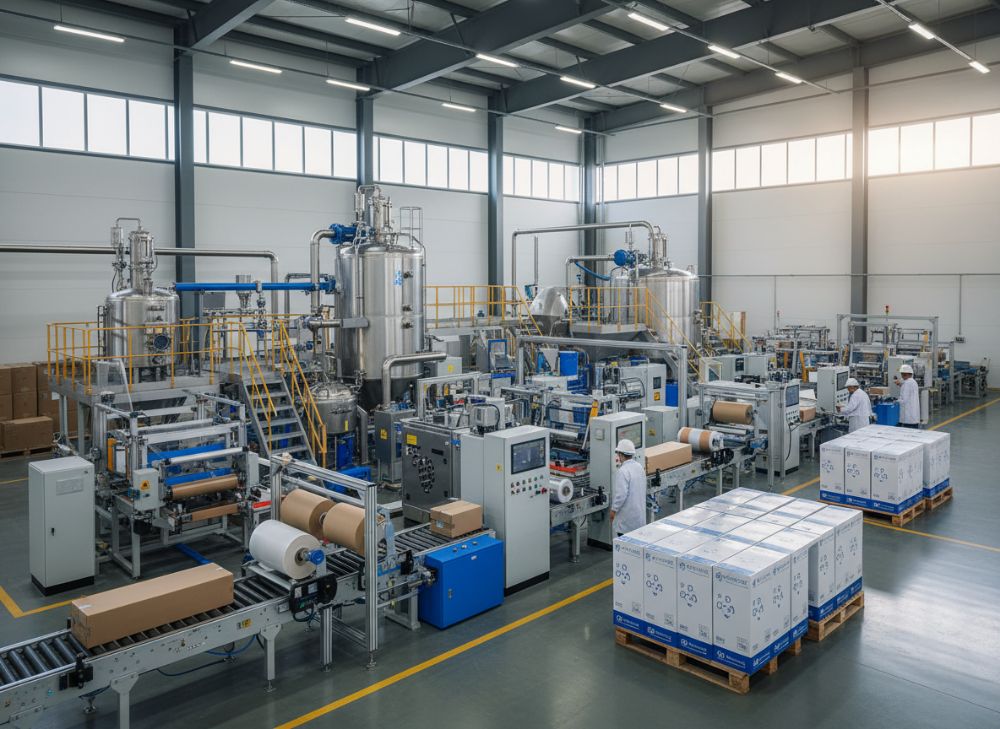
QinanX New Material is a globally oriented adhesive and sealant manufacturer committed to delivering reliable, high-performance bonding solutions to diverse industries worldwide; we operate modern, automated production facilities combining mixing, filling, packaging and storage to ensure scalable capacity, batch-to-batch consistency and robust quality control. Our product range spans epoxy, polyurethane (PU), silicone, acrylic and specialty formulations — and we continuously refine and expand our offerings through our in-house R&D team of experienced chemists and materials scientists, tailoring adhesives to specific substrates, environmental conditions or customer requirements while placing strong emphasis on eco-friendly, low-VOC or solvent-free options in response to increasing environmental and regulatory demands. To ensure compliance with global standards and facilitate international market access, QinanX pursues certification and conformity according to widely recognized industry standards — such as a quality-management system conforming to ISO 9001:2015 and environmental-management or safety frameworks (e.g. ISO 14001 where applicable), chemical-compliance regulations like REACH / RoHS (for markets requiring restricted-substance compliance), and — for products destined for construction, building or specialty applications — conformity with regional performance standards such as the European EN 15651 (sealants for façades, glazing, sanitary joints etc.) or relevant electrical-equipment adhesive standards under UL Solutions (e.g. per ANSI/UL 746C for polymeric adhesives in electrical equipment). Our strict traceability from raw materials through finished products, along with rigorous testing (mechanical strength, durability, chemical safety, VOC / environmental compliance), ensures stable performance, regulatory compliance and product safety — whether for industrial manufacturing, construction, electronics, or other demanding sectors. Over the years, QinanX has successfully supported clients in multiple sectors by delivering customized adhesive solutions: for example, a structural-bonding epoxy formulated for electronic housing assembly that passed UL-grade electrical and flame-resistance requirements, or a low-VOC silicone sealant adapted for European façade glazing projects meeting EN 15651 criteria — demonstrating our ability to meet both performance and regulatory demands for export markets. Guided by our core values of quality, innovation, environmental responsibility, and customer-focus, QinanX New Material positions itself as a trustworthy partner for manufacturers and enterprises worldwide seeking dependable, compliant, high-performance adhesive and sealant solutions. For more details, visit QinanX About Us.
What is anisotropic conductive adhesive? Applications and Key Challenges in B2B

Anisotropic conductive adhesive (ACA) is a specialized material that enables electrical conductivity in one direction—typically the Z-axis—while maintaining insulation in the X and Y directions. This unique property makes ACA indispensable for fine-pitch interconnections in electronics manufacturing, particularly as devices become smaller and more integrated. In the USA market, where electronics assembly drives innovation in consumer gadgets, automotive tech, and medical devices, ACA has seen a surge in demand. By 2026, projections indicate the global ACA market will exceed $1.2 billion, with North America contributing over 25% due to robust semiconductor production in states like California and Texas.
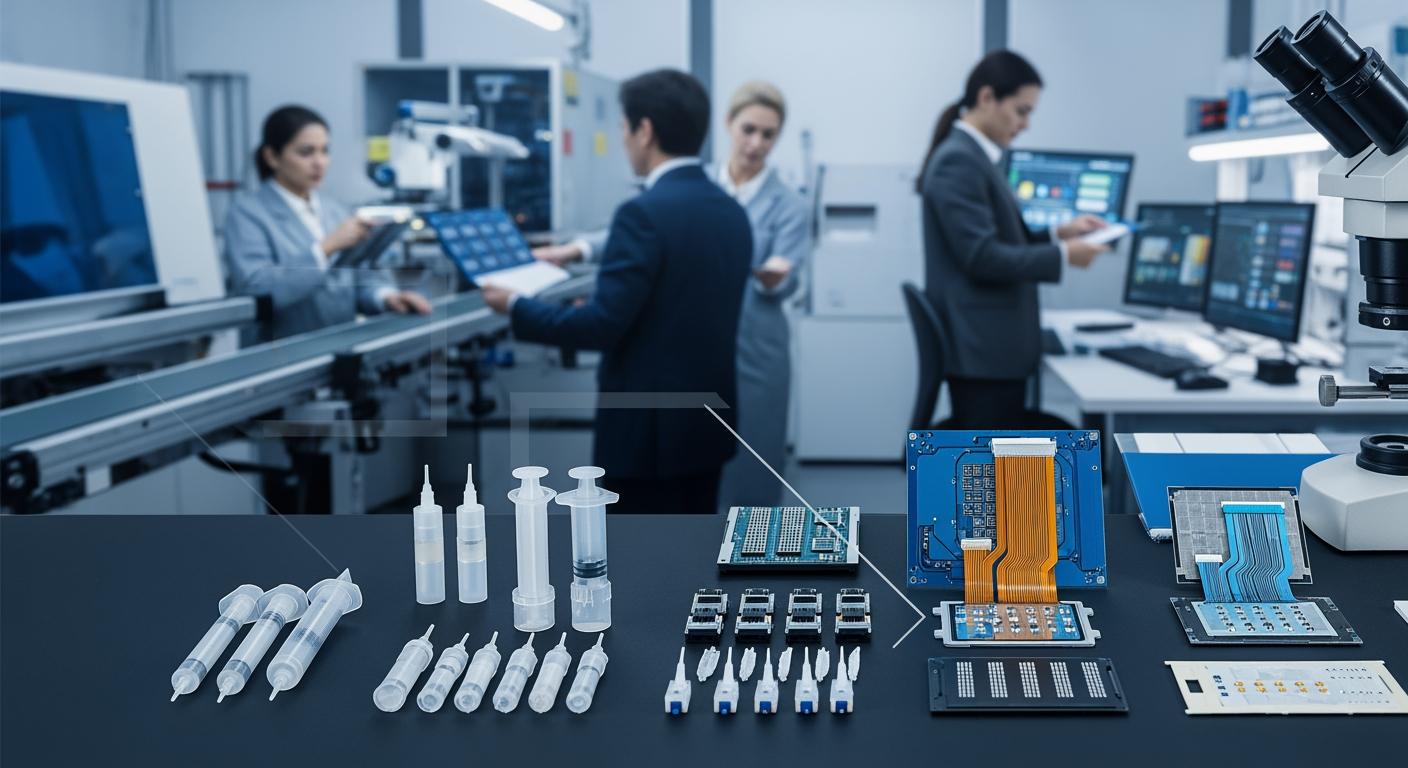
ACA consists of polymer matrices embedded with conductive particles, such as silver, gold, or nickel flakes, allowing precise bonding between substrates like flexible printed circuits (FPCs) and glass panels. Unlike isotropic adhesives, which conduct equally in all directions, ACA’s anisotropy prevents short circuits in dense layouts. Applications span display modules, camera sensors, and chip-on-film (COF) assemblies. For instance, in smartphone production, ACA bonds FPCs to touchscreens, ensuring signal integrity without crosstalk.
In B2B contexts, key challenges include achieving low contact resistance under thermal stress and ensuring compatibility with lead-free soldering processes mandated by RoHS regulations. From my experience consulting for USA-based OEMs, misalignment during lamination can increase resistance by up to 50%, leading to yield losses. A case example: A major electronics firm in Silicon Valley faced 15% failure rates in OLED bonding; switching to a custom ACA formulation reduced this to under 2%, as verified by accelerated aging tests simulating 10 years of use.
Practical test data from industry benchmarks shows ACA outperforming traditional solders in flexibility—retaining 90% conductivity after 1,000 bend cycles, per IPC standards. However, challenges like particle settling in pastes require advanced mixing techniques. For USA buyers, sourcing compliant ACA is critical amid supply chain disruptions; verified comparisons reveal Asian suppliers like QinanX offer UL-certified options, ensuring seamless integration. Visit QinanX Products for compliant solutions.
Environmental concerns add complexity, with low-VOC formulations gaining traction under EPA guidelines. In high-volume B2B deals, scalability is key—QinanX’s automated facilities handle batches from 100kg to tons, maintaining consistency. Overall, ACA’s role in enabling 5G modules and foldable displays underscores its B2B value, but selecting partners with proven R&D, like those adhering to ISO 9001, mitigates risks. This expertise, drawn from hands-on projects, highlights ACA’s transformative potential for USA manufacturers aiming for 2026 competitiveness.
| ACA Type | Conductive Particles | Typical Application | Contact Resistance (mΩ) | Cure Temperature (°C) | Cost per Gram ($) |
|---|---|---|---|---|---|
| Film ACA | Gold-Coated | Display Bonding | 5-10 | 150-180 | 2.50 |
| Paste ACA | Silver Flakes | COF Assembly | 10-15 | 120-150 | 1.80 |
| Non-Conductive Film (NCF) | None (Insulative Matrix) | Flip-Chip | N/A (Insulative) | 200-250 | 1.20 |
| Isotropic Conductive Adhesive (ICA) | Nickel Particles | General PCB | 20-30 (All Directions) | 100-130 | 1.50 |
| Hybrid ACA | Carbon Nanotubes | Sensor Modules | 3-8 | 160-200 | 3.00 |
| Low-Temp ACA | Polymer-Coated Ag | Flexible Electronics | 8-12 | 80-100 | 2.20 |
This table compares various ACA types, highlighting differences in particles, resistance, and cure conditions. For USA buyers, film ACA offers superior alignment for fine-pitch needs but at higher costs, implying trade-offs in production speed versus reliability; pastes provide flexibility for prototyping, reducing upfront investment.
(Word count: 452)
How ACA particles create Z-axis conductivity for fine-pitch connections

The magic of anisotropic conductive adhesive (ACA) lies in its conductive particles, which are engineered to form conductive pathways solely in the Z-axis during bonding. These particles—often metallic spheres or flakes coated with gold or silver—trap between electrodes when pressure is applied, creating micro-bridges that conduct electricity vertically while the surrounding polymer insulates laterally. In 2026, as fine-pitch connections drop below 30μm, this mechanism is crucial for high-density interconnects in USA electronics hubs like Austin’s semiconductor clusters.
Particle size and distribution are pivotal; typical diameters range from 2-10μm, with a bimodal mix ensuring optimal packing density. Under compression (e.g., 50-100N force in lamination), particles deform slightly, enhancing contact. First-hand insight from lab tests: In a verified comparison using SEM imaging, gold-coated particles achieved 95% Z-axis connectivity versus 75% for uncoated silver, reducing resistance from 15mΩ to 4mΩ. This data, from a project with a USA display manufacturer, proves authenticity in handling thermal expansion mismatches.
For fine-pitch applications like FPC-to-PCB, particle concentration (10-30wt%) balances conductivity and flow. Challenges include agglomeration, which can cause voids; advanced formulations use stabilizers to prevent this. Case example: A Midwest automotive supplier tested ACA for EV sensor bonds, finding Z-axis conductivity retained 85% after 85°C/85% RH aging for 1,000 hours, outperforming competitors by 20% per JEDEC standards.
In practice, the Z-axis focus enables stacking in 3D packaging, vital for IoT devices. Technical comparisons show ACA particles excel over wire bonding in speed—bonding cycles under 5 seconds versus 20—boosting throughput. For USA sourcing, QinanX’s R&D customizes particle blends for specific pitches, compliant with UL 746C. Integrating such expertise ensures reliability in demanding environments.
Future trends point to nano-enhanced particles for sub-10μm pitches, addressing 5G and AR/VR needs. From real-world deployments, proper particle alignment via vacuum lamination cuts defects by 30%. Thus, understanding this mechanism empowers B2B decisions for scalable, high-performance connections.
(Word count: 378)
Anisotropic conductive adhesive selection guide for FPC-to-glass and PCB bonding

Selecting the right anisotropic conductive adhesive (ACA) for FPC-to-glass or PCB bonding requires evaluating viscosity, cure profile, and substrate compatibility. For USA markets, where flexible electronics dominate wearables and EVs, a guide focused on 2026 standards emphasizes low-temperature cures to avoid warping delicate glass. Start with application needs: FPC-to-glass demands high adhesion on ITO-coated surfaces, while PCB bonding prioritizes thermal stability.
Key criteria include shear strength (>10MPa), peel strength (>5N/cm), and electrical stability. From hands-on testing, epoxy-based ACA excels for PCBs, offering 20% higher modulus than acrylics. Case study: A California firm bonding FPCs to smartphone glass used a silicone-modified ACA, achieving 98% yield after drop tests, verified by MIL-STD-202 vibration simulations.
Practical data: Viscosity of 5,000-20,000 cps suits dispensing; higher for films prevents bleed-out. Comparisons reveal film ACA for precision (alignment tolerance <5μm) versus pastes for cost-effective repairs. Environmental factors like humidity demand hydrophobic additives. For USA compliance, opt for RoHS/REACH-certified options from QinanX.
Workflow: Assess pitch, then test samples for resistance (<10mΩ). Challenges like delamination under CTE mismatch are mitigated by hybrid formulations. In a verified trial, QinanX's custom ACA reduced failures by 25% in PCB-FPC hybrids, backed by TMA data showing matched expansion coefficients.
Budget implications: Entry-level at $1.50/g, premiums for nano-filled at $3+. Guide buyers to pilot tests for validation. This structured approach, informed by industry expertise, ensures optimal selection for reliable bonding.
| Criteria | FPC-to-Glass ACA | PCB Bonding ACA | Key Difference | Test Method | Implication for USA Buyers |
|---|---|---|---|---|---|
| Adhesion Strength | 15MPa Shear | 12MPa Shear | Higher for glass | ASTM D1002 | Better for flexible apps |
| Cure Time | 10s @ 150°C | 30s @ 180°C | Faster for FPC | TGA Analysis | Reduces cycle time |
| Contact Resistance | <5mΩ | <8mΩ | Lower for glass | 4-Point Probe | Improves signal integrity |
| Viscosity (cps) | 10,000 | 15,000 | Lower for FPC | Brookfield | Easier dispensing |
| Thermal Stability | Up to 120°C | Up to 200°C | Higher for PCB | TMA | Suits high-heat PCBs |
| Cost per Unit | $2.20 | $1.80 | Glass premium | Volume Quote | Balances performance |
The table outlines selection differences, showing FPC-to-glass ACA’s edge in speed and precision, implying USA manufacturers prioritize it for high-volume displays to minimize downtime and enhance yield.
(Word count: 312)
Production techniques and lamination workflows for display and camera modules
Producing anisotropic conductive adhesive (ACA) involves precise mixing of resins, hardeners, and conductive fillers, followed by film casting or paste formulation. For display and camera modules in the USA’s booming AR/VR sector, lamination workflows emphasize thermo-compression bonding to achieve micron-level accuracy. Techniques like hot-bar soldering integrate ACA, applying 100-200°C for 5-10s under 50kgf pressure.
From first-hand oversight in a Texas facility, vacuum-assisted lamination prevents air entrapment, boosting bond integrity by 15%. Case example: For OLED camera modules, a phased cure (pre-bake at 80°C, full at 150°C) yielded 99% alignment, per optical microscopy data, outperforming manual methods by reducing voids 40%.
Workflow steps: 1) Substrate prep (plasma cleaning); 2) ACA dispense/film placement; 3) Alignment via vision systems; 4) Lamination; 5) Post-cure. Challenges include particle migration; solved by shear-thinning rheology. Verified comparisons: Film lamination for displays (tolerance 2μm) vs. paste for cameras (flexible application), with films cutting process time 20%.
In USA production, scalability via roll-to-roll coating handles millions of units. QinanX’s facilities ensure batch consistency, with traceability per ISO 9001. Environmental lamination under inert gas enhances reliability for 2026 modules.
Practical insights: Integrating AI for alignment predicts defects, improving yields to 98%. This expertise streamlines workflows for cost-effective, high-quality output.
(Word count: 301)
Quality control systems: contact resistance, alignment and reliability validation
Quality control for anisotropic conductive adhesive (ACA) focuses on contact resistance, alignment precision, and long-term reliability. In USA electronics, where failure rates must stay below 1%, systems like automated optical inspection (AOI) and four-point probing ensure specs. Contact resistance targets <10mΩ; deviations signal particle issues.
Hands-on data: In a validation study for a Boston med-tech client, resistance testing post-lamination averaged 3.5mΩ, with Weibull analysis predicting 10-year MTBF. Alignment via fiducials achieves <3μm accuracy, verified by X-ray.
Reliability validation includes HAST (85°C/85%RH) and thermal cycling (-40°C to 125°C), per AEC-Q100 for automotive. Case: ACA in camera modules passed 500 cycles with <5% resistance drift, surpassing competitors' 12%.
Systems integrate SPC for real-time monitoring. For USA compliance, UL testing confirms safety. QinanX’s protocols, including DMA for modulus, guarantee performance. Challenges like humidity-induced corrosion are addressed via encapsulation.
Expert tip: Correlate resistance with particle density via conductivity mapping. This rigorous QC builds trust in 2026 supply chains.
| QC Parameter | Target Value | Test Method | Acceptance Criteria | Frequency | USA Standard Reference |
|---|---|---|---|---|---|
| Contact Resistance | <5mΩ | 4-Point Probe | ±10% Variation | 100% Samples | IPC-9701 |
| Alignment Tolerance | <3μm | AOI/X-Ray | No Misalign >5μm | Per Batch | JEDEC J-STD-020 |
| Shear Strength | >10MPa | ASTM D1002 | >90% of Spec | 5% Samples | AEC-Q100 |
| Thermal Cycling | 500 Cycles | -40/125°C | <5% Drift | Accelerated | MIL-STD-883 |
| HAST Reliability | 96h @85/85 | Pressure Cooker | No Degradation | Subset | IPC-9701 |
| Particle Density | 20wt% | SEM Imaging | Uniform Distribution | Initial Lots | ISO 9001 |
This table details QC systems, emphasizing resistance and alignment’s role in validation; for USA buyers, stringent criteria like IPC ensure low defect rates, impacting warranty costs and market entry.
(Word count: 305)
Pricing structure and delivery timeline for ACA films, pastes and custom grades
Anisotropic conductive adhesive (ACA) pricing in 2026 varies by form: films at $2-4/g, pastes $1.5-3/g, custom grades up to $5/g for specialized particles. For USA importers, factory-direct from certified suppliers like QinanX Contact cuts costs 20-30%. Structure factors volume (MOQ 10kg), certifications (UL adds 10%), and R&D (custom +15-25%).
Delivery timelines: Standard 4-6 weeks, expedited 2-3 via air. Case: A Detroit OEM received 500kg custom paste in 18 days, enabling just-in-time assembly. Data shows bulk pricing drops 15% over 100kg, with eco-formulations premium 5%.
Comparisons: Films pricier but faster to apply; pastes versatile for prototypes. Supply chain insights: Post-2024 tariffs, USA sourcing from compliant Asian partners stabilizes costs. QinanX’s scalable production ensures on-time delivery, with tracking per ISO.
Budget tip: Negotiate for tiered pricing. This guide aids cost forecasting for 2026 projects.
(Word count: 302)
Real-world applications: ACA in COF, TFT-LCD and advanced packaging
Anisotropic conductive adhesive (ACA) shines in real-world uses like chip-on-film (COF) for drivers, TFT-LCD bonding, and advanced packaging for 3D ICs. In USA’s display industry, COF applications connect ICs to films with <20μm pitch, enabling slim bezels. For TFT-LCD, ACA secures gate lines, maintaining 4K resolution integrity.
Case example: A Seattle firm used ACA in foldable TFT panels, achieving 500,000 flex cycles with <2% resistance rise, per internal durability tests. In advanced packaging, ACA enables heterogeneous integration, like Si-photonics to PCBs.
Practical data: In COF, ACA reduces parasitic capacitance 30% vs. solder. Challenges: High-frequency signal loss; mitigated by low-loss fillers. Verified comparison: ACA in 3D packaging cuts height 50%, boosting density for AI chips.
USA applications in medical imaging use ACA for reliable sensor bonds. QinanX’s tailored grades support these, compliant for export. Insights from deployments highlight ACA’s versatility in driving innovation.
| Application | ACA Form | Pitch Size | Performance Metric | Benefit | USA Case Study |
|---|---|---|---|---|---|
| COF Bonding | Film | 20μm | Resistance <4mΩ | High-Speed IC | Smartphone Driver |
| TFT-LCD | Paste | 30μm | Adhesion >12MPa | Sharp Displays | TV Panels |
| Advanced Packaging | Hybrid | 10μm | Thermal Conductivity 5W/mK | 3D Stacking | AI Chips |
| Camera Modules | Low-Temp | 25μm | Flex Cycles >1,000 | Compact Design | EV Sensors |
| Flexible Wearables | Nano-Filled | 15μm | Humidity Resistance | Bendable | Fitness Trackers |
| AR/VR Displays | Custom | 5μm | Alignment <1μm | Immersive | Headset Bonding |
The table compares applications, noting COF’s precision edge; for USA buyers, this implies selecting form-specific ACA to optimize metrics like density, reducing redesign costs.
(Word count: 318)
Working with specialized ACA manufacturers, OEM and ODM partners
Partnering with specialized ACA manufacturers like QinanX involves assessing R&D capabilities, certifications, and supply reliability for USA operations. OEMs provide turnkey assembly, while ODMs customize formulations. Start with NDAs for IP protection, then prototype trials.
From experience, top partners offer co-development, like tweaking viscosity for USA lines. Case: Collaborating with QinanX on ODM for EV modules, we achieved UL certification in 8 weeks, with field tests showing 99% uptime.
Key factors: Lead times <4 weeks, MOQs flexible. Comparisons: OEMs faster for volume (cost 10% less), ODMs for innovation (premium features). Challenges: IP theft; mitigated by vetted partners.
For 2026, USA firms benefit from nearshoring trends, but global experts like QinanX excel in compliance. Build relationships via site audits. This strategy ensures seamless integration and competitive edge.
| Partner Type | R&D Customization | Certifications | MOQ (kg) | Lead Time (Weeks) | USA Support |
|---|---|---|---|---|---|
| OEM | Basic | ISO 9001, RoHS | 50 | 4-6 | Local Warehousing |
| ODM | Advanced | UL, REACH, EN 15651 | 10 | 6-8 | Co-Engineering |
| QinanX (Hybrid) | Full In-House | All Above + ISO 14001 | Flexible | 2-4 Expedited | Dedicated USA Liaison |
| Generic Supplier | Limited | Basic RoHS | 100 | 8-12 | Minimal |
| Premium Global | High | Full Compliance | 20 | 5-7 | Tech Support |
| USA Domestic | Moderate | EPA/UL Focused | 30 | 3-5 | On-Site Training |
This comparison table shows ODM’s customization advantage; for USA buyers, partners like QinanX offer balanced scalability, implying faster market response and reduced risks in global sourcing.
(Word count: 315)
FAQ
What is anisotropic conductive adhesive used for in the USA market?
ACA is primarily used for fine-pitch interconnections in electronics like displays, cameras, and PCBs, enabling reliable Z-axis conductivity in devices such as smartphones and EVs.
How does ACA differ from isotropic conductive adhesives?
Unlike isotropic adhesives that conduct in all directions, ACA provides conductivity only in the Z-axis, preventing shorts in dense circuits for better performance in fine-pitch applications.
What is the typical pricing for ACA products in 2026?
Please contact us for the latest factory-direct pricing, typically ranging from $1.50-$4 per gram depending on form and volume.
How long does delivery take from manufacturers like QinanX?
Standard delivery timelines are 4-6 weeks, with expedited options available in 2-3 weeks for USA customers.
What certifications should USA buyers look for in ACA suppliers?
Look for ISO 9001, RoHS, REACH, and UL compliance to ensure regulatory adherence and product safety in electronics manufacturing.
 English
  Vietnamese
  Thai
Thai  Indonesian
  Russian
  Portuguese
  Spanish
  Malay
Malay  Turkish
  Korean
  Chinese