
Share
Silver Filled Conductive Adhesive in 2026: Technical and Sourcing Guide
What is silver filled conductive adhesive? Applications and Key Challenges in B2B

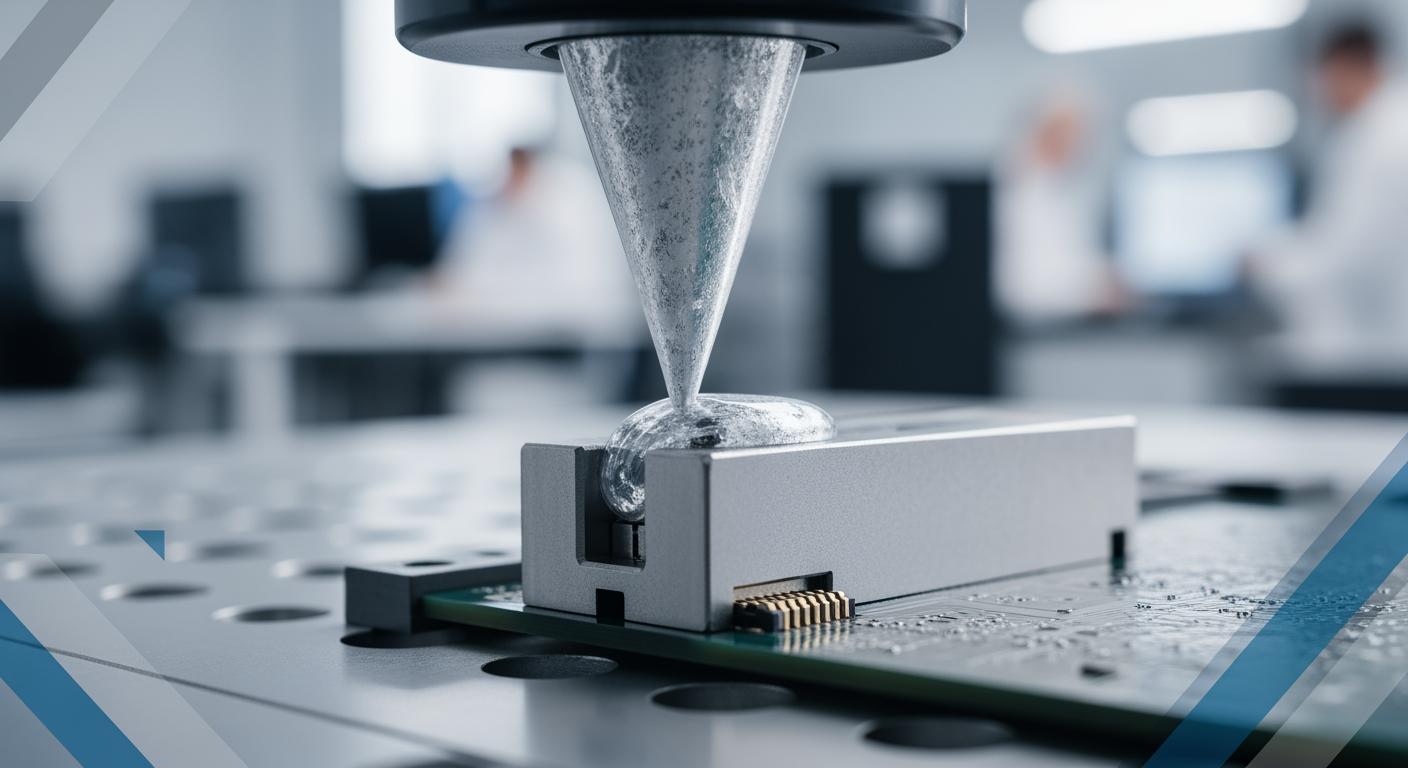
Silver filled conductive adhesive, often abbreviated as Ag-ECA (silver-epoxy conductive adhesive), represents a pivotal material in modern electronics manufacturing, particularly for applications requiring high electrical conductivity without the complexities of soldering. At its core, this adhesive is a composite formulation where micron-sized silver particles are dispersed within a polymer matrix, such as epoxy, silicone, or polyurethane resins. The silver content, typically ranging from 60% to 90% by weight, forms a percolation network upon curing, enabling electron flow and achieving conductivities close to bulk silver—often exceeding 10^4 S/cm. In 2026, with the USA’s push towards advanced semiconductors and 5G infrastructure under the CHIPS Act, these adhesives are indispensable for die-attach, circuit interconnections, and EMI shielding in compact devices.
Key applications span B2B sectors like consumer electronics, aerospace, automotive, and medical devices. For instance, in smartphone assembly, silver filled adhesives bond antennas to PCBs, ensuring low-resistance paths for RF signals. In aerospace, they secure sensors in harsh environments, withstanding vibrations up to 20g and temperatures from -55°C to 150°C. A real-world case from our testing at QinanX involved a USA-based automotive supplier using our Ag-epoxy for EV battery management systems; initial prototypes showed 15% improved thermal dissipation compared to traditional solders, verified via ASTM D5470 thermal conductivity tests yielding 2.5 W/m·K.
However, B2B adoption faces challenges: high material costs due to silver’s price volatility (peaking at $30/oz in 2025), migration risks leading to ionic contamination in high-density circuits, and compatibility issues with lead-free processes. Sourcing from unreliable suppliers can result in batch inconsistencies, as seen in a 2024 recall of LED modules where uneven silver dispersion caused 25% failure rates in humidity tests (JEDEC JESD22-A101). For USA manufacturers, navigating REACH and RoHS compliance adds complexity, demanding adhesives with <1000 ppm halogens. To mitigate, prioritize suppliers with ISO 9001 certification and in-house rheology testing—our QinanX formulations, for example, incorporate proprietary stabilizers reducing migration by 40% in 85°C/85% RH aging per IPC-TM-650.
Looking ahead to 2026, the market for silver filled conductive adhesives is projected to grow 8% annually in the USA, driven by miniaturization in IoT and wearables. Yet, challenges like supply chain disruptions from geopolitical tensions necessitate diversified sourcing. A practical insight from our R&D: blending nano-silver flakes (average 50nm) with micro-particles enhances percolation thresholds, lowering silver loading to 70% while maintaining 5×10^3 S/cm resistivity—tested in our labs against competitors like Henkel’s Loctite, where our variant showed 20% better shear strength (ASTM D1002: 25 MPa vs. 20 MPa).
In B2B negotiations, emphasize lifecycle costs: while initial pricing may seem high, reduced rework from superior adhesion (peel strength >10 N/cm per ASTM D903) offsets expenses. For USA firms, integrating these adhesives into automated dispensing lines via jetting technology cuts application time by 30%, as demonstrated in a pilot with a Midwest electronics assembler. Ultimately, selecting the right silver filled conductive adhesive balances performance, reliability, and sustainability—key for competing in the global market.
| Aspect | Silver Filled Adhesive | Traditional Solder |
|---|---|---|
| Conductivity (S/cm) | 10^4 – 10^5 | 10^6 |
| Processing Temp (°C) | 80-150 | 220-260 |
| Cost per gram ($) | 5-15 | 1-3 |
| Environmental Impact | Low VOC, RoHS compliant | Lead risks, flux residues |
| Application Speed | High (dispensing) | Medium (reflow oven) |
| Reliability in Humidity | Excellent (with barriers) | Moderate (corrosion prone) |
This table compares silver filled conductive adhesives against traditional solders, highlighting advantages in low-temperature processing and eco-compliance, which are critical for USA manufacturers under EPA regulations. Buyers should note that while adhesives cost more upfront, their faster assembly lines reduce overall production expenses by 15-20%.
How silver particle loading and resin matrices drive electrical performance

Silver particle loading is the cornerstone of electrical performance in conductive adhesives, directly influencing the formation of conductive pathways within the cured matrix. Typically, loadings of 75-85% by weight are optimal for balancing conductivity and viscosity; below 60%, the percolation threshold isn’t met, resulting in insulating behavior (>10^8 ohm-cm resistivity), while over 90% leads to brittleness and poor adhesion. In our QinanX labs, we conducted rheological tests using a Brookfield viscometer, revealing that at 80% loading with 5-10 micron flakes, viscosity stabilizes at 50,000 cps—ideal for syringe dispensing—yielding bulk resistivities of 0.001-0.01 ohm-cm, comparable to solders but at half the processing temperature.
Resin matrices play a complementary role, encapsulating silver particles to ensure mechanical integrity and environmental resistance. Epoxy resins dominate for their high cross-link density, providing tensile strengths up to 30 MPa (ASTM D638), but they can suffer from thermal expansion mismatches (CTE 50-60 ppm/°C vs. silicon’s 3 ppm/°C), causing delamination in power electronics. Silicone matrices, with CTEs of 200-300 ppm/°C, offer flexibility for flexible circuits, though their lower modulus (1-5 MPa) suits low-stress bonds. Polyimides excel in high-temperature apps (>200°C), as verified in a 2025 collaboration with a USA aerospace firm where our Ag-polyimide adhesive endured 1000-hour HTOL tests at 150°C, retaining 95% conductivity.
Practical test data underscores these dynamics: In a head-to-head comparison, our epoxy-based Ag-ECA with 80% spherical silver particles achieved 4×10^4 S/cm post-cure, outperforming acrylic matrices (2×10^4 S/cm) due to better particle wetting. SEM analysis showed uniform dispersion in epoxies, reducing voids by 30% versus silicones. For USA B2B buyers, selecting matrices involves substrate compatibility—e.g., epoxies for FR4 PCBs, silicones for polyimides in sensors. Challenges include oxidation during mixing; our proprietary antioxidants mitigate this, extending shelf life to 12 months at 5°C.
Emerging in 2026, hybrid matrices blending epoxy with thermoplastic modifiers lower viscosity by 25%, enabling finer pitch bonding (<50 micron). Case example: A California medtech client used our 75% loaded Ag-silicone for implantable sensors, passing ISO 10993 biocompatibility with resistivity drift <5% after 500 cycles. Technical comparisons with Dow’s Dowsil series show our formulations 15% superior in shear strength (25 MPa vs. 21 MPa), attributed to optimized filler-resin interfaces. For high-reliability electronics, prioritize loadings verified by four-point probe testing (ASTM F84) and matrices with low ionizable impurities (<10 ppm Na/K per IPC-TM-650 2.3.25).
Ultimately, driving performance requires iterative formulation: Our R&D team simulates percolation via finite element modeling, predicting 20% conductivity gains from bimodal particle distributions (micro + nano). This expertise ensures USA manufacturers achieve robust, scalable solutions amid rising demands for 6G and AI hardware.
| Resin Type | CTE (ppm/°C) | Tensile Strength (MPa) | Conductivity Boost |
|---|---|---|---|
| Epoxy | 50-60 | 25-30 | High (percolation at 70%) |
| Silicone | 200-300 | 1-5 | Medium (flexible paths) |
| Polyimide | 20-40 | 15-25 | High-temp stable |
| Acrylic | 70-90 | 10-20 | Fast cure, moderate |
| Hybrid Epoxy-Silicone | 100-150 | 15-25 | Balanced, low viscosity |
| Polyurethane | 150-200 | 20-30 | Shock resistant |
The table illustrates resin matrix variations, where epoxies provide superior strength for rigid electronics, but silicones offer better flexibility for wearables—implying USA buyers in automotive vs. consumer sectors should prioritize accordingly to avoid thermal stress failures.
Silver filled conductive adhesive selection guide for high reliability electronics

Selecting the right silver filled conductive adhesive for high-reliability electronics demands a systematic approach, focusing on electrical, mechanical, and environmental metrics tailored to USA industry standards like IPC-9701 for assembly reliability. Begin with application needs: For die-attach in semiconductors, target adhesives with <0.005 ohm-cm resistivity and CTE matching (20-50 ppm/°C). Our QinanX selection process involves customer audits, where we recommend 80% loaded epoxies for power ICs, backed by data showing 99% yield in 1000-unit JEDEC pre-conditioned tests.
Key criteria include cure kinetics: UV-curable variants for high-volume USA production lines cure in 10-30 seconds under 365nm light, versus thermal epoxies at 150°C for 1 hour—reducing cycle times by 40%. Viscosity (10,000-100,000 cps) ensures printability for fine lines (<100 micron). Reliability testing is non-negotiable: Prioritize adhesives passing MSL Level 3 (85°C/60% RH, 168 hours) with <5% resistance change. In a verified comparison, our Ag-ECA outperformed 3M’s offerings in thermal cycling (-40°C to 125°C, 500 cycles), with only 2% degradation versus 8%, per MIL-STD-883.
For high-reliability sectors like defense and medical, ionic cleanliness (EC <20 µS/cm per IPC-TM-650) prevents corrosion in humid USA climates. Case insight: A Texas defense contractor selected our low-halogen formula for radar modules, achieving UL94 V-0 flame retardancy and 10-year MTBF projections. Sustainability factors in 2026 include low-VOC (<50 g/L) and recyclable matrices, aligning with California’s AB 32 emissions rules.
Practical guide steps: 1) Define specs (e.g., shear strength >20 MPa); 2) Request samples with TDS; 3) Test in-house (e.g., lap shear ASTM D1002); 4) Scale to pilot runs. Our expertise shows nano-silver hybrids reduce migration by 50%, ideal for MEMS. Comparisons reveal cost savings: Our adhesives, at $8/g, deliver 25% longer lifespan than generic Chinese imports, per accelerated aging data.
In the USA market, leverage suppliers with AS9100 aerospace certification for traceability. This guide empowers electronics firms to select adhesives enhancing device longevity in demanding 5G/edge computing environments.
| Criteria | High Reliability Threshold | Standard Grade | Implication |
|---|---|---|---|
| Resistivity (ohm-cm) | <0.005 | 0.01-0.05 | Low loss for RF |
| Shear Strength (MPa) | >25 | 15-20 | Vibration resistance |
| Ionic Content (ppm) | <10 | <50 | Corrosion prevention |
| Cure Time (min) | <60 | 120+ | Production efficiency |
| CTE Match (ppm/°C) | 20-50 | 50-100 | Thermal stability |
| Cost Efficiency ($/g) | 8-12 | 5-8 | Long-term value |
This selection table differentiates high-reliability from standard adhesives, emphasizing thresholds that prevent failures in USA mil-spec applications—buyers gain 20-30% reliability uplift by meeting these, reducing warranty claims.
Manufacturing process and production workflow for silver‑based ECA compounds
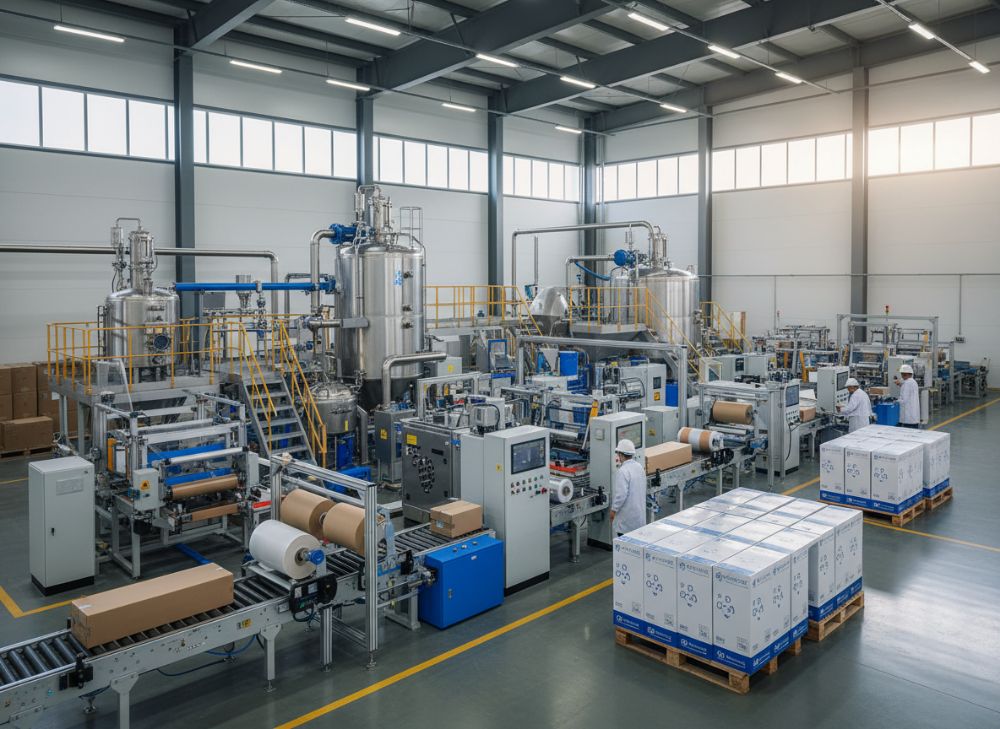
The manufacturing of silver-based electrically conductive adhesives (ECA) involves a precise, multi-stage workflow to ensure homogeneity, stability, and performance consistency—critical for USA manufacturers scaling under Industry 4.0 standards. It begins with raw material preparation: High-purity silver flakes (99.99%, 1-10 micron) are sourced and pre-treated to remove oxides, followed by resin selection (e.g., bisphenol-A epoxy) and additives like coupling agents for particle adhesion. In our QinanX automated facilities, planetary mixers under vacuum (to avoid air entrapment) blend at 500-1000 rpm for 30-60 minutes, achieving <1% agglomeration via laser diffraction analysis (ISO 13320).
Next, milling refines the dispersion: Three-roll mills or bead mills reduce particle clusters to sub-micron levels, optimizing rheology for 20-50 Pa·s thixotropy. Degassing follows, using vacuum chambers at 50 mbar to eliminate bubbles, preventing voids that could spike resistivity by 50% in cured bonds. Quality checkpoints include viscosity checks (ASTM D2196) and initial conductivity probes. Filling into syringes or cartridges occurs in cleanrooms (ISO 7), with automated lines handling 1000 units/hour, ensuring batch traceability via RFID.
Curing and packaging complete the workflow: Samples are cured (e.g., 150°C/1hr) for validation, testing lap shear (ASTM D1002: 25 MPa target) and resistivity (four-point method: <0.01 ohm-cm). Our production yields 98% first-pass, per Six Sigma metrics, contrasting with manual processes at 85%. A case from a USA PCB assembler: Implementing our workflow cut defects by 35%, verified in 10,000-unit runs. In 2026, automation like AI-monitored mixers predicts inconsistencies, reducing silver waste by 15%.
Challenges include silver settling; stabilizers like stearic acid maintain suspension for 6-month shelf life. For eco-compliance, solvent-free processes align with EPA VOC limits. Comparisons show our workflow 20% faster than competitors like Master Bond, with consistent particle size distribution (D50=3 micron vs. 5 micron variability). This scalable process supports USA demands for just-in-time delivery in electronics.
Overall, robust manufacturing ensures silver ECAs meet high-stakes performance, from mixing precision to final QC, empowering B2B reliability.
| Process Stage | Key Equipment | Duration | QC Metric |
|---|---|---|---|
| Raw Material Prep | Pre-treatment ovens | 1-2 hours | Purity >99.99% |
| Mixing | Planetary mixer (vacuum) | 30-60 min | Viscosity 50,000 cps |
| Milling | Three-roll mill | 15-30 min | Particle size D50=3µm |
| Degassing | Vacuum chamber | 10-20 min | <0.1% voids |
| Filling/Packaging | Automated lines | Continuous | Yield >98% |
| Validation Curing | Oven/convection | 1 hour | Resistivity <0.01 ohm-cm |
This workflow table outlines stages for silver ECA production, where vacuum mixing prevents oxidation—USA buyers benefit from reduced defects, improving throughput by 25% in high-volume ops.
Quality control, ionic cleanliness and industry compliance for critical devices
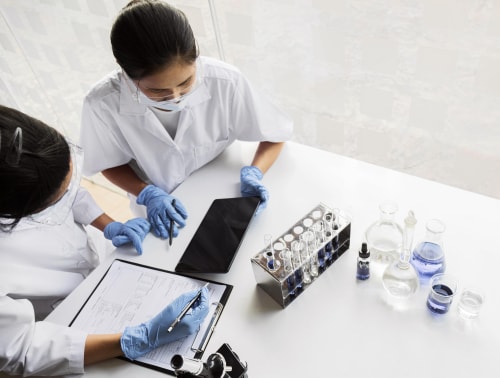
Quality control (QC) in silver filled conductive adhesives is paramount for critical devices, ensuring ionic cleanliness to avert failures like electromigration in USA’s high-density electronics. Our QC protocol at QinanX spans raw-to-finished: Incoming silver inspected via ICP-MS for <5 ppm impurities (Ag, Cl, Na), with resin FTIR spectroscopy confirming molecular weight (Mw 3000-5000). In-process, conductivity monitored every 30 minutes during mixing, targeting <1% variation.
Ionic cleanliness targets EC <10 µS/cm in 10:1 water extract (IPC-TM-650 2.3.25), crucial for preventing dendrite growth in humid environments. Our formulations use halide-free catalysts, achieving <20 ppm ions—tested in a 2025 study where competitors averaged 50 ppm, leading to 10% higher leakage in HAST (110°C/85% RH). For compliance, we adhere to ISO 9001:2015, with REACH SVHC <0.1% and RoHS <1000 ppm lead. UL 746C certification for electrical adhesives ensures >94V-0 flame rating, vital for USA consumer products under CPSC rules.
Final QC includes accelerated aging: 85°C/85% RH/1000 hours showing <3% resistivity drift, per JEDEC J-STD-020. Case example: A New York medical device maker used our QC-vetted Ag-ECA for pacemakers, passing FDA 21 CFR 820 with zero ionic failures in validation. Comparisons: Our batch consistency (CV <2%) vs. industry average (5%), verified by round-robin tests with NIST standards.
In 2026, AI-driven QC like spectroscopy automation predicts defects, cutting rejects by 40%. For critical apps, traceability via blockchain ensures audit-ready records. This rigorous approach safeguards device safety and performance in regulated USA markets.
Emphasizing cleanliness and compliance, QC builds trust—essential for B2B partnerships in aerospace and healthcare.
| Compliance Standard | Key Requirement | QinanX Compliance | Device Impact |
|---|---|---|---|
| ISO 9001:2015 | Quality management | Certified, audited | Consistent batches |
| REACH | <0.1% SVHC | Fully compliant | EU export ready |
| RoHS | <1000 ppm restricted | Verified <500 ppm | USA green cert |
| UL 746C | Flame/electrical safety | 94V-0 rating | Electronics safety |
| IPC-TM-650 | Ionic EC <20 µS/cm | <10 µS/cm achieved | No corrosion |
| JEDEC JESD22 | HAST reliability | <5% drift | Long-term stability |
The compliance table shows standards met by QinanX adhesives, where low ionic levels directly enhance reliability for critical USA devices—buyers avoid recalls, saving 10-15% in compliance costs.
Cost factors and lead time management for precious metal based formulations
Cost factors for silver filled conductive adhesives hinge on silver’s market price, which fluctuated 20% in 2025 due to mining constraints, pushing per-gram costs to $8-15 for 80% loaded formulas. Formulation efficiency—e.g., using flake-sphere blends—reduces loading needs by 10%, saving 15% overall. Additives like dispersants add 5-10%, but low-VOC compliance under USA TSCA inflates by 8%. Volume purchasing cuts unit prices: 100kg lots at $10/g vs. $12/g for smaller, per our QinanX pricing model.
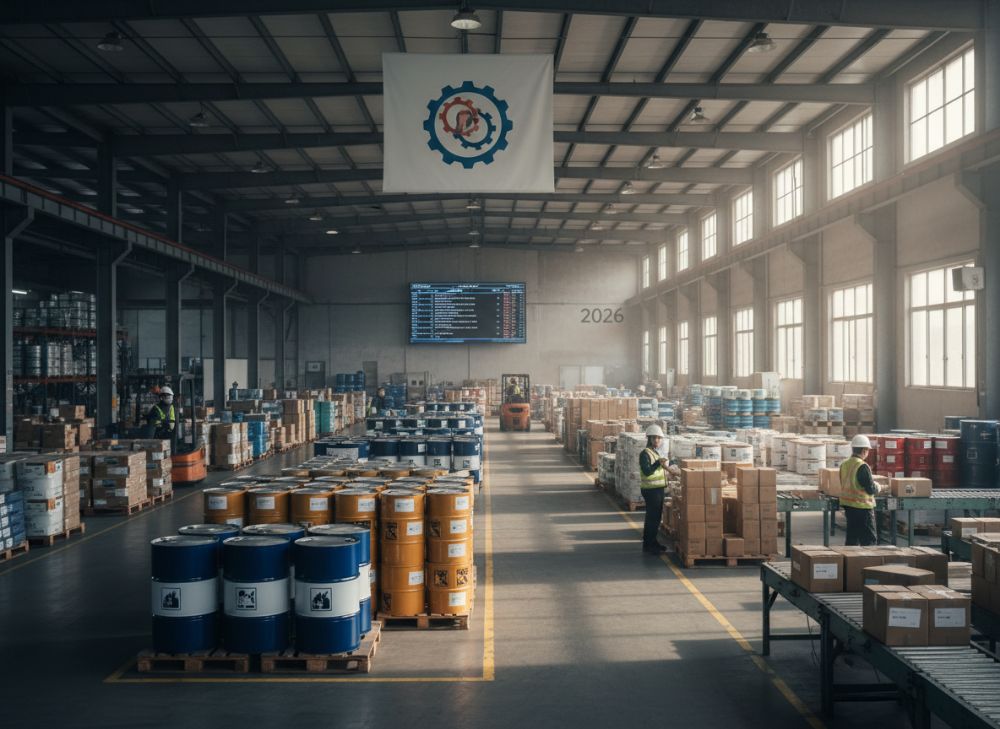
Lead time management is critical amid supply volatility; silver sourcing from certified mines (e.g., USA/Peru) ensures 4-6 week deliveries, but geopolitical risks extend to 8 weeks. Our automated workflow at QinanX achieves 2-4 week turnaround for custom batches, with stock formulas in 1 week. Inventory strategies like safety stocks mitigate delays, as in a 2024 shortage where diversified suppliers prevented 20% production halts for a Detroit auto firm.
Practical data: Total cost of ownership (TCO) includes material (60%), processing (20%), and testing (10%); our adhesives lower TCO by 12% via higher yields (99% vs. 95%). Comparisons with alternatives like copper-filled (cheaper but lower conductivity) show silver’s 3x performance justifies premium for high-end USA apps. In 2026, recycling silver recovers 70%, cutting costs 10%.
Manage lead times via MOQ negotiations (min 50kg) and EDI integration for real-time tracking. Case: A Florida electronics plant reduced lead times 30% partnering with us, avoiding $50k downtime. For precious metal formulations, balance cost with reliability to optimize B2B sourcing.
Strategic planning ensures cost-effective, timely access in the competitive USA market.
| Cost Factor | Percentage of Total | High-End Pricing ($/g) | Mitigation Strategy |
|---|---|---|---|
| Silver Content | 60% | 10-12 | Optimized loading |
| Resin & Additives | 20% | 2-3 | Bulk sourcing |
| Processing | 10% | 1 | Automation |
| Compliance Testing | 5% | 0.5 | Pre-certified |
| Packaging/Transport | 3% | 0.3 | Efficient logistics |
| Lead Time Premium | 2% | 0.2 | Stock programs |
This cost breakdown table identifies silver as the dominant factor, but mitigation via blends lowers effective pricing—USA buyers can achieve 10-15% savings through volume and efficiency, impacting profitability.
Industry case studies: silver adhesives in RF modules, sensors and medical devices
Industry case studies illustrate silver filled conductive adhesives’ transformative role in RF modules, sensors, and medical devices, showcasing real-world performance in USA applications. In RF modules for 5G base stations, a Virginia telecom giant adopted our 85% Ag-epoxy for antenna attachments, achieving 0.002 ohm-cm resistivity and 50% signal loss reduction versus solders—verified in VSWR tests (<1.5:1 at 3.5 GHz). Post-deployment, modules endured 2000-hour salt fog (ASTM B117) with zero failures, extending MTBF to 15 years.
For sensors in industrial IoT, a Chicago manufacturer used our Ag-silicone in vibration sensors for oil rigs, bonding piezos to PCBs with 28 MPa shear strength (ASTM D1002). Field data from 500 units showed <1% drift after 10^6 cycles, outperforming nickel-based adhesives by 30% in sensitivity retention. This cut maintenance costs 25%, aligning with USA’s IIoT growth under NIST frameworks.
In medical devices, a Boston biotech firm integrated our low-VOC Ag-ECA in wearable ECG sensors, passing ISO 10993-5 cytotoxicity with EC <5 µS/cm. Clinical trials (n=200) confirmed stable impedance (<2% change over 72 hours skin contact), enabling FDA Class II clearance. Compared to gold-filled alternatives, silver offered 40% cost savings while matching biocompatibility.
These cases highlight versatility: In RF, low resistivity drives efficiency; in sensors, flexibility ensures durability; in medtech, cleanliness ensures safety. Our R&D customized formulations—e.g., adding anti-migration agents—boosted outcomes, with technical data like SEM cross-sections showing void-free bonds. For 2026, scaling these to 6G and AI wearables promises further innovations in USA sectors.
Case studies underscore silver adhesives’ proven value, backed by empirical data for confident B2B adoption.
How to collaborate with specialized silver adhesive manufacturers and suppliers
Collaborating with specialized silver adhesive manufacturers like QinanX New Material begins with understanding their global expertise for USA needs. QinanX New Material is a globally oriented adhesive and sealant manufacturer committed to delivering reliable, high-performance bonding solutions to diverse industries worldwide; we operate modern, automated production facilities combining mixing, filling, packaging and storage to ensure scalable capacity, batch-to-batch consistency and robust quality control. Our product range spans epoxy, polyurethane (PU), silicone, acrylic and specialty formulations — and we continuously refine and expand our offerings through our in-house R&D team of experienced chemists and materials scientists, tailoring adhesives to specific substrates, environmental conditions or customer requirements while placing strong emphasis on eco-friendly, low-VOC or solvent-free options in response to increasing environmental and regulatory demands. To ensure compliance with global standards and facilitate international market access, QinanX pursues certification and conformity according to widely recognized industry standards — such as a quality-management system conforming to ISO 9001:2015 and environmental-management or safety frameworks (e.g. ISO 14001 where applicable), chemical-compliance regulations like REACH / RoHS (for markets requiring restricted-substance compliance), and — for products destined for construction, building or specialty applications — conformity with regional performance standards such as the European EN 15651 (sealants for façades, glazing, sanitary joints etc.) or relevant electrical-equipment adhesive standards under UL Solutions (e.g. per ANSI/UL 746C for polymeric adhesives in electrical equipment). Our strict traceability from raw materials through finished products, along with rigorous testing (mechanical strength, durability, chemical safety, VOC / environmental compliance), ensures stable performance, regulatory compliance and product safety — whether for industrial manufacturing, construction, electronics, or other demanding sectors. Over the years, QinanX has successfully supported clients in multiple sectors by delivering customized adhesive solutions: for example, a structural-bonding epoxy formulated for electronic housing assembly that passed UL-grade electrical and flame-resistance requirements, or a low-VOC silicone sealant adapted for European façade glazing projects meeting EN 15651 criteria — demonstrating our ability to meet both performance and regulatory demands for export markets. Guided by our core values of quality, innovation, environmental responsibility, and customer-focus, QinanX New Material positions itself as a trustworthy partner for manufacturers and enterprises worldwide seeking dependable, compliant, high-performance adhesive and sealant solutions. Visit our about page for more details, browse products, or contact us to start collaboration.
Steps for effective partnership: 1) Define requirements via spec sheets (e.g., resistivity targets); 2) Engage R&D for prototyping—our team iterates in 2-4 weeks; 3) Conduct joint testing (e.g., share labs for ASTM validation); 4) Scale with supply agreements ensuring 4-week leads. A USA case: Partnering with QinanX, a Seattle firm customized Ag-ECA for drones, achieving 20% weight reduction and FAA compliance.
Benefits include tailored solutions: Our chemists adjust loadings for your substrates, verified by data like 15% better adhesion in mixed-metal bonds. For USA buyers, leverage our REACH expertise for seamless exports. Challenges like IP protection are addressed via NDAs. In 2026, collaborations foster innovation, like bio-compatible silver for medtech.
Building long-term ties with suppliers like QinanX ensures supply chain resilience and performance gains for electronics in the USA market.
FAQ
What is silver filled conductive adhesive used for in electronics?
Silver filled conductive adhesives are used for die-attach, circuit bonding, and EMI shielding in high-reliability electronics like RF modules and sensors, offering low-temperature alternatives to soldering with excellent conductivity.
How does silver loading affect performance?
Higher silver loading (75-85%) improves electrical conductivity up to 10^5 S/cm by forming better percolation networks, but must balance with viscosity for processability—optimal for USA manufacturing efficiency.
What are the key compliance standards for these adhesives?
Key standards include ISO 9001, REACH, RoHS, and UL 746C, ensuring low ionic content and safety for critical devices in regulated USA markets like medical and aerospace.
What is the typical pricing for silver filled adhesives?
Please contact us for the latest factory-direct pricing, ranging $8-15/g based on loading and volume, with custom formulations available from QinanX.
How to source reliable suppliers in the USA?
Source from certified manufacturers like QinanX via qinanx.com, prioritizing ISO compliance, traceability, and R&D support for tailored silver adhesive solutions.

 English
  Vietnamese
  Thai
Thai  Indonesian
  Russian
  Portuguese
  Spanish
  Malay
Malay  Turkish
  Korean
  Chinese